Why roof work usually needs scaffolding
Working on a roof means working at an edge. A scaffold at gutter level gives roofers a platform to work from and, crucially, edge protection – guardrails and toe boards rising above the eaves – to help prevent people and materials falling from the roof. It also gives somewhere to stack tiles or slates and to pass materials up and down.
What a roof scaffold looks like
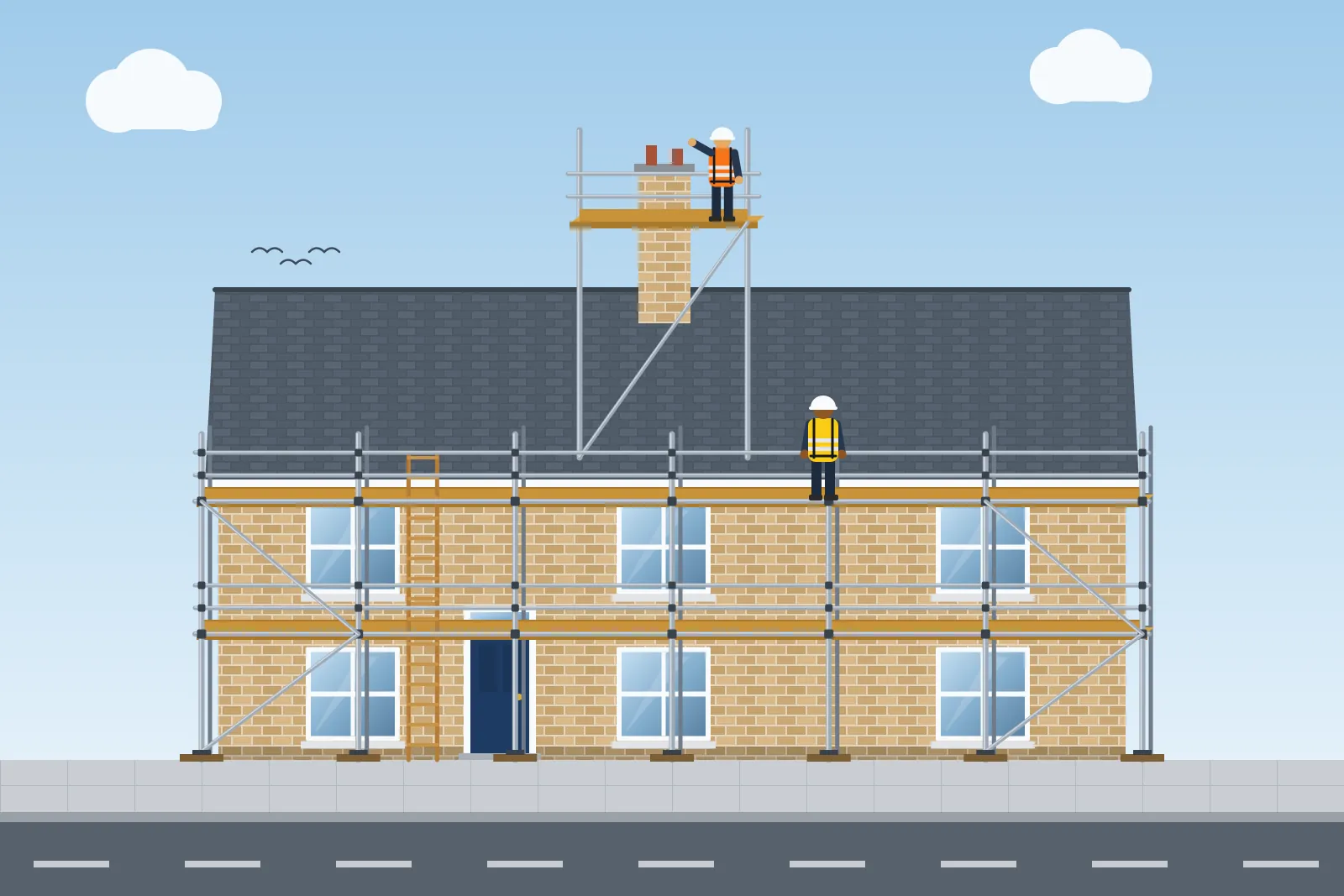
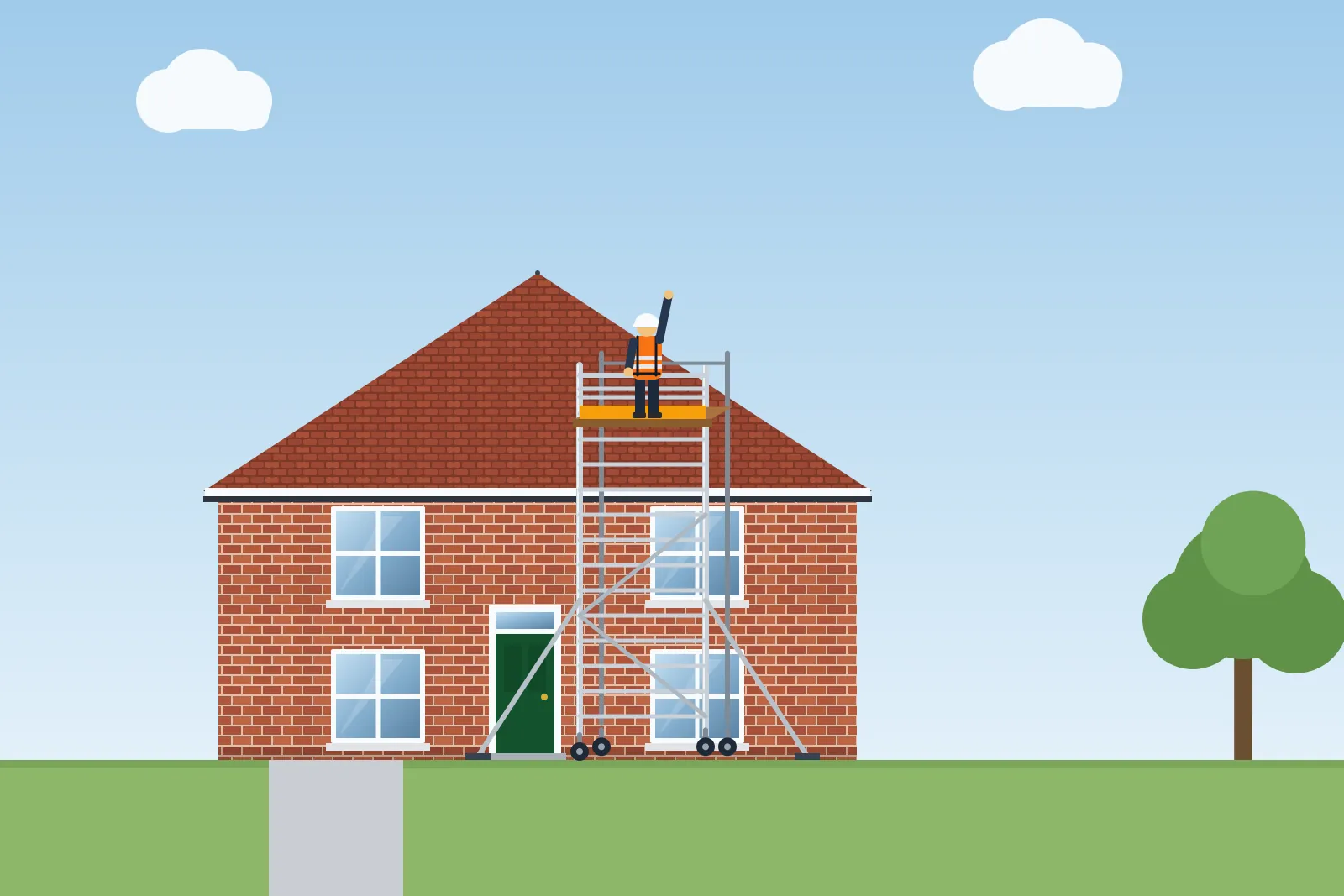
A typical roof scaffold has its top boarded lift just below the gutter line, with guardrails continuing above the eaves. Depending on the roof, it may run along one elevation (for example, the front slope of a terrace) or wrap round several sides (for a hipped roof). Lower lifts provide access up to the top and may be used by other trades.
- Platform at or just below gutter level
- Edge protection above the eaves
- Ladder access within the scaffold
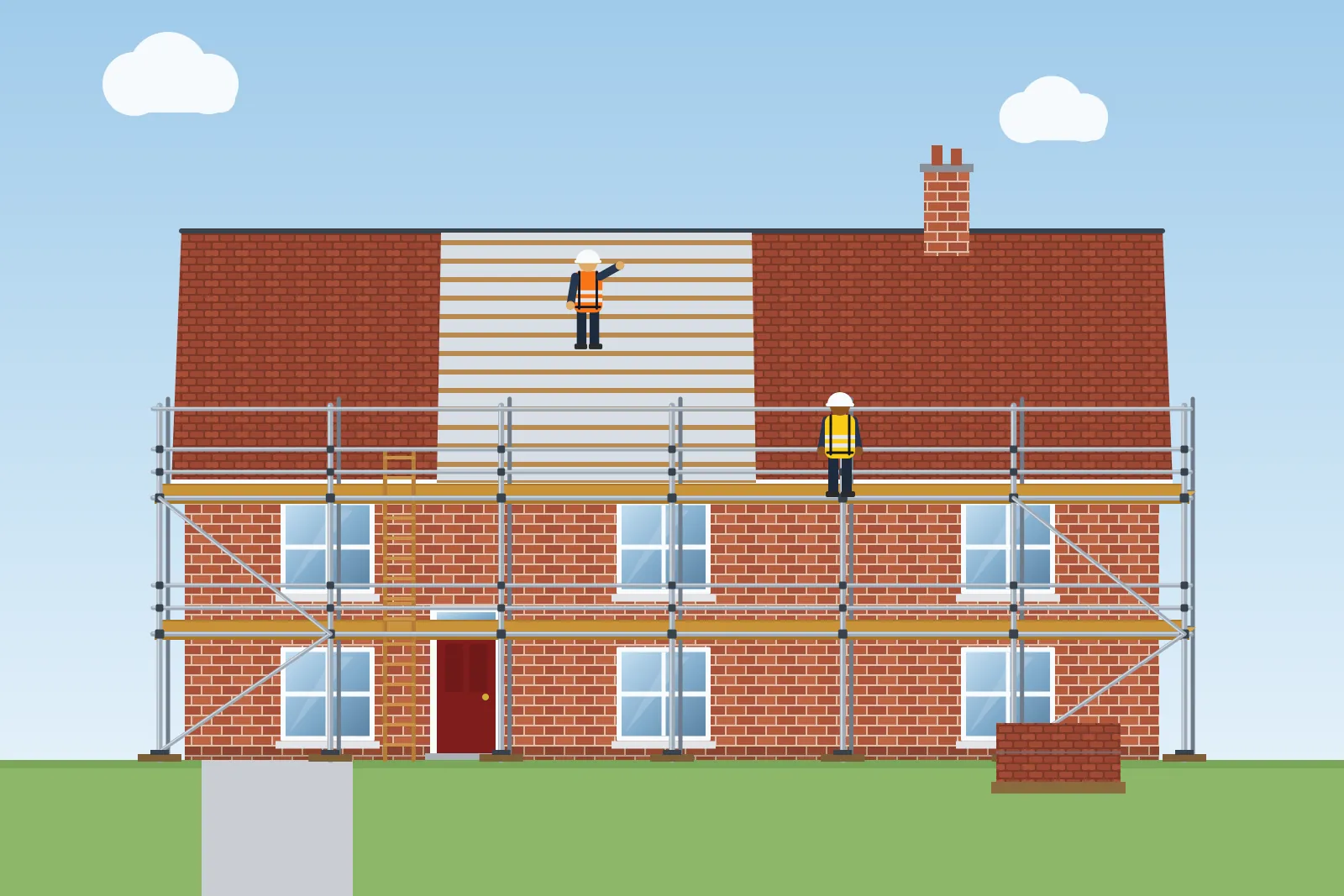
- Loading bay for tiles and slates on larger jobs
- Chimney scaffold if the stack also needs work
Temporary roofs for bigger jobs
If a roof will be fully stripped, or opened up for a loft conversion, rain can damage the house below. A temporary roof – a sheeted roof structure on top of the scaffold – keeps the building dry while the work is done. It adds cost and time, so it's usually reserved for larger projects, older buildings or wetter times of year. Your roofer and scaffolder can advise whether it's justified.
Ready to get prices?
Describe your project and compare free scaffolding quotes from local companies – there's no obligation.
- Free to use
- No obligation
- Local scaffolding companies
- Quick online form
You'll continue to our quotes partner, MyJobQuote, to describe your scaffolding job.
Planning a roof scaffold
- Agree with your roofer which slopes need access and edge protection
- Mention chimneys, dormers, conservatories and bay windows
- Ask about a loading bay if a lot of materials are involved
- Get a realistic timescale, allowing for weather
- Check access for the lorry and whether a pavement licence is needed
Bungalows and low roofs
Even on a bungalow, a low scaffold with edge protection is commonly used for re-roofing. The height may be modest, but the risk of falling from the roof edge is still there, and the scaffold gives roofers a safe place to work and stack materials.