The key difference
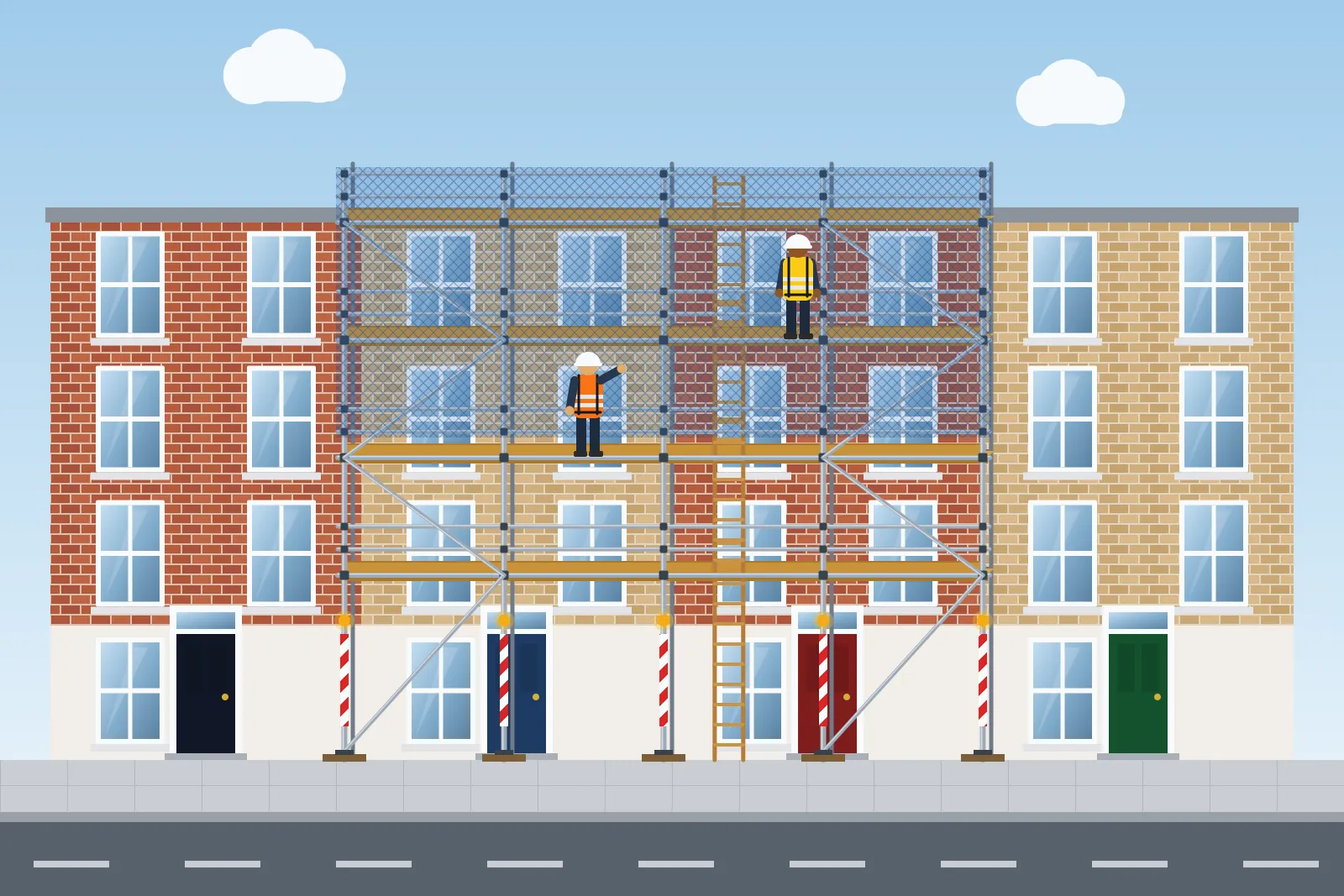
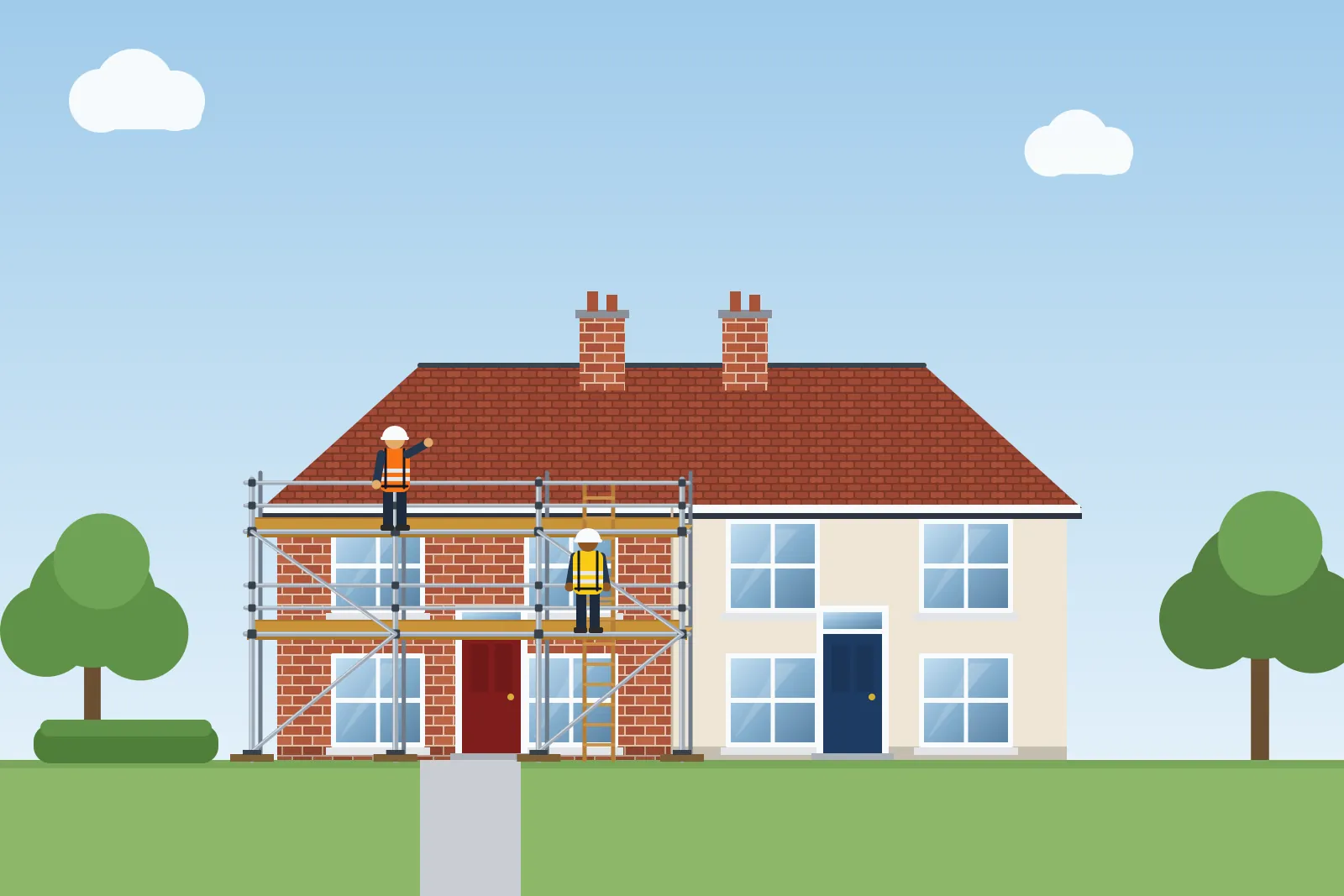
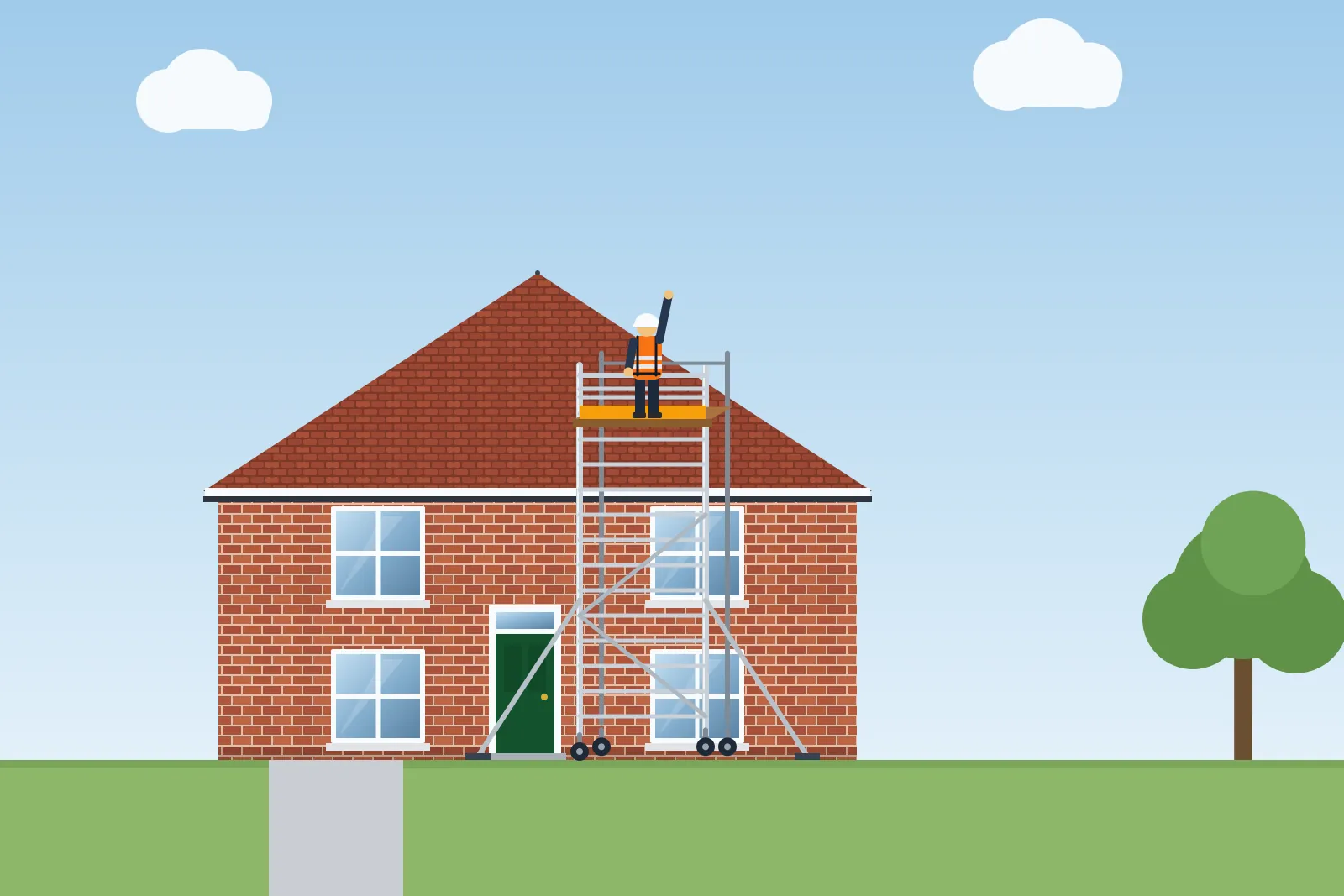
A scaffold tower is a free-standing frame with one working platform, usually aluminium and often on castors. Full scaffolding is built along or around the building, tied into it, and gives continuous boarded platforms at several levels.
That makes a tower ideal for a small area and a scaffold better for long runs, multiple levels and longer jobs.
| Consideration | Scaffold tower | Full scaffolding |
|---|---|---|
| Area covered | One small area at a time | Whole elevations or the full building |
| Typical duration | Hours to days | Days to months |
| Roof work | Not usually suitable for working on the roof | Can provide edge protection at the eaves |
| Materials | Light loads only | Designed for the loads agreed for the job |
| Ground | Firm, level surfaces (or suitable legs) | Can be built on slopes and uneven ground |
| Erection | Competent person following the manual | Competent scaffolders |
How scaffold towers and full scaffolding typically compare
When a tower makes sense
Towers work best for light, short jobs in a limited area, on firm ground, within the height the manufacturer allows for that model.
- Clearing or replacing a section of gutter
- Painting or replacing fascias along one wall
- Reaching a high ceiling, stairwell or atrium indoors
- Fixing a light, sign or camera at first-floor level
- Short jobs where the tower can be moved along between tasks
Ready to get prices?
Describe your project and compare free scaffolding quotes from local companies – there's no obligation.
- Free to use
- No obligation
- Local scaffolding companies
- Quick online form
You'll continue to our quotes partner, MyJobQuote, to describe your scaffolding job.
When full scaffolding is the better choice
If several trades need access, or the job will run for weeks, a scaffold usually gives better value and steadier access.
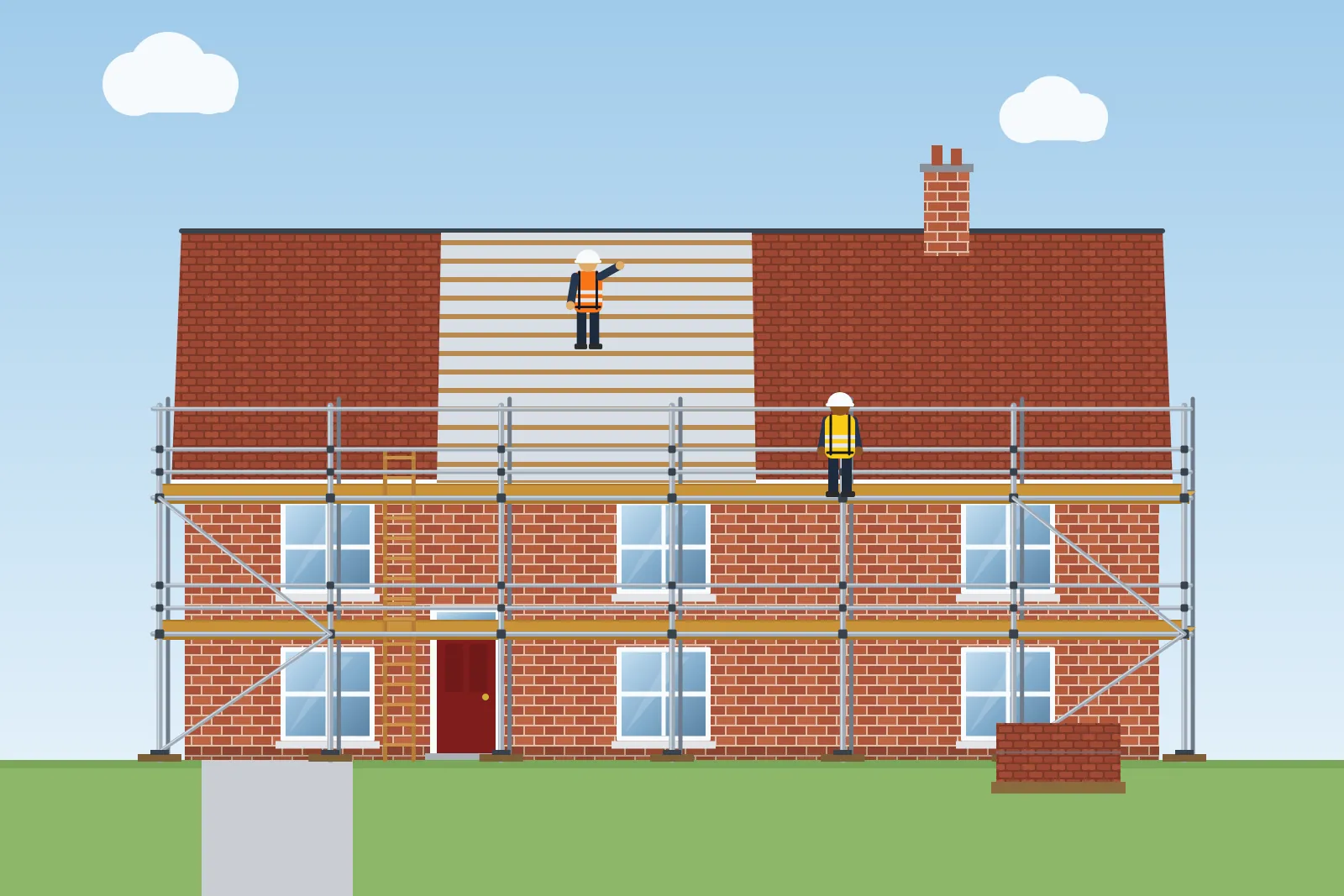
- Any work on the roof itself, where edge protection is needed
- Chimney repairs and rebuilding
- Rendering, repointing or painting a whole elevation
- Work that will last more than a few days
- Jobs needing materials stored at height, such as roof tiles
- Sloping, soft or uneven ground around the building
Cost: it depends on the job
A tower is often cheaper for a short, small job, but not always. Once you add delivery, erection, several days' hire and repeated moves, a small scaffold can sometimes be competitive – and it may let you do more of the work in one go. Ask for prices for both if you're unsure.