Scaffold Tower Hire Quotes
Need to reach a gutter, a run of fascia or a high ceiling for a few days? A scaffold tower can be a practical alternative to full scaffolding for smaller, shorter jobs. Compare quotes from local suppliers and scaffolding companies.
- Mobile and static towers
- Gutters, fascias and soffits
- High ceilings and stairwells
- Short hire periods
- Delivery and collection
- Erection by trained staff on request
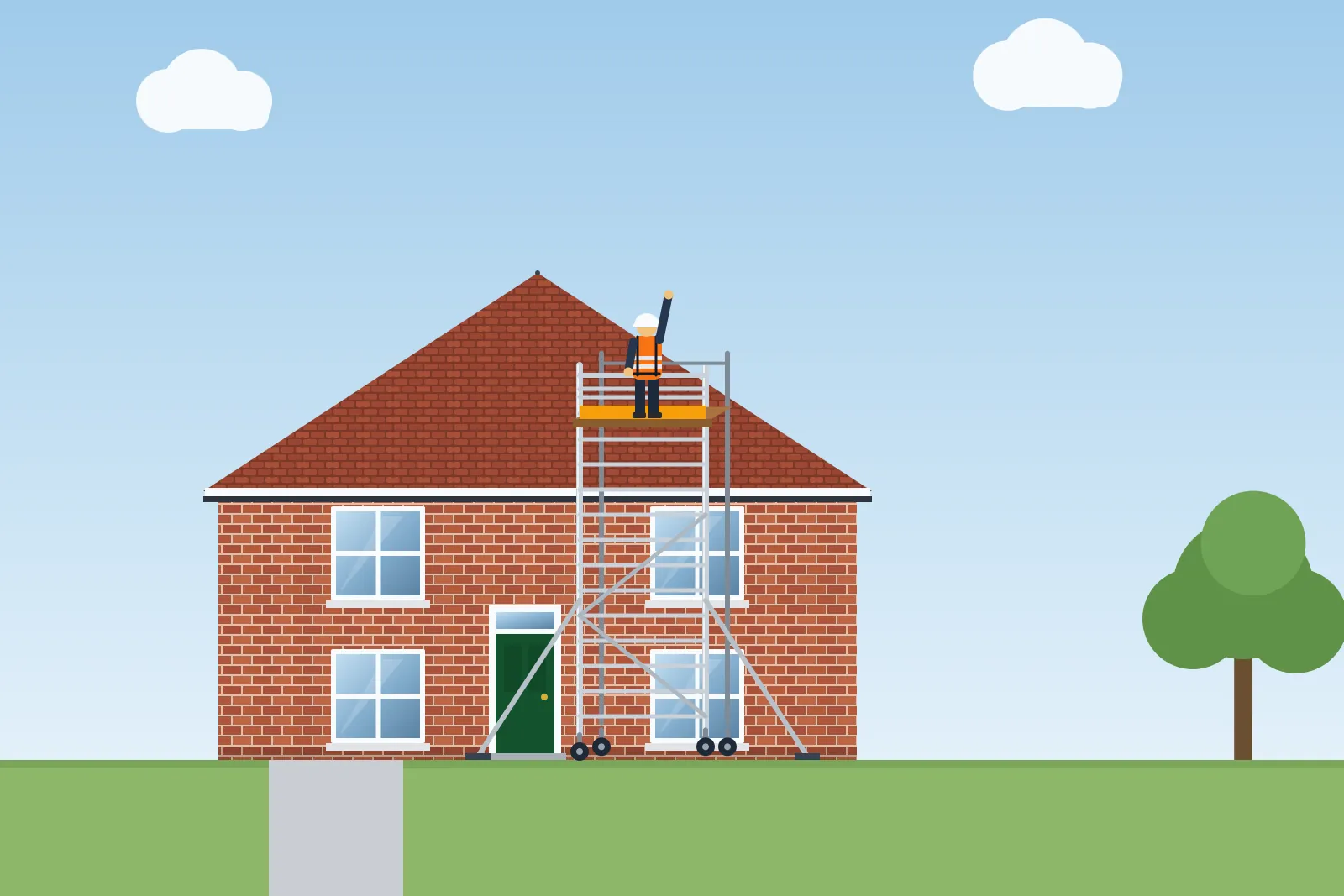
A scaffold tower – also called a mobile access tower or tower scaffold – is a free-standing frame with a working platform at the top. Most are made from lightweight aluminium sections that slot together, stand on lockable castors or base plates, and use stabilisers or outriggers for extra stability. Because a tower has a small footprint and can be repositioned between uses, it is a common choice for short, contained jobs at height.
A tower is not a substitute for full scaffolding on every project. It suits work that can be done from one platform in a limited area – a stretch of guttering, a section of fascia, a chimney breast indoors – rather than a whole elevation for weeks at a time. How high a particular tower can safely go depends on the model, its base dimensions, whether it is used inside or out and the manufacturer's instructions, so the right choice depends on the job, the ground and the building.
Through Scaffolding Hire Quotes you can describe what you need to reach and for how long, then hear back from local companies that supply towers, either for you to use or erected by their own team. Mention the working height, the surface the tower will stand on and whether it is for inside or outside use, and the quotes you receive will be much easier to compare.
Jobs a scaffold tower is often hired for
Gutters and downpipes
Clearing, repairing or replacing a section of guttering, where the work moves along the wall a few metres at a time.
Fascias, soffits and bargeboards
Replacing or repairing timber or uPVC boards along the eaves of a house, garage or outbuilding.
Windows and frames
Upper-floor window repairs, resealing and frame maintenance on a single elevation.
High ceilings and stairwells
Decorating, plastering or fitting lights in double-height rooms, halls, stairwells and atriums.
Small exterior repairs
Patch repointing, small render repairs, fixing cables or replacing a security light – short, light jobs in one area.
Shopfronts and signage
Fitting or maintaining signs, canopies and lighting on commercial frontages, often outside opening hours.
Mobile towers and static towers
Mobile towers stand on castors so they can be moved along a wall or across a room between tasks. The castors are locked while the tower is in use, and a tower should never be moved with anyone or anything on the platform. They work best on firm, level surfaces such as concrete, patios and indoor floors.
Static towers stand on base plates or adjustable legs instead of wheels. They are better suited to uneven or sloping ground, or to jobs where the tower will stay in one place. Some suppliers also offer low-level work platforms for jobs just above head height, where a full tower would be unnecessary.
When a scaffold tower is the right choice
A tower tends to make sense when the job is short, contained and light. Typical signs that a tower could work well include:
- The work is in one area, or can be done in a few short moves
- It will take hours or days rather than weeks
- The ground is firm and reasonably level, or can be levelled with the right legs
- The working height is within the range the manufacturer allows for that tower
- Only one or two people need to work from the platform
- Materials and tools are light enough to carry up safely
The limitations of scaffold towers
Towers have a small platform and are designed for light loads, so they are not suitable for stacking tiles, bags of render or blocks. They are also affected by wind more than a tied scaffold, and manufacturers set limits on the conditions in which their towers can be used outdoors. Soft lawns, slopes, steps and nearby overhead cables all need to be considered before a tower goes up.
Roof work is the clearest example of where a tower usually isn't enough. Working on a roof slope generally calls for proper edge protection along the eaves, which is normally provided by a full scaffold rather than a tower. If your job involves the roof itself, our domestic scaffolding and scaffolding services pages explain the usual options.
Self-assembly hire or erected for you
Scaffold towers are hired in two main ways. Some suppliers deliver the components for you to assemble, which is common with trade customers who are trained to erect towers. Others – including many scaffolding companies – will deliver, erect, inspect and later dismantle the tower for you.
Assembling a tower is not something to learn on the job. It should only be done by someone competent, following the instruction manual for that specific model, and many hirers expect the person erecting it to have completed recognised training, such as courses run through PASMA. If you have no experience of towers, paying for it to be erected and taken down is usually the sensible option.
Using a tower indoors
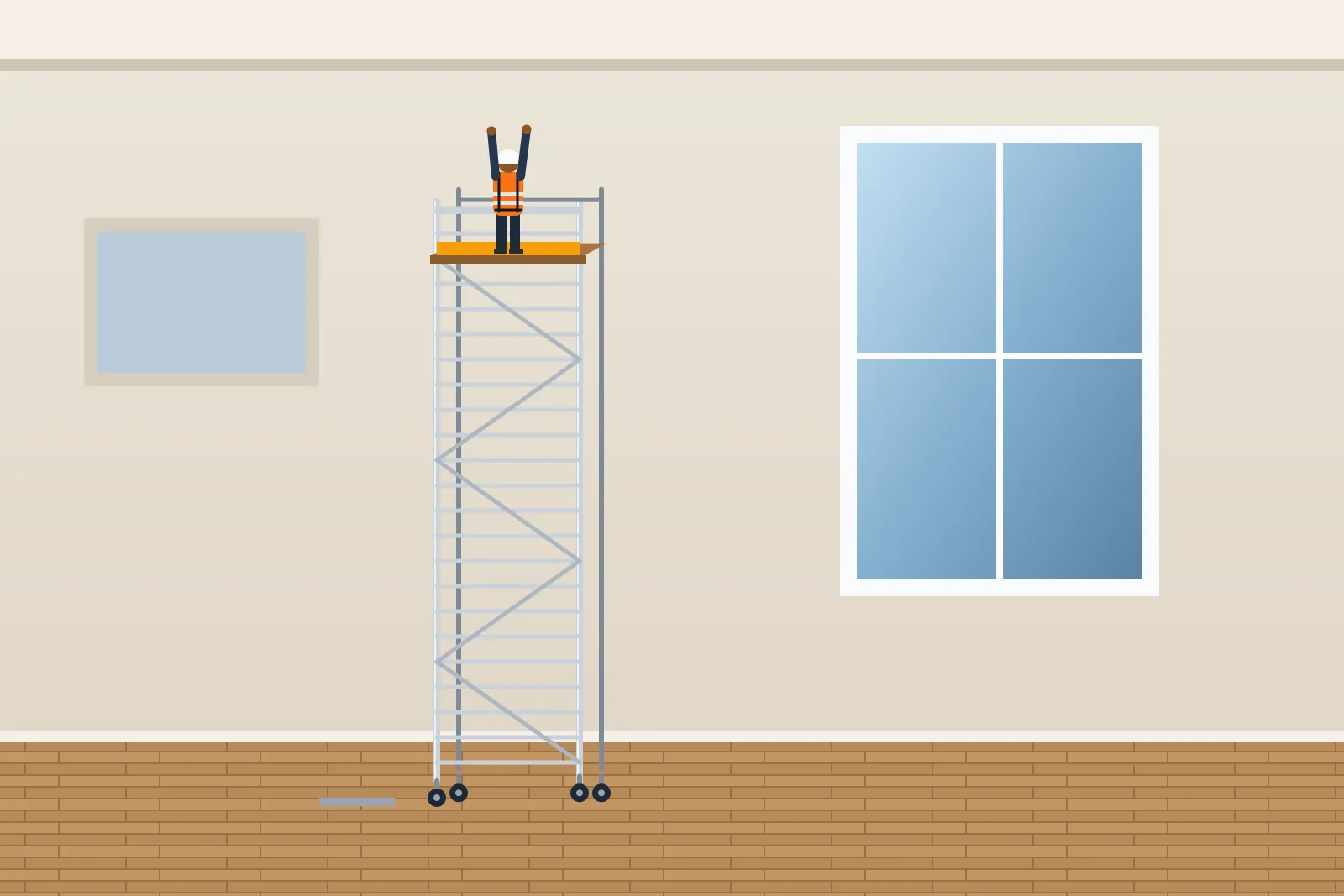
Inside, towers are used for high ceilings, double-height living spaces, stairwells, churches, halls and commercial premises. Before booking, check that the components will fit through doorways and up any stairs, and that the floor can take the load. Castor wheels can mark delicate floors, so ask about floor protection.
Stairwells need particular care because the tower has to stand on different levels. Suppliers may recommend adjustable legs or a purpose-made stairwell configuration – describe the stairs, or send photos, when you request quotes.
Planning your tower hire
Start by measuring the height you actually need to work at, not just the height of the building. Suppliers usually talk about platform height and working height, and a quote based on a vague "two storeys" may not give you the tower you need.
Then think about where the tower will stand: patio, gravel, lawn, a sloping drive or a busy pavement, and anything in the way such as a conservatory, bay window or overhead cables. A couple of photos help a supplier recommend the right base size, legs and stabilisers – and spot early on if full scaffolding would be the better option.
Safety points to raise
- A tower should be erected, altered and dismantled only by someone competent to do so, following the manufacturer's instructions for that model.
- Castors should be locked and stabilisers fitted as specified before anyone climbs, and a mobile tower should never be moved with people or materials on the platform.
- Guardrails and toe boards should be in place on the working platform, and access should be by the built-in ladder or stairway – never by climbing the outside of the frame.
- Wind, soft ground, slopes and overhead power lines all affect whether a tower can be used outdoors. If in doubt, ask the supplier, or consider full scaffolding instead.
- If the tower will stand on a public pavement, a licence from the council is usually needed. Ask the supplier who will arrange it.
This is general information, not professional advice. Requirements depend on the project, the building and where you are in the UK.
What affects scaffold tower hire prices
Tower hire is usually priced for a set period, with delivery, collection and any erection service on top. These are the things that tend to move the price:
- Platform height
- Taller towers need more sections, larger bases and more stabilisers.
- Hire period
- A day, a weekend or several weeks. Longer hires often work out cheaper per day.
- Erection and dismantling
- Having a trained team put the tower up, move it and take it down adds to the price but removes a lot of risk.
- Delivery and access
- Distance from the depot, parking, and how far components have to be carried.
- Extra components
- Adjustable legs, stairwell units, wider platforms or outriggers for awkward ground.
- Deposits and damage cover
- Some suppliers ask for a deposit or offer a damage waiver – check what is included.
Scaffolding is priced job by job, so the only reliable figure is a written quote. Our scaffolding hire cost guide explains every factor in more detail.
Comparing scaffold tower quotes
- The platform height and the maximum working height it gives you
- The base size, stabilisers or outriggers included
- The hire period, and what it costs to extend
- Delivery and collection charges
- Whether erection, moves and dismantling are included
- Who inspects the tower after it is erected, and how that is recorded
- That the manufacturer's instruction manual is supplied with the tower
- Any deposit, damage waiver and the supplier's insurance cover
Request scaffold tower hire quotes
Describe the job, add your postcode and compare quotes from local scaffolding companies. It's free, and you're under no obligation to go ahead.
Get free scaffold tower hire quotes
Describe your project once and compare quotes from local scaffolding companies that cover your area.
- Free to use
- No obligation
- Local scaffolding companies
- Quick online form
You'll continue to our quotes partner, MyJobQuote, to describe your scaffolding job.
Scaffold Tower Hire near you
You can request scaffold tower hire quotes anywhere in the UK. These cities have their own local scaffold towers page:
Scaffolding hire in more towns and cities
Scaffold Tower Hire: frequently asked questions
What is the difference between a scaffold tower and scaffolding?
A scaffold tower is a free-standing frame with one working platform, usually aluminium and often on wheels, used for short jobs in one area. Scaffolding is built around the building from tubes, fittings and boards (or a system scaffold), is tied to the structure, and gives continuous access along whole elevations for longer projects.
How high can a scaffold tower go?
It depends on the tower. Each model has its own maximum heights, which are often lower outdoors than indoors and depend on the base size and stabilisers fitted. The manufacturer's instructions set the limits, and a supplier can tell you which tower suits your working height.
Can I put up a scaffold tower myself?
Only if you are competent to do so and follow the instruction manual for that tower. Many hirers expect the person erecting it to be trained. If you have no experience, it's usually wiser to pay for the tower to be erected and dismantled by the supplier or a scaffolding company.
Is a scaffold tower suitable for roof work?
Usually not for working on the roof itself. Roof work generally needs edge protection along the eaves, which a full scaffold provides. A tower may be fine for gutters and fascias, but describe the job when you request quotes so suppliers can recommend the right equipment.
How long can I hire a scaffold tower for?
Towers can be hired for as little as a day or for several weeks. For long projects covering a whole elevation, full scaffolding may be better value and more practical, so it is worth asking for prices for both.
Do I need permission to put a scaffold tower on the pavement?
If the tower will stand on the public highway, including the pavement, a licence from the local council is usually required. Ask the supplier whether they will apply for it and whether the cost is included in the quote.
Ready to get scaffold tower hire quotes?
One short form, local scaffolding companies, no obligation.
Get Free Scaffolding Quotes