Domestic Scaffolding Quotes
Re-roofing, a chimney repair, new render or a long-overdue repaint – get quotes for residential scaffolding from local companies that work on homes like yours.
- Roof and chimney work
- Rendering and repointing
- Painting and decorating
- Windows, gutters and fascias
- Extensions and loft conversions
- Terraces, semis and detached homes
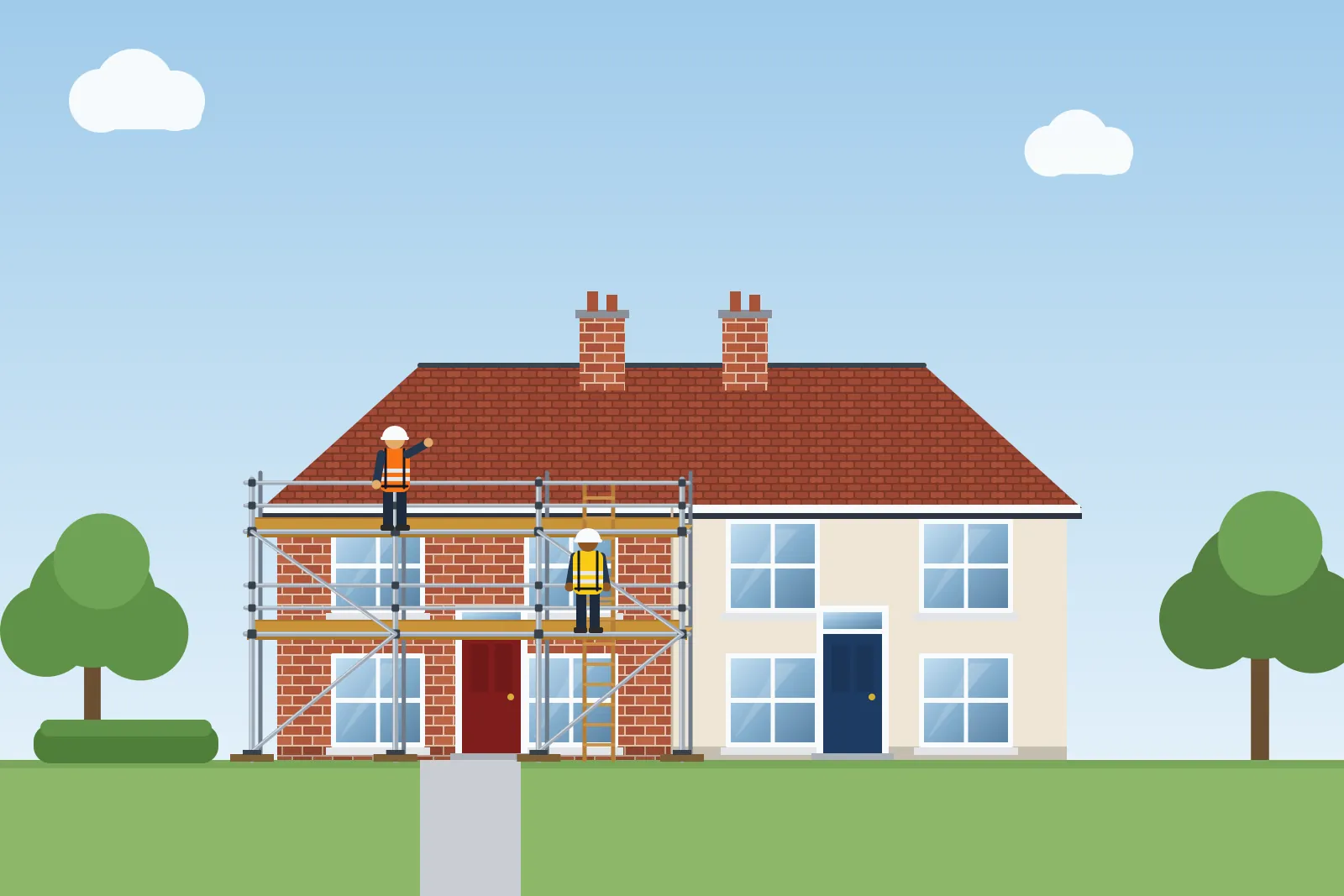
Most homeowners only think about scaffolding when a bigger job comes along: slipped tiles, a leaning chimney stack, cracked render or windows that need replacing. For anything above ground-floor level that will take more than a short time, a properly designed scaffold usually gives safer, steadier access than ladders – and lets the tradespeople do the job properly rather than stretching to reach.
Domestic scaffolding is built around the shape of your home. A mid-terrace may only need a scaffold across the front, put up from the pavement; a semi might need the front and side; a detached house being re-roofed could need scaffolding on every elevation, with edge protection at the eaves and a loading bay for materials.
Through Scaffolding Hire Quotes you can describe the house, the work planned and roughly how long it will take, and hear back from local scaffolding companies. If your roofer or builder normally arranges scaffolding, it's still worth knowing what a fair quote looks like – this page explains what's involved.
Home projects that often need scaffolding
Roof repairs and re-roofing
Replacing tiles or slates, re-felting, new flashings and ridge repairs, with a platform and edge protection at the eaves.
Chimney repairs and removal
Repointing, new pots and flaunching, leadwork or taking a stack down – often with a dedicated chimney scaffold.
Rendering and repointing
Full-height access along a whole elevation, so walls can be prepared and finished evenly.
Exterior painting
Masonry, windows, fascias and gutters on two- and three-storey houses, reached safely from boarded lifts.
Windows, gutters and fascias
Replacing upper-floor windows, guttering, fascias and soffits along one or more elevations.
Extensions and loft conversions
Scaffolding that rises with new walls, plus roof-level access for dormers and loading bays for materials.
Scaffolding for terraces, semis, detached houses and bungalows
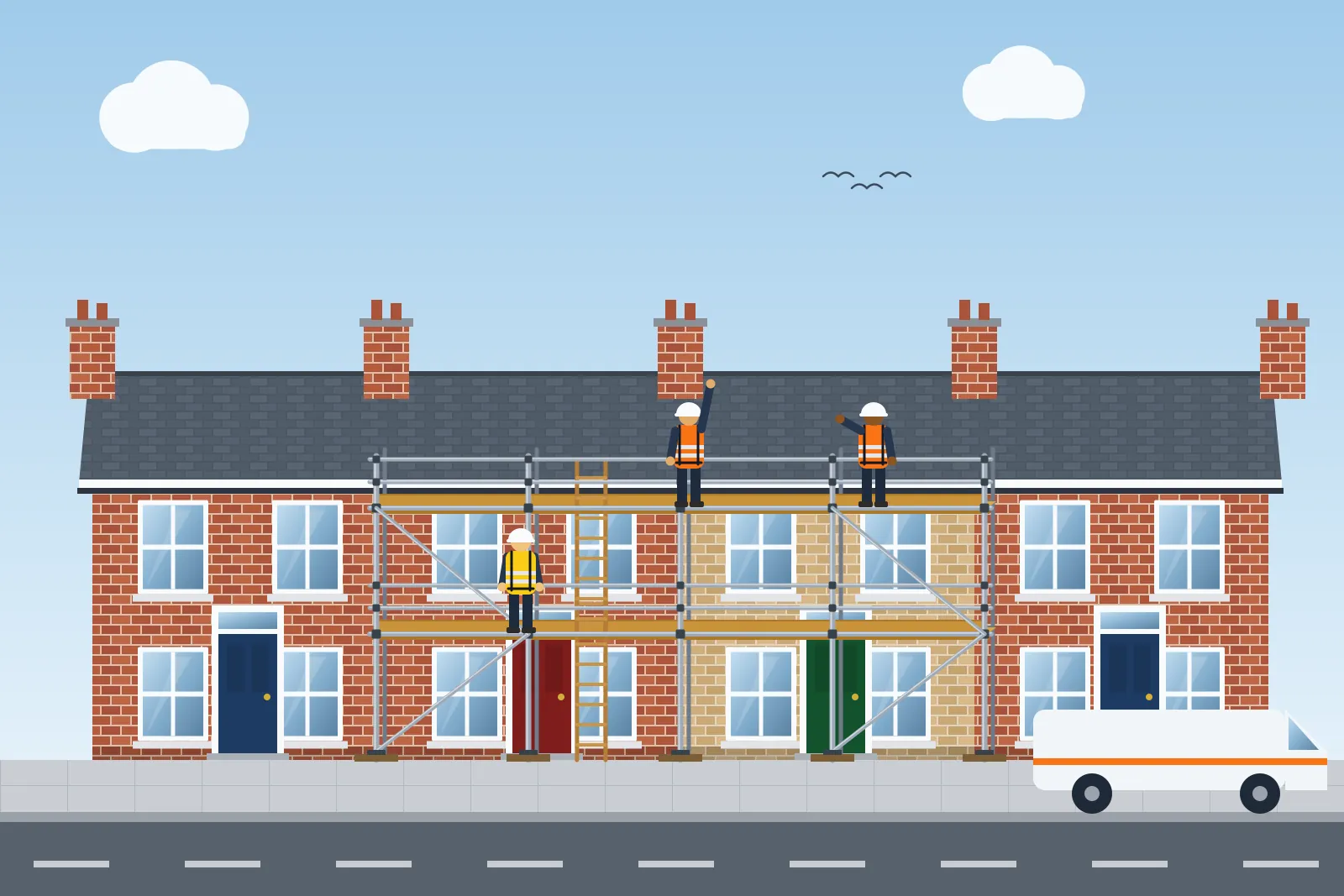
On a terraced house, the front scaffold often stands on the pavement, which usually means the scaffolder applying for a council licence and adding lights and protection for passers-by. Rear scaffolds on terraces can be harder: if there is no back alley, every tube and board may have to be carried through the house, which takes time and is reflected in the price.
Semi-detached and detached houses usually have more space around them, but also more elevations. A scaffold that wraps around the corners of a house costs more than a single elevation, though it can save money if several jobs are done at once. Bungalows are lower, but roof work still needs edge protection, so a single-lift scaffold around the eaves is common.
Roof and chimney scaffolding
For roof work the key feature is the top lift: a boarded platform at or just below gutter level, with guardrails and toe boards rising above the eaves to provide edge protection. Roofers work from this platform and use it to stage materials, and larger jobs may add a loading bay so tiles and slates can be lifted up and stacked safely.
Chimney work often needs a separate chimney scaffold that surrounds the stack, either supported from the main scaffold below or built on the roof itself with appropriate protection for the roof covering. Where a whole roof will be stripped for some time, a temporary roof – a sheeted cover on the scaffold – can keep the weather out while the work is done.
Rendering, repointing and painting
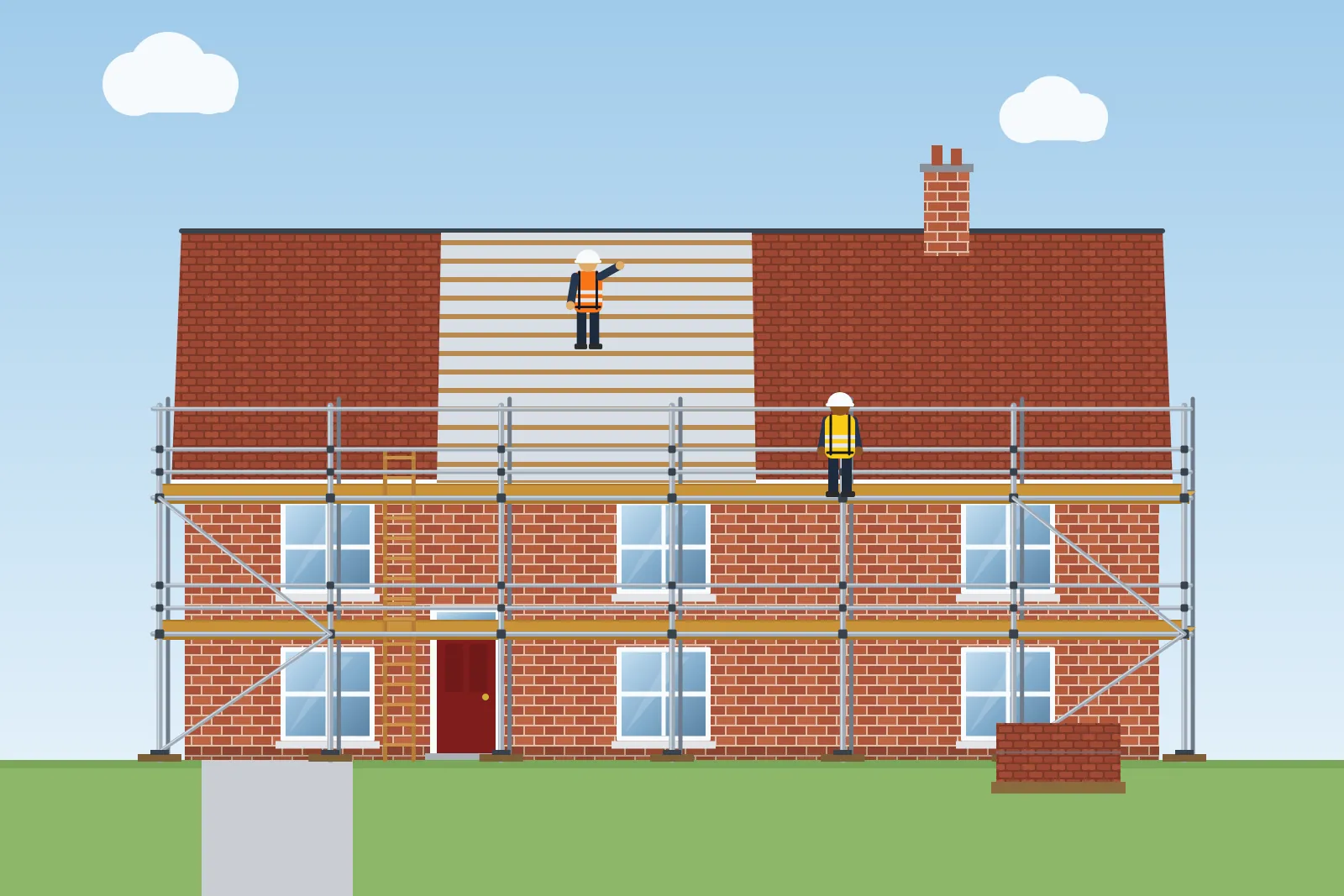
Rendering and repointing need steady access across a whole wall, so that work can be done evenly from top to bottom. Scaffolders will think about the spacing of lifts, how close the boards sit to the wall and where ties will go, because ties may need to be moved or made good as the wall is finished. Some renderers ask for the scaffold to be sheeted to protect fresh work from rain and wind – mention it when you request quotes.
Exterior painting on two- and three-storey houses is often done from scaffolding for the same reasons: preparation is easier, the painter isn't moving ladders every few minutes, and windows, fascias and gutters can be done in one visit while access is in place.
Extensions and loft conversions
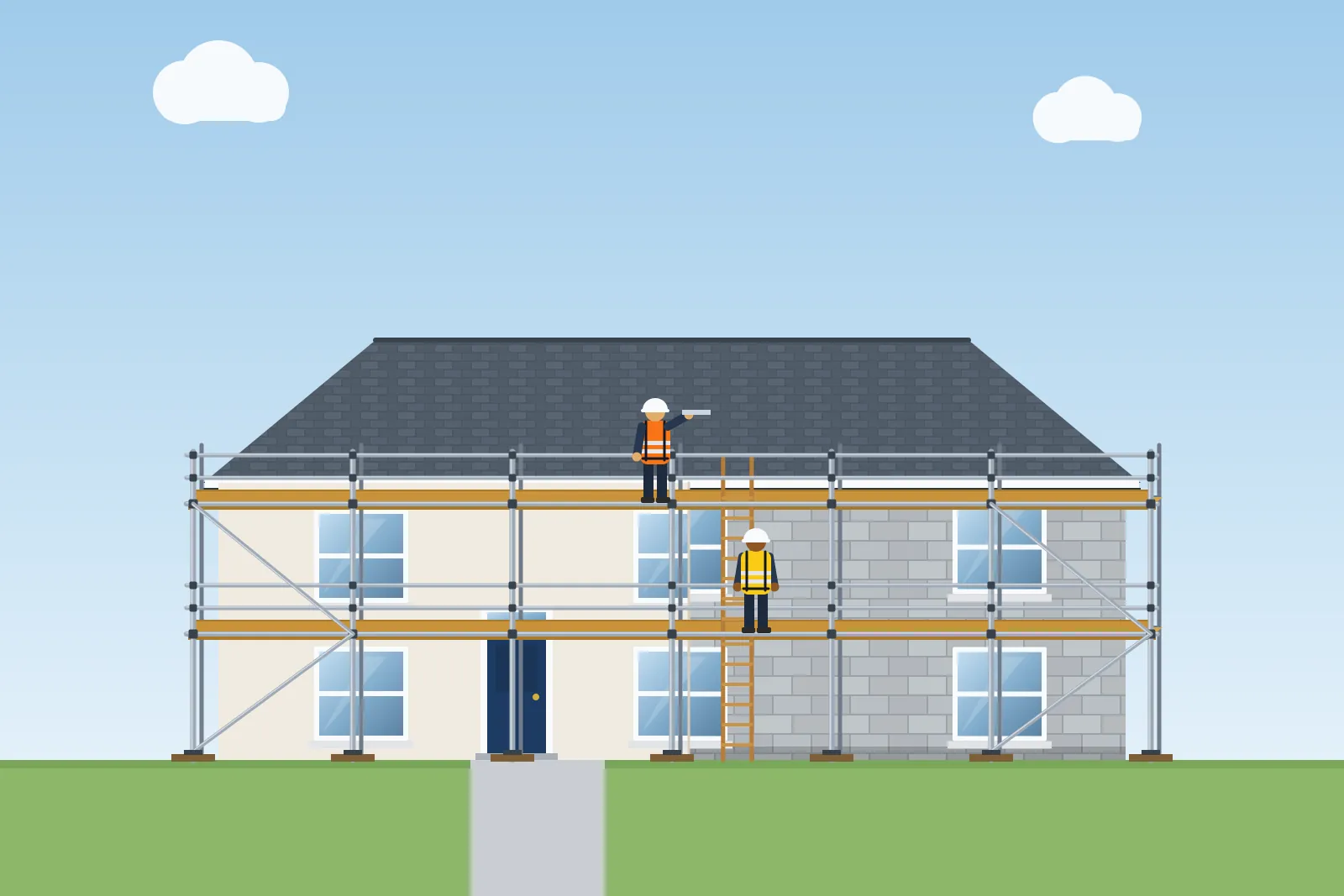
On a new extension, scaffolding usually goes up in stages. The first lift is added once the walls reach a certain height, and further lifts follow as the brickwork or blockwork rises, so bricklayers always have a sensible working height. Your builder will normally coordinate this with the scaffolder.
Loft conversions and dormers usually need access at roof level, edge protection and somewhere to land materials. On larger conversions, where part of the existing roof is opened up, a temporary roof can protect the house below until the new structure is watertight.
Neighbours, access and permissions
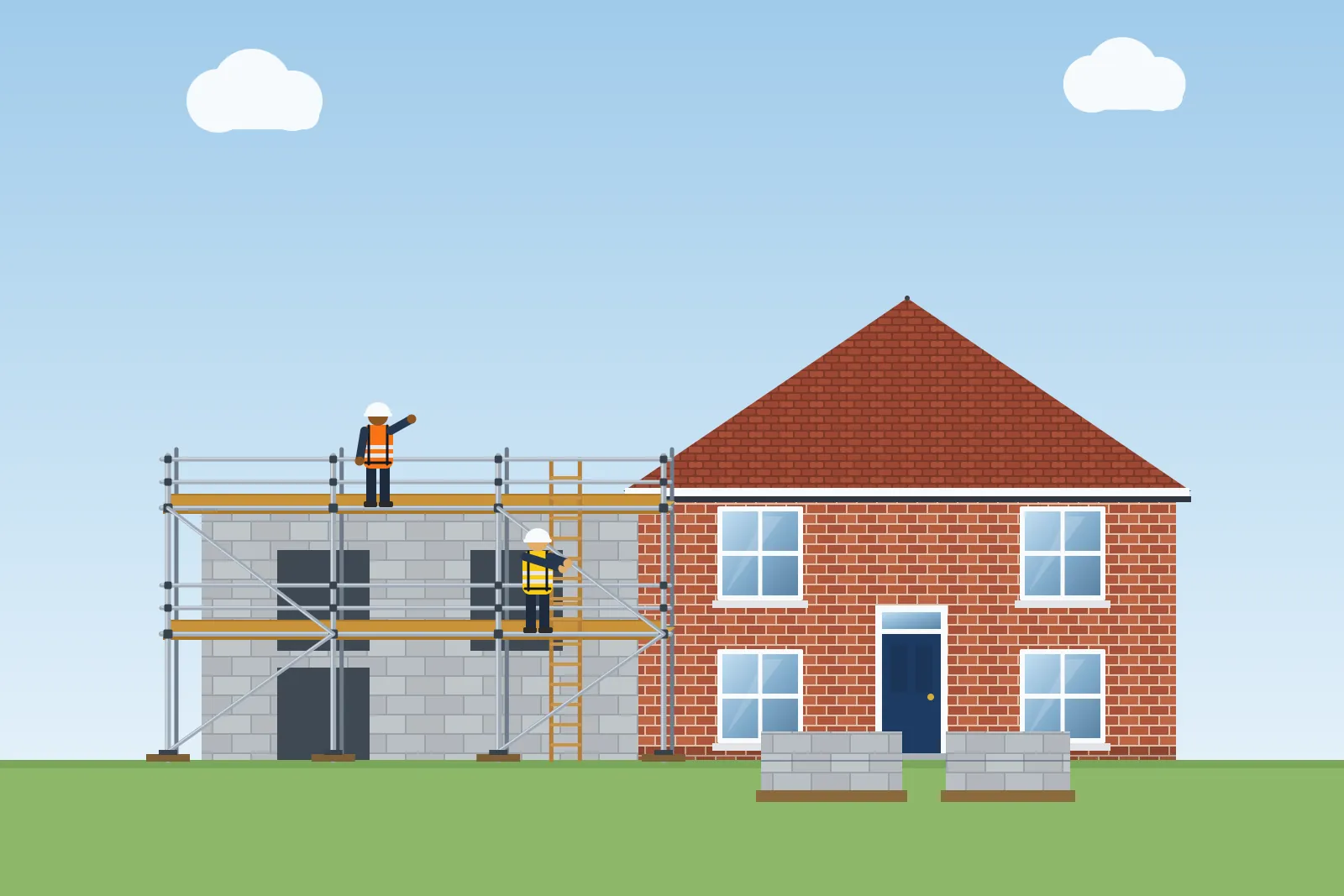
If any part of the scaffold will stand on, or overhang, a neighbour's property, you need their agreement before it goes up. On terraces and semis this is common, particularly at the rear. A short, friendly conversation – explaining how long the scaffold will be up and what the work is – usually goes a long way. Where agreement can't be reached, there are legal routes for some essential repairs, but they take time, so talk to neighbours early.
Scaffolding on a public pavement or road normally needs a licence from the local highway authority, and sometimes a parking suspension for the lorry. Scaffolding companies usually handle the application, but check whether the cost is included and allow time for it in your plans.
Keeping your home secure while the scaffold is up
A scaffold can make upper-floor windows easier to reach, so it's sensible to think about security. Ask whether the company can fit a scaffold alarm, and whether access ladders can be removed or boarded off at the end of each working day. Keep upstairs windows locked when nobody is working, and check whether your home insurer needs to be told that scaffolding will be in place.
When to book domestic scaffolding
Scaffolding companies are often busiest from spring to early autumn, when most roofing, rendering and painting is planned. If you have a fixed start date for your tradespeople, request scaffolding quotes a few weeks ahead – and allow extra time if a pavement licence is needed.
Decide early who is arranging the scaffold. Roofers and builders often book a scaffolder they work with regularly and include it in their price; others leave it to you. Either way is fine, but make sure everyone agrees on the dates, the height and position of the lifts, and who to call if the scaffold needs adapting.
Safety and permissions to check
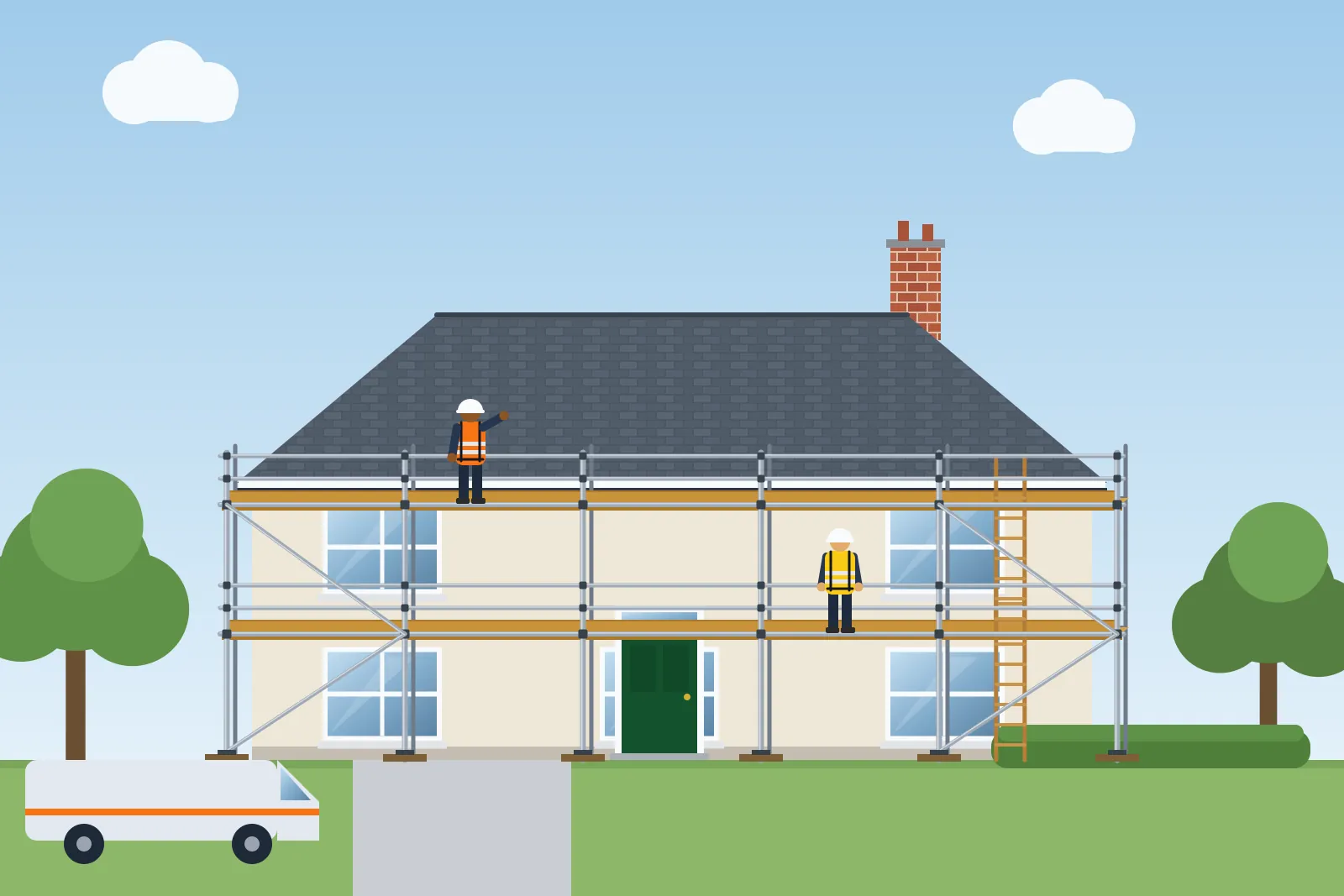
- The scaffold should be designed for the job and erected, altered and dismantled by competent scaffolders – not adjusted by other trades or by the homeowner.
- Scaffolds should be inspected after erection, at regular intervals and after anything that could affect them, such as strong winds. Ask how inspections will be done and recorded.
- Ask for confirmation that the scaffold is ready to use (often given as a handover certificate) before any work starts from it.
- Scaffolding on a public pavement or road normally needs a licence from the highway authority, usually applied for by the scaffolding company.
- Get your neighbour's agreement before any part of the scaffold stands on or overhangs their property.
This is general information, not professional advice. Requirements depend on the project, the building and where you are in the UK.
What affects domestic scaffolding prices
There's no standard price for scaffolding a house – each quote depends on the building and the job. These are the main factors behind the figure:
- Size and height
- The number of elevations, the length of each one and the number of lifts needed to reach the work.
- Access to the property
- A clear drive is quicker than carrying every tube through a house or up a long flight of steps.
- Hire period
- Most quotes include a set number of weeks, with a weekly charge if the scaffold stays up longer.
- Type of scaffold
- Chimney scaffolds, loading bays, temporary roofs and bridging over conservatories all add complexity.
- Licences and parking
- Pavement licences, parking suspensions and traffic considerations on busy roads.
- Extras
- Alarms, sheeting, netting, rubbish chutes and any return visits to adapt the scaffold.
Scaffolding is priced job by job, so the only reliable figure is a written quote. Our scaffolding hire cost guide explains every factor in more detail.
Comparing domestic scaffolding quotes
- Which elevations are scaffolded, and to what height
- The number of boarded lifts and where the top lift will be
- The hire period included, and the weekly charge afterwards
- Who applies for any pavement licence, and whether it is included
- Edge protection, loading bays or chimney scaffolds, if your job needs them
- How the scaffold will be inspected, and confirmation it is ready to use
- Public liability insurance and how the company deals with damage
- What happens if the job overruns or the scaffold needs adapting
Request domestic scaffolding quotes
Describe the job, add your postcode and compare quotes from local scaffolding companies. It's free, and you're under no obligation to go ahead.
Get free domestic scaffolding quotes
Describe your project once and compare quotes from local scaffolding companies that cover your area.
- Free to use
- No obligation
- Local scaffolding companies
- Quick online form
You'll continue to our quotes partner, MyJobQuote, to describe your scaffolding job.
Domestic Scaffolding near you
You can request domestic scaffolding quotes anywhere in the UK. These cities have their own local domestic scaffolding page:
Scaffolding hire in more towns and cities
Guides for domestic scaffolding
- Benefits of using scaffoldingWhy do roofers, renderers and builders prefer to work from scaffolding? The advantages are practical as much as anything – and they depend on the scaffold being designed, built and used properly.
- What should a scaffolding quote include?A clear, written scaffolding quote protects you and makes comparisons easy. Use this checklist to make sure nothing important is missing.
- Scaffolding for roof workFrom replacing a few slates to stripping and re-covering a whole roof, most roof work on houses is done from scaffolding. Here's what a roof scaffold involves and how to plan it.
- Scaffolding for house extensionsOn an extension, the scaffold changes as the building grows. Understanding how that works helps you plan the build – and understand the scaffolding part of your builder's quote.
- Scaffolding for renderingRender needs to be applied evenly across a whole wall, often in more than one coat. That's why renderers usually work from scaffolding – and why the scaffold needs to suit the job.
- Scaffolding for painting and decoratingPainting the outside of a house well is mostly about preparation – and preparation is far easier from a proper platform. Here's when painters use scaffolding and how to plan it.
Domestic Scaffolding: frequently asked questions
Do I need scaffolding to repair my roof?
For most roof work on a house – re-roofing, replacing slates or tiles, new flashings or ridge repairs – a scaffold with edge protection at the eaves is the usual way to provide safe access. Very small repairs may be done in other ways, but your roofer should explain the access they plan to use and why.
Who should arrange the scaffolding – me or my roofer?
Either can work. Many roofers and builders arrange scaffolding through a firm they trust and include it in their quote. Booking it yourself gives you more control over the price, but you'll need to coordinate dates and the scaffold design with your tradespeople.
How long does it take to put scaffolding up on a house?
A straightforward scaffold on one elevation of a two-storey house is often erected within a day. Larger wrap-round scaffolds, chimney scaffolds or temporary roofs take longer. The company will give you an idea of timings when they quote.
Will scaffolding damage my house or garden?
A good scaffolder takes care to protect the property – using sole boards on soft ground, padding where tubes touch the building and planning where ties go. Ask how ties will be fixed and made good afterwards, and agree how any damage would be handled before work starts.
Do I need to tell my neighbours about scaffolding?
It's courteous to tell them, and essential to get their agreement if any part of the scaffold will stand on or overhang their land. Letting them know how long it will be up and what work is planned usually avoids problems.
Is my home secure with scaffolding up?
Scaffolding can make upper windows easier to reach, so take sensible precautions: keep windows locked, ask about scaffold alarms and whether ladder access can be removed or blocked overnight, and check with your home insurer.
Ready to get domestic scaffolding quotes?
One short form, local scaffolding companies, no obligation.
Get Free Scaffolding Quotes