Scaffolding that rises with the walls
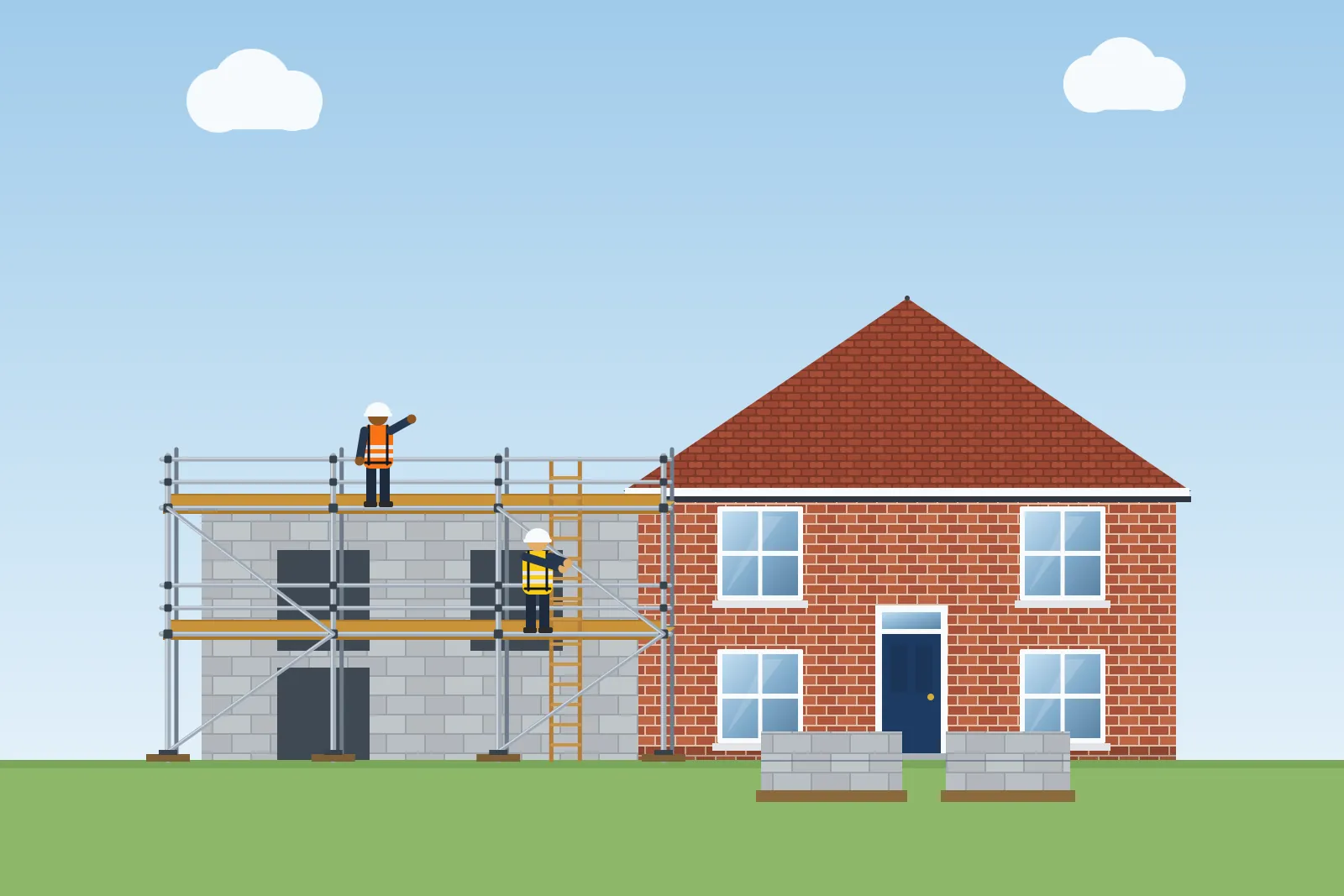
On a new extension, scaffolding is usually erected in stages. Once the walls reach a certain height, the first lift goes up so bricklayers can keep working at a comfortable level. More lifts are added as the walls rise, then the scaffold is adapted for the roofers and finally removed once the outside is finished.
Each of those visits takes time, so quotes for extensions often include a set number of adaptations, with extra visits charged separately.
Single-storey and two-storey extensions
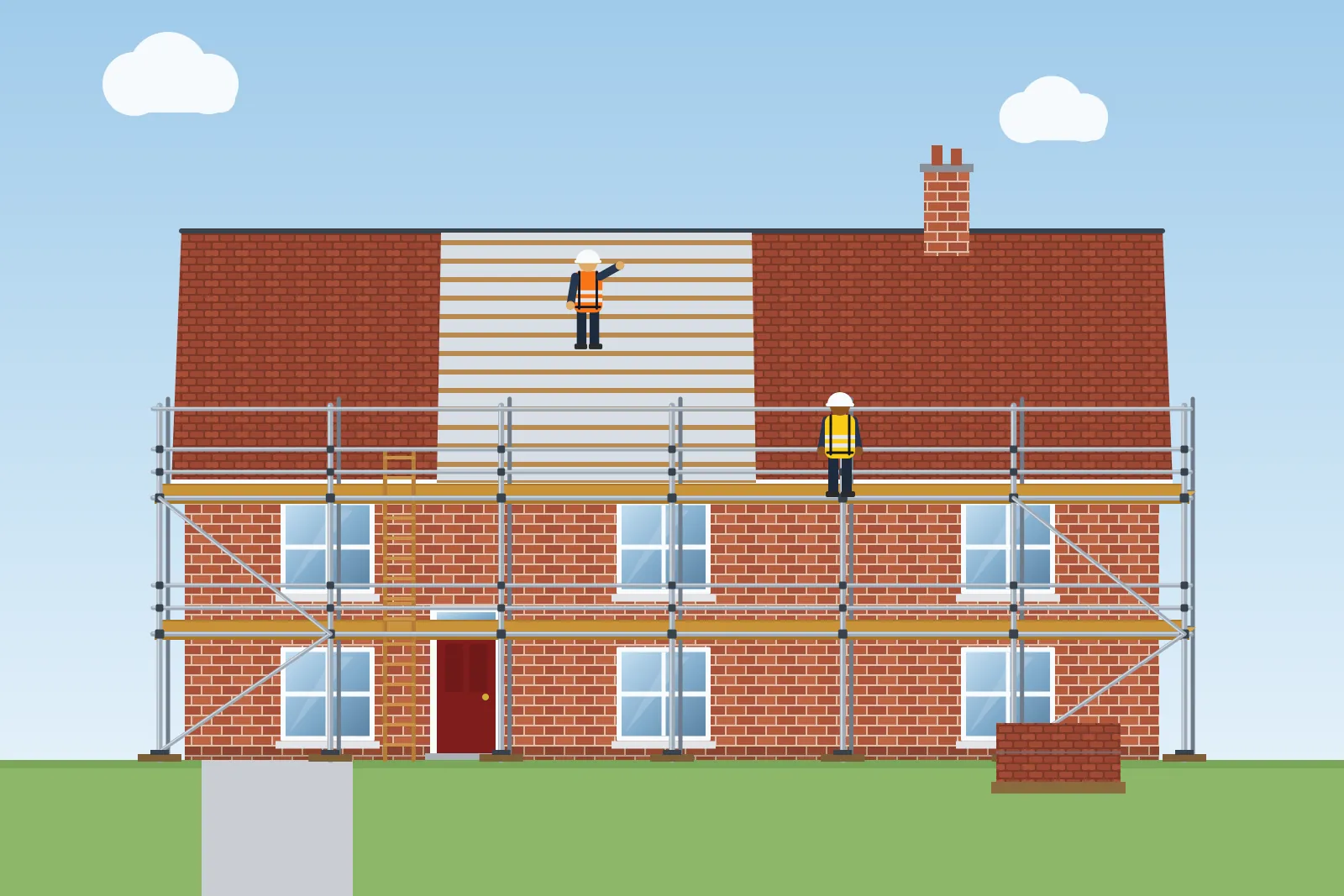
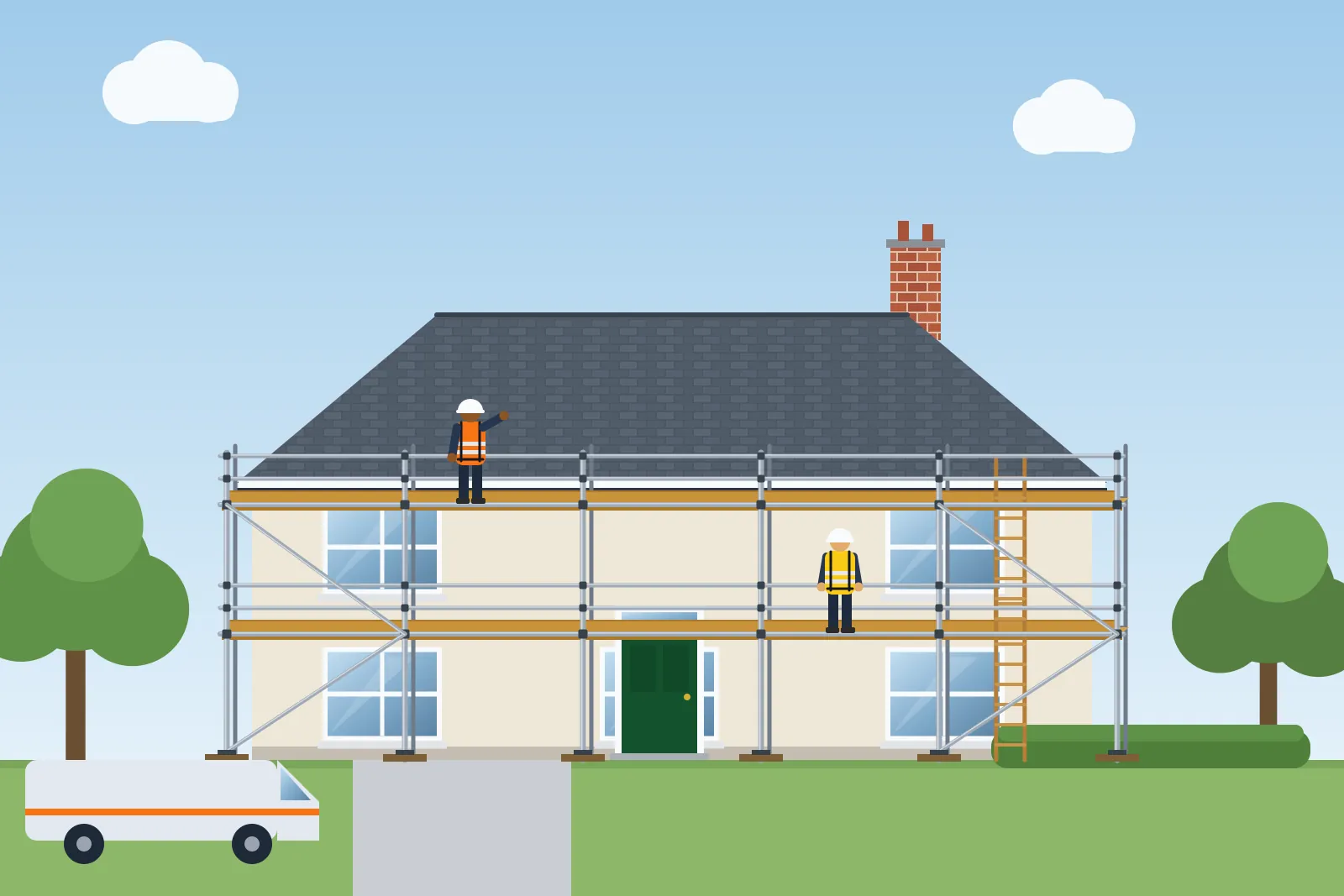
Single-storey extensions may need only a low scaffold for the walls and roof, with edge protection for roof work. Two-storey extensions need taller scaffolds, often tied back to the existing house, and the roof junction between old and new needs careful access.
Loft conversions and dormers
Loft conversions need access at roof level for building dormers, fitting windows and making the roof watertight again. The scaffold usually covers the rear elevation on terraces and semis, with edge protection and a loading point for materials. On larger conversions, a temporary roof may be used while the existing roof is opened.
Ready to get prices?
Describe your project and compare free scaffolding quotes from local companies – there's no obligation.
- Free to use
- No obligation
- Local scaffolding companies
- Quick online form
You'll continue to our quotes partner, MyJobQuote, to describe your scaffolding job.
Neighbours and access
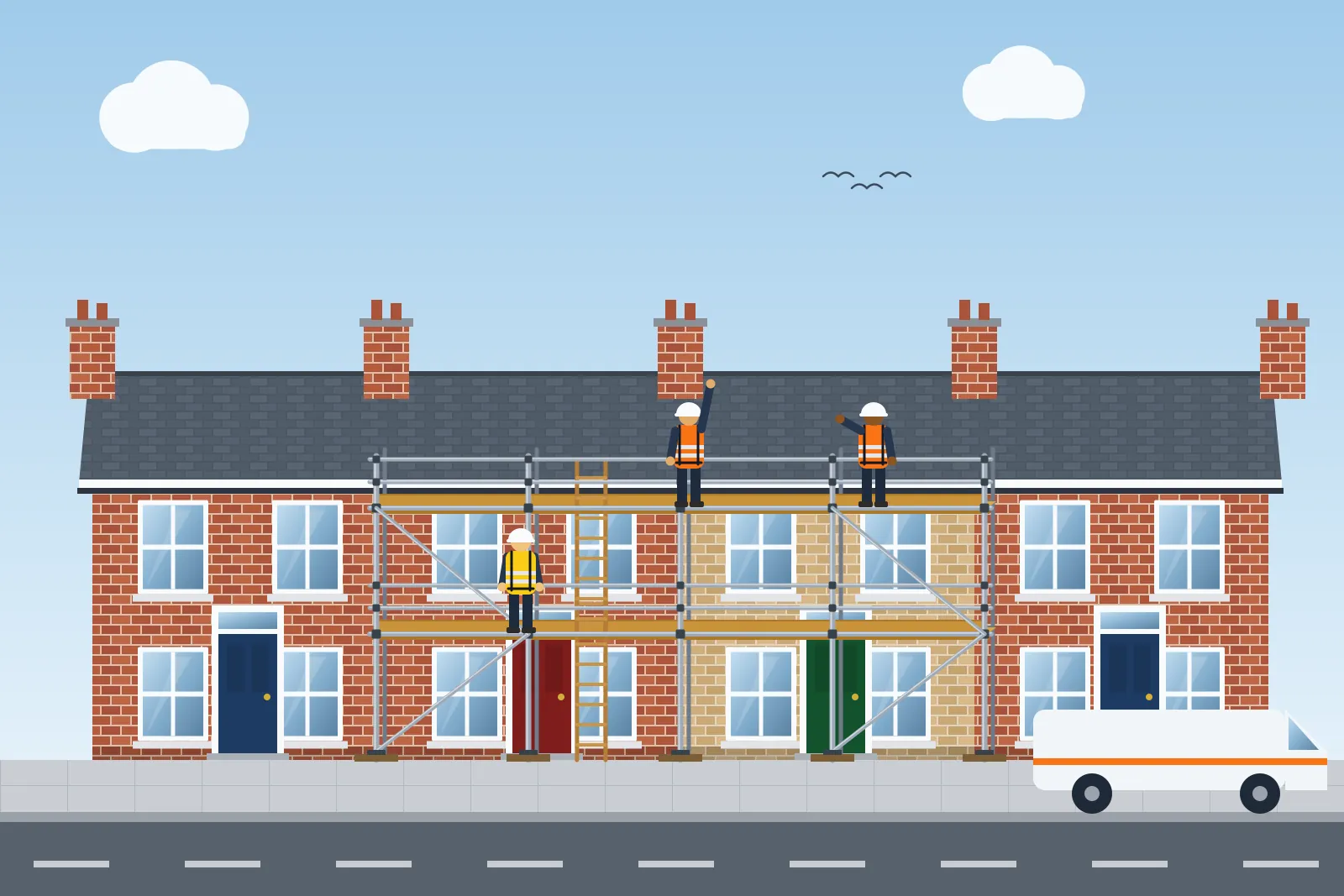
Extensions are often close to the boundary, so the scaffold may need to stand on or overhang a neighbour's land. You'll need their agreement first. Work on party walls may also involve the Party Wall etc. Act 1996, which your builder or surveyor can advise on separately from the scaffolding.
Who arranges the scaffold
Builders usually organise scaffolding as part of an extension, because it has to be timed with the brickwork. If you're arranging it yourself, agree the dates, heights and number of adaptations with your builder, and ask scaffolding companies to quote on that basis.