Independent scaffolding
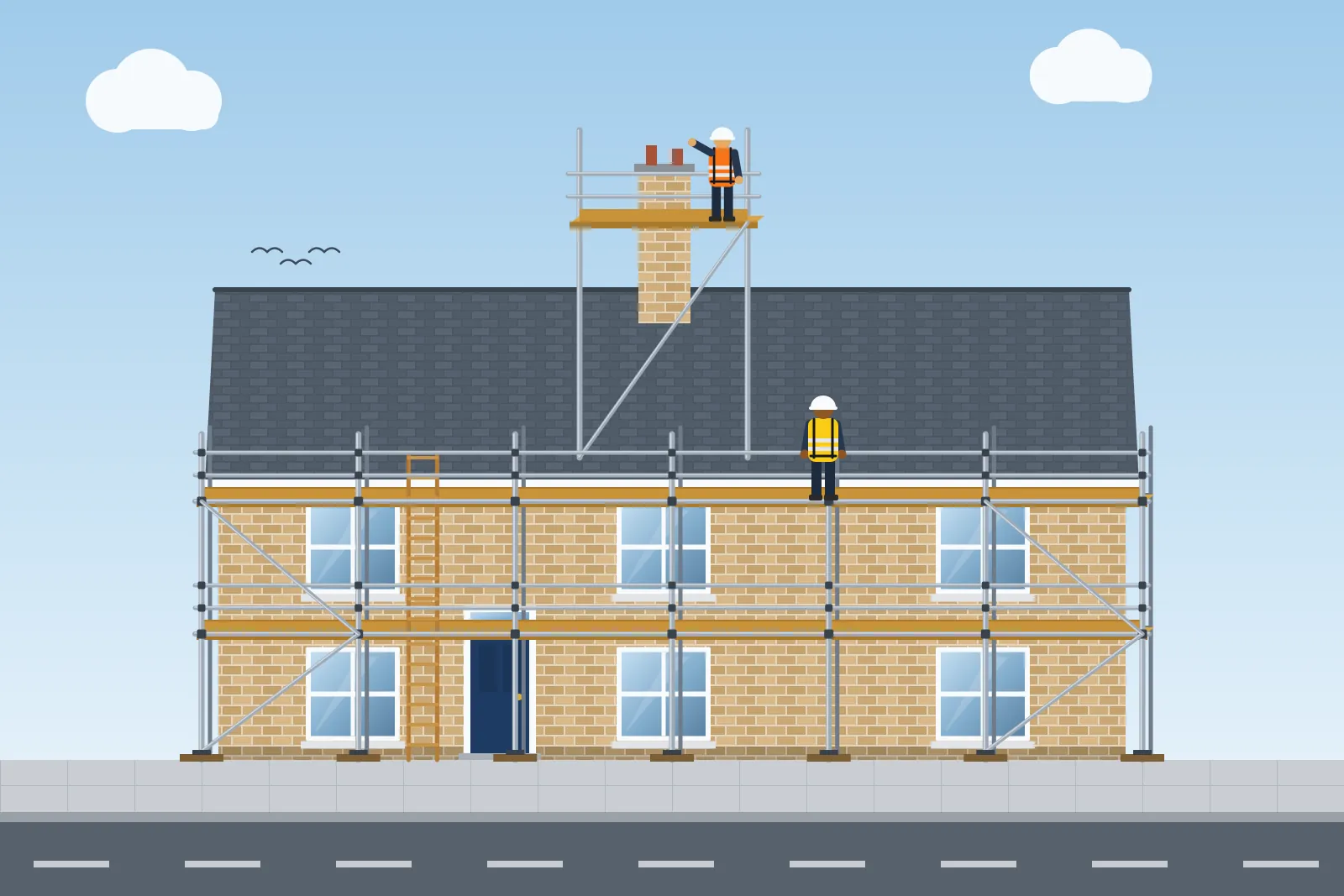
The most common scaffold on UK buildings. It has two rows of standards – one close to the wall and one further out – joined by ledgers and transoms, so it stands up independently of the building. It's still tied to the structure for stability, but it doesn't rely on the wall to carry its load.
Independent scaffolds are used for most domestic and commercial work: roofs, chimneys, rendering, painting, windows and facade repairs.
Single (putlog) scaffolding
A single scaffold has only one row of standards, away from the wall. The inner ends of the putlogs – horizontal tubes with a flattened end – rest in the brickwork itself. It's traditionally associated with new brickwork, where the putlogs can sit in the joints as the wall rises.
Because it relies on the wall for support, it isn't suitable for every building, and independent scaffolds are far more common on existing homes.
System scaffolding
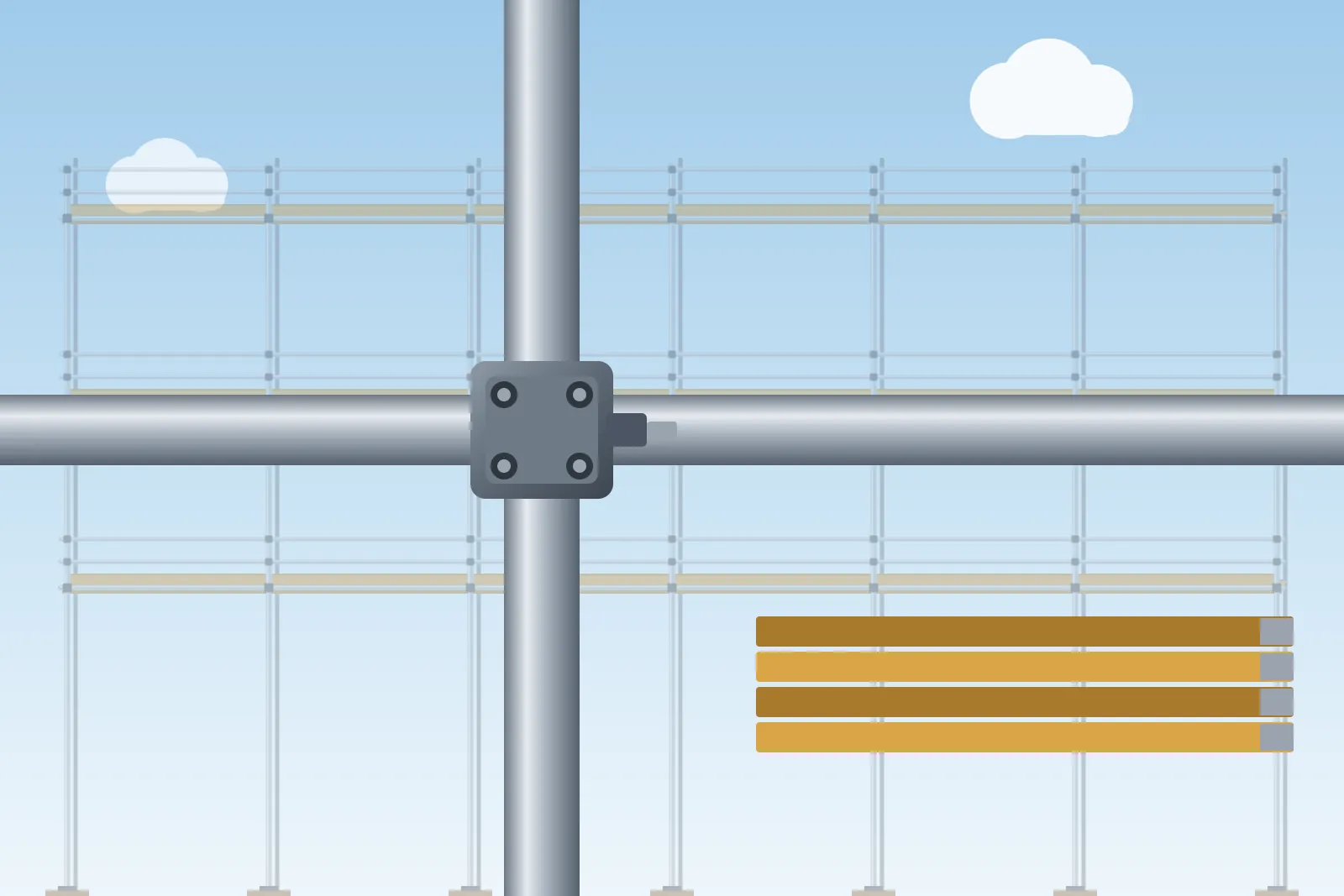
System scaffolds use prefabricated standards, ledgers and transoms that lock together at fixed points, rather than loose tubes joined with fittings. They can be quicker to erect on regular shapes and are widely used on construction and commercial projects.
Tube and fitting scaffolds remain popular because they adapt easily to irregular buildings. Many scaffolding companies use both, depending on the job.
Scaffold towers
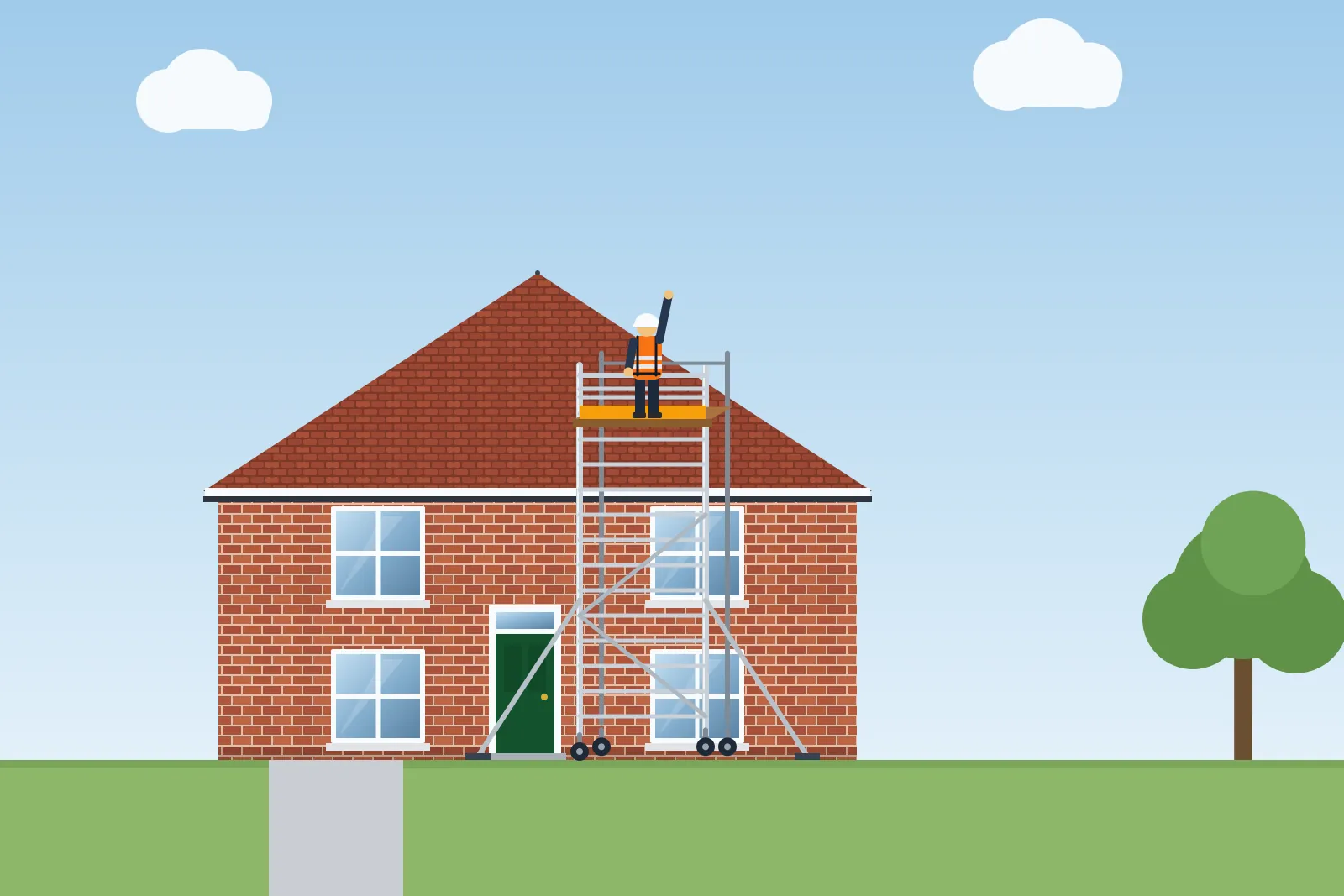
Tower scaffolds – usually mobile aluminium access towers – are free-standing frames with a single working platform. They suit short, contained jobs such as gutters, fascias and high ceilings. They should be erected only by competent people following the manufacturer's instructions.
Ready to get prices?
Describe your project and compare free scaffolding quotes from local companies – there's no obligation.
- Free to use
- No obligation
- Local scaffolding companies
- Quick online form
You'll continue to our quotes partner, MyJobQuote, to describe your scaffolding job.
Access scaffolding
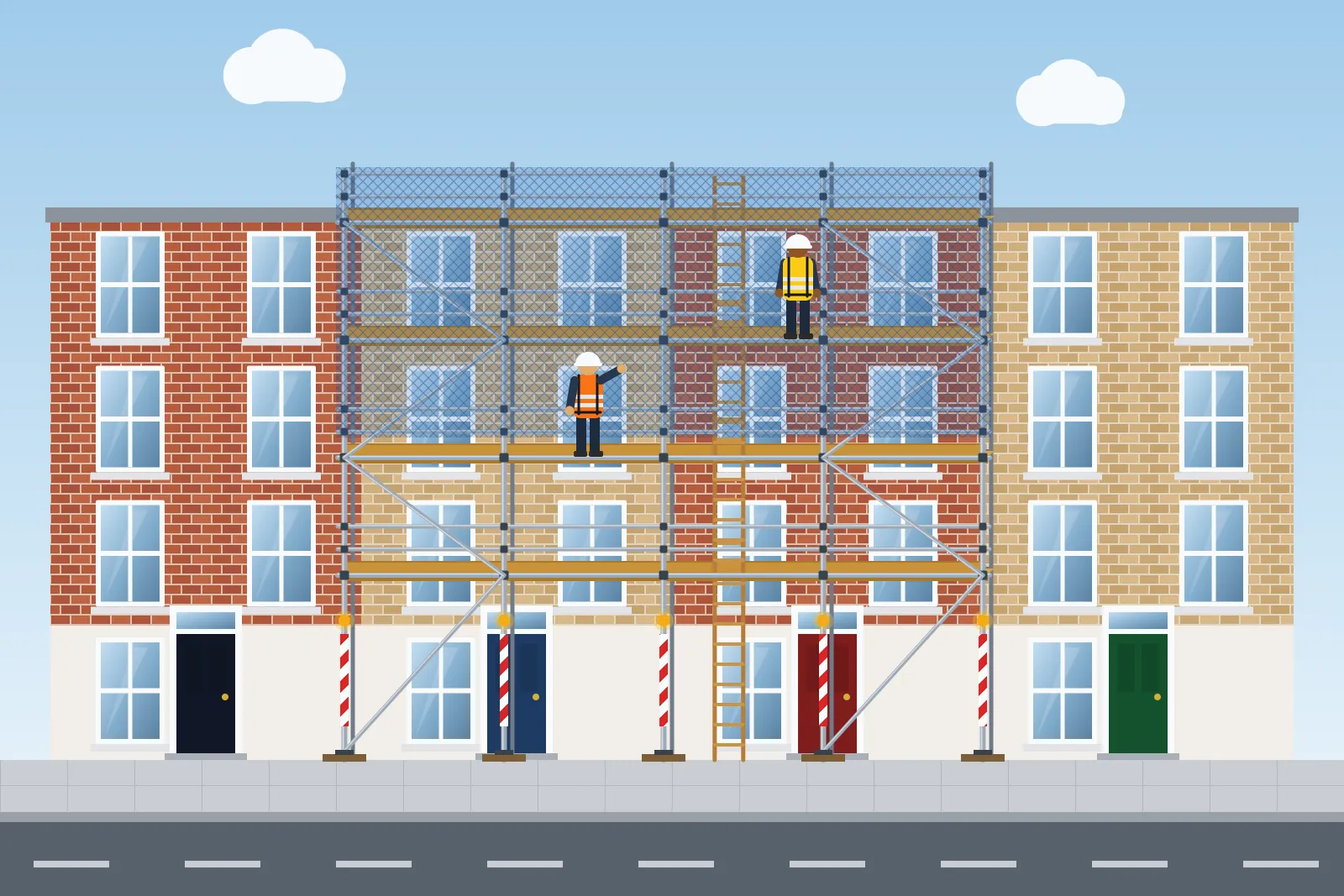
Access scaffolding is a general term for any scaffold whose main purpose is to let people reach and work on part of a building, rather than to support a structure. Most domestic scaffolds fall into this category, from a simple front-elevation scaffold to a wrap-round scaffold for a re-roof.
Chimney scaffolding
A chimney scaffold surrounds a chimney stack with a boarded platform and guardrails so it can be repaired, repointed or taken down. It may be supported from a scaffold below or built on the roof with measures to spread the load and protect the roof covering.
Temporary roof systems
A temporary roof is a covered structure on top of a scaffold that keeps rain off a building while the permanent roof is stripped or replaced. Temporary roofs need designing for wind and other loads, and they add significantly to the scaffold's cost and complexity.
Edge protection systems
Edge protection is a barrier – usually guardrails and toe boards – at the open edge of a roof or floor. On pitched roofs it's commonly provided by extending a scaffold above the gutter line; on flat roofs and construction sites it can also be a free-standing or clamp-on system.