Commercial Scaffolding Quotes
Facade repairs on an office block, refurbishment of a parade of shops or scaffolding for a new-build scheme – request quotes from scaffolding contractors with experience of commercial projects.
- Offices, shops and retail units
- Blocks of flats and mixed-use buildings
- New-build and refurbishment
- Facade and roof maintenance
- Hoardings, netting and sheeting
- Phased and long-term hire
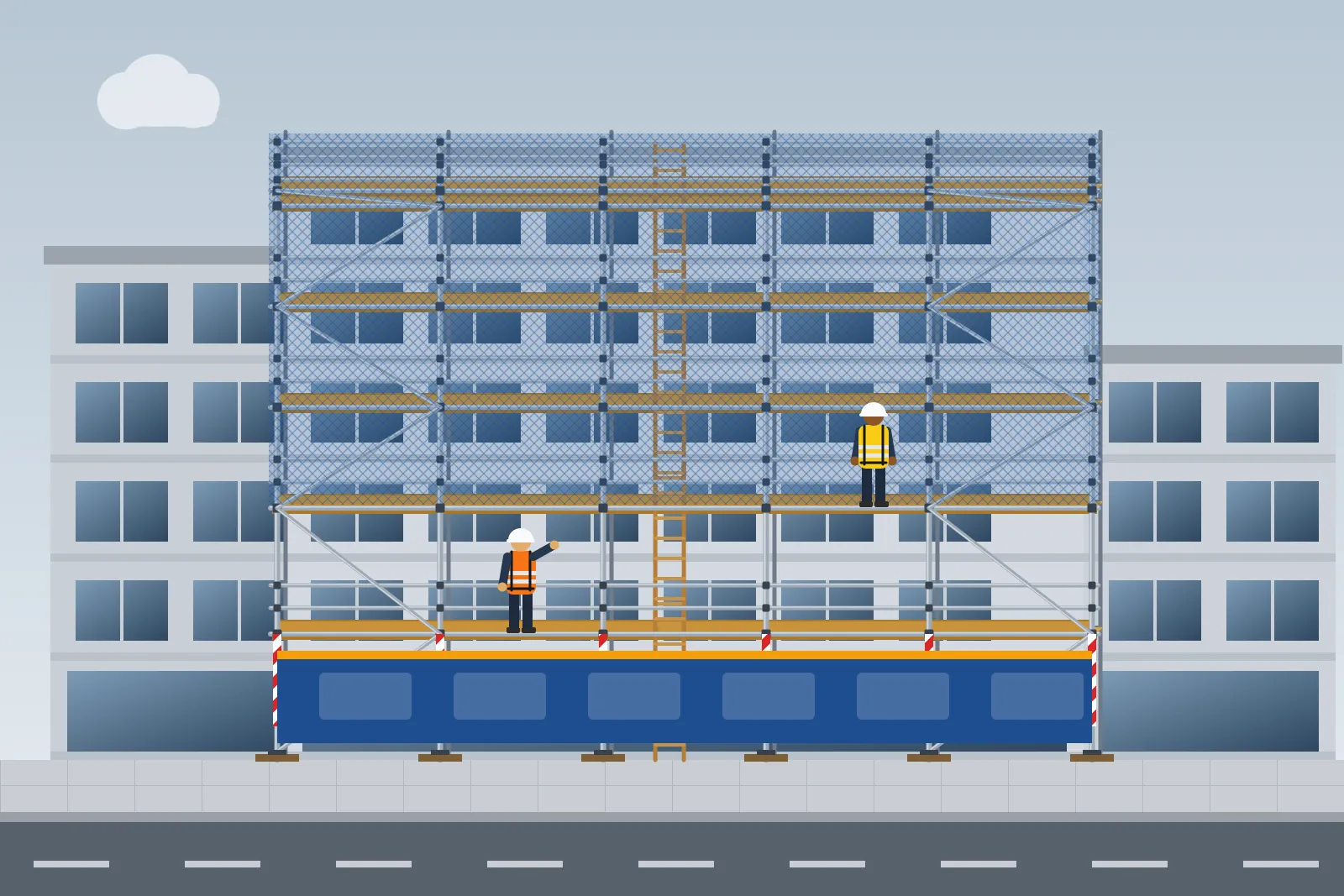
Commercial scaffolding covers everything from a two-lift scaffold on the front of a high-street shop to multi-storey access on an office block or a new residential development. What these projects have in common is that the scaffold has to fit around a wider programme of work – and often around a building that stays open, a busy street and members of the public.
On commercial jobs, the scaffold is usually planned rather than simply put up. The loads it will carry, how it is tied to the building, how the public will be protected and how it will change as the work progresses all need thinking about before the first tube is delivered. Larger or more complex scaffolds may need a specific design.
If you manage a building, run a business or are planning a construction project, you can describe the site, the work and the timescale and receive quotes from scaffolding contractors who take on commercial work. The more detail you can give – drawings, photos, heights, access restrictions – the more comparable the quotes will be.
Commercial projects that need scaffolding
Office and retail refurbishment
Facade repairs, window replacement, cladding work and redecoration on occupied commercial buildings.
Blocks of flats
Roof replacement, balcony repairs, external wall work and maintenance programmes on residential blocks.
New-build construction
Scaffolding that rises with the building, with loading areas and access for bricklayers, roofers and other trades.
Schools, churches and public buildings
Roof and stonework repairs, often timed around term dates, services or opening hours.
Roof plant and maintenance
Access to plant rooms, rooflights and flat roofs, with edge protection where needed.
Shopfronts and high streets
Short-term scaffolds and protected walkways on busy pavements, often erected outside trading hours.
Planning and designing a commercial scaffold
Scaffolds need to be designed for the loads they will carry and the way they will be used. Many straightforward scaffolds are built to recognised industry design guidance, such as the NASC's TG20 guidance for tube and fitting scaffolds, while larger, heavily loaded, sheeted or unusual structures often need a bespoke design from a scaffold designer.
When you request quotes, describe what the scaffold is for: the trades that will use it, any materials to be stored on it, whether it needs sheeting or netting, and whether loading bays, hoists or stair towers are required. Contractors can then price a scaffold that matches the work rather than making assumptions.
Protecting the public and keeping the street open
Commercial scaffolds often sit on busy pavements. Depending on the location, the scaffolding contractor may need a licence from the highway authority, lighting and hazard marking at street level, debris netting or brick guards to stop anything falling, and sometimes a covered walkway or gantry so pedestrians can pass underneath.
Hoardings at ground level help keep the public out of the working area, and some projects need road closures or traffic management while materials are delivered. All of this affects cost and lead times, so it should be discussed at the quoting stage.
Scaffolding on construction sites
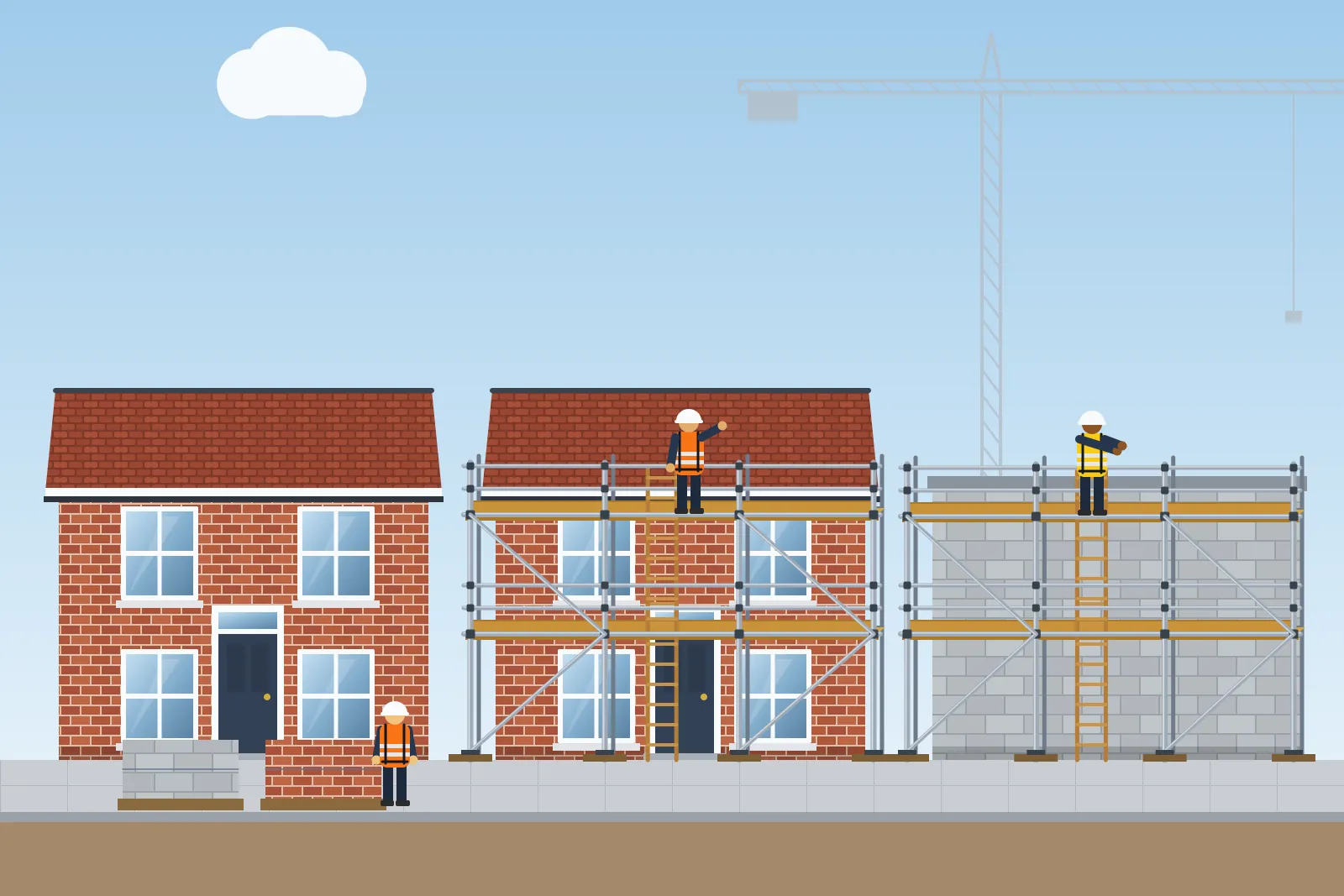
On new-build projects, scaffolding is usually erected in stages as the structure rises, and then adapted for the roofing, glazing and finishing trades. Loading bays, materials hoists and stair towers may be added, and the scaffold may stay in place for many months.
Construction work in Great Britain is generally subject to the Construction (Design and Management) Regulations 2015, so the scaffold should be planned as part of the wider project, with clear responsibilities for who designs, erects, inspects and alters it.
Working on occupied buildings
Offices, shops, schools and blocks of flats often stay in use while the work is done. Scaffolders can plan around entrances, fire escapes and deliveries, keep walkways open and, where needed, erect or dismantle outside normal hours. Residents and tenants may need advance notice, especially if windows or balconies will be covered.
Security matters on occupied buildings too. Ask how access to the scaffold will be controlled out of hours – for example with alarms, locked ladder gates or boarded-off access points.
Project duration and long-term hire
Commercial scaffolds are often up for months rather than weeks. Quotes typically include erection, dismantling and an initial hire period, followed by a weekly or periodic hire charge. Adaptations – adding lifts, moving boards, creating new access points – are usually charged separately.
Because hire charges add up over a long project, it pays to plan the scaffold around the programme: phasing work elevation by elevation, removing sections that are no longer needed, and agreeing in advance how variations will be priced.
When to involve a scaffolding contractor
Bring a scaffolding contractor in early, ideally while the work is still being planned. Scaffold design, licence applications, traffic management and lead times for specialist equipment can all affect the start date, and early input helps avoid redesigns later.
If you are a building manager or business owner rather than a contractor, it can help to ask your main contractor or surveyor how the scaffold has been specified. Clear information – heights, loads, durations and access requirements – makes quotes much easier to compare.
Responsibilities and safety
- Scaffolds should be erected, altered and dismantled by competent scaffolders, under the supervision of someone competent to oversee the work.
- Under the Work at Height Regulations 2005, scaffolds used for construction work are generally inspected after erection, at intervals of no more than seven days and after any event likely to affect their stability, such as strong winds.
- Ask for risk assessments and method statements for the scaffold work, and confirmation (often a handover certificate) that the scaffold is complete and safe to use.
- Ask whether the scaffold will be built to recognised design guidance or needs a bespoke design, particularly for sheeted, heavily loaded or unusual scaffolds.
- Check the contractor's insurance cover is appropriate for the size and type of project.
This is general information, not professional advice. Requirements depend on the project, the building and where you are in the UK.
What affects commercial scaffolding prices
Commercial scaffolding is priced project by project. These are the factors that usually make the biggest difference:
- Size, height and complexity
- The area to be scaffolded, the number of lifts, and features such as cantilevers, bridges or stair towers.
- Design requirements
- Bespoke designs, heavy loading or sheeting can require extra materials, ties and engineering input.
- Public protection
- Netting, brick guards, gantries, hoardings, lighting and any traffic management.
- Licences and permits
- Highway licences, parking suspensions and road closures, which vary by council.
- Duration and phasing
- Long hire periods, phased erection and the number of adaptations during the project.
- Working hours
- Out-of-hours or weekend erection to avoid disrupting a business or busy street.
Scaffolding is priced job by job, so the only reliable figure is a written quote. Our scaffolding hire cost guide explains every factor in more detail.
Comparing commercial scaffolding quotes
- A clear description or drawing of the scaffold being priced
- Whether it is built to standard design guidance or a bespoke design
- Loading capacity, sheeting, netting and any loading bays or hoists
- Licences, permits and traffic management – who arranges and pays
- The initial hire period and how ongoing hire is charged
- How adaptations and variations will be priced
- Inspection arrangements, handover certificates and RAMS
- Insurance cover appropriate to the project
Request commercial scaffolding quotes
Describe the job, add your postcode and compare quotes from local scaffolding companies. It's free, and you're under no obligation to go ahead.
Get free commercial scaffolding quotes
Describe your project once and compare quotes from local scaffolding companies that cover your area.
- Free to use
- No obligation
- Local scaffolding companies
- Quick online form
You'll continue to our quotes partner, MyJobQuote, to describe your scaffolding job.
Commercial Scaffolding near you
You can request commercial scaffolding quotes anywhere in the UK. These cities have their own local commercial scaffolding page:
Scaffolding hire in more towns and cities
Commercial Scaffolding: frequently asked questions
What counts as commercial scaffolding?
Broadly, any scaffolding for non-domestic buildings and construction projects: offices, shops, blocks of flats, schools, churches, warehouses and building sites. The difference from domestic work is usually scale, duration and the need to plan around the public and a wider construction programme.
Do commercial scaffolds need to be designed?
Every scaffold should be suitable for its use. Many straightforward scaffolds are built to recognised design guidance, while larger, heavily loaded, sheeted or unusual scaffolds often need a bespoke design. The scaffolding contractor can advise which applies to your project.
How is long-term scaffold hire charged?
Most quotes include erection, dismantling and an initial hire period, followed by a weekly or periodic charge for as long as the scaffold stays up. Adaptations are usually priced separately, so agree how variations will be charged before work starts.
Can scaffolding go up while a business stays open?
Yes, in most cases. Contractors can keep entrances and walkways open, add covered walkways or gantries, and erect or dismantle outside opening hours. Explain how the building is used when requesting quotes.
Who inspects a commercial scaffold?
Inspections must be carried out by a competent person – often the scaffolding contractor, though on larger sites the principal contractor may arrange them. For construction work, scaffolds are generally inspected after erection, at least every seven days and after events such as high winds, with the results recorded.
Can I get quotes for scaffolding on a block of flats?
Yes. Managing agents, freeholders and residents' associations regularly need scaffolding for roofs, balconies and external walls. Share as much detail as you can – number of storeys, elevations, and any access constraints – so contractors can price accurately.
Ready to get commercial scaffolding quotes?
One short form, local scaffolding companies, no obligation.
Get Free Scaffolding Quotes