Who is responsible?
In a block of flats or a converted house, the roof, external walls and other shared parts are usually the responsibility of the freeholder, a management company or the owners together, depending on how the building is owned. The lease or title deeds set out who repairs what and how costs are shared.
That means the first step is often not getting quotes but checking the paperwork and talking to the other owners, the freeholder or the managing agent.
Leasehold flats in England and Wales
Where leaseholders pay for major works through the service charge, the landlord may need to consult them before the works go ahead. Under section 20 of the Landlord and Tenant Act 1985, consultation requirements apply to qualifying works where any leaseholder's contribution would be more than £250. Managing agents usually run this process.
If you're a leaseholder, you can still request scaffolding quotes to understand likely costs, but the decision usually sits with the landlord or management company.
Tenements and flatted buildings in Scotland
In Scotland, work to the shared parts of a tenement – roof, chimneys, front wall – is usually a common repair, with costs shared between owners according to the title deeds and the rules that apply to the building. Many buildings have a factor who organises repairs once owners agree.
Ready to get prices?
Describe your project and compare free scaffolding quotes from local companies – there's no obligation.
- Free to use
- No obligation
- Local scaffolding companies
- Quick online form
You'll continue to our quotes partner, MyJobQuote, to describe your scaffolding job.
What block scaffolding involves
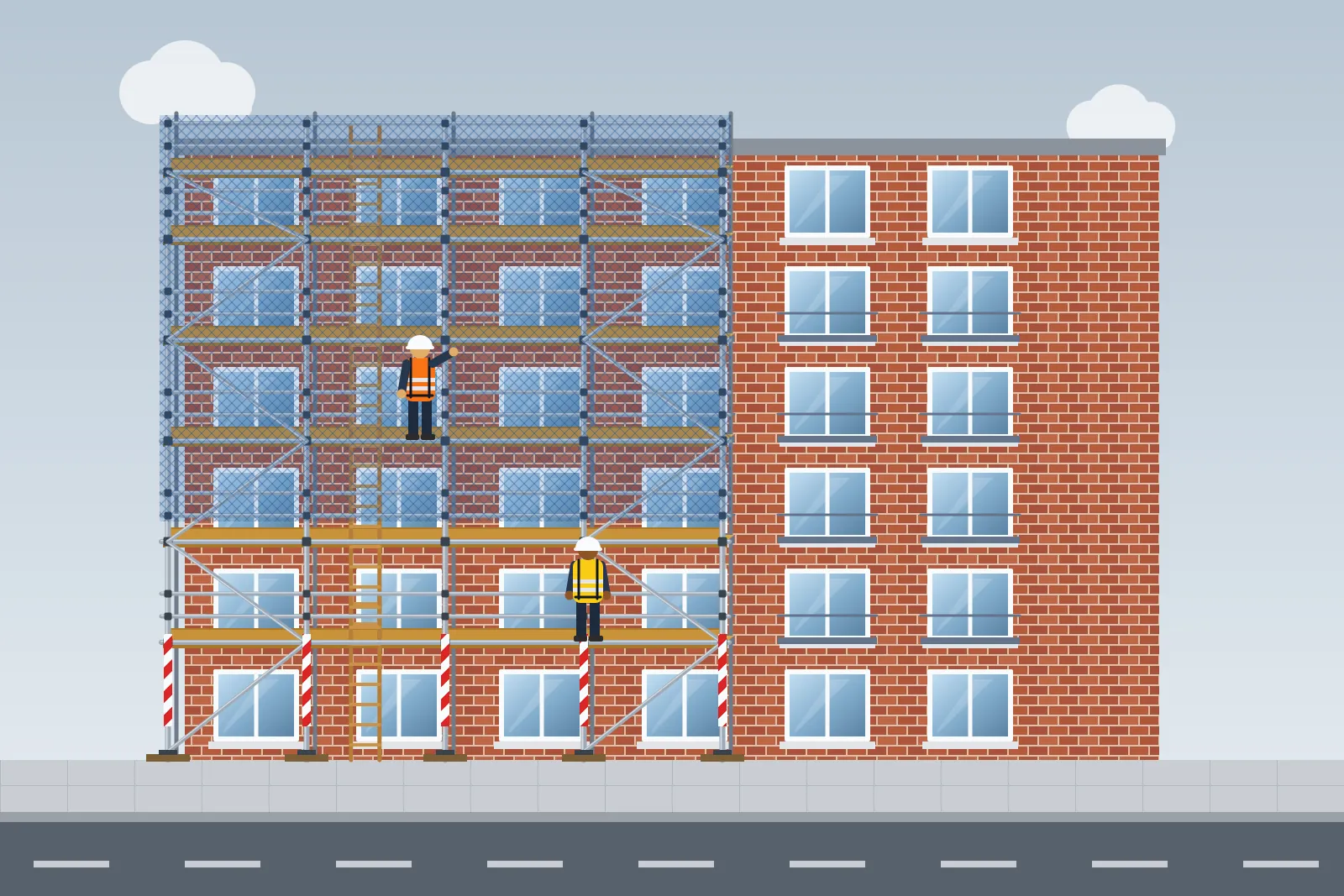
- Multi-lift scaffolds, often with debris netting
- Protected walkways over entrances and pavements
- Pavement licences and sometimes traffic management
- Access for residents, including fire exits and bin stores
- Long hire periods, often phased elevation by elevation
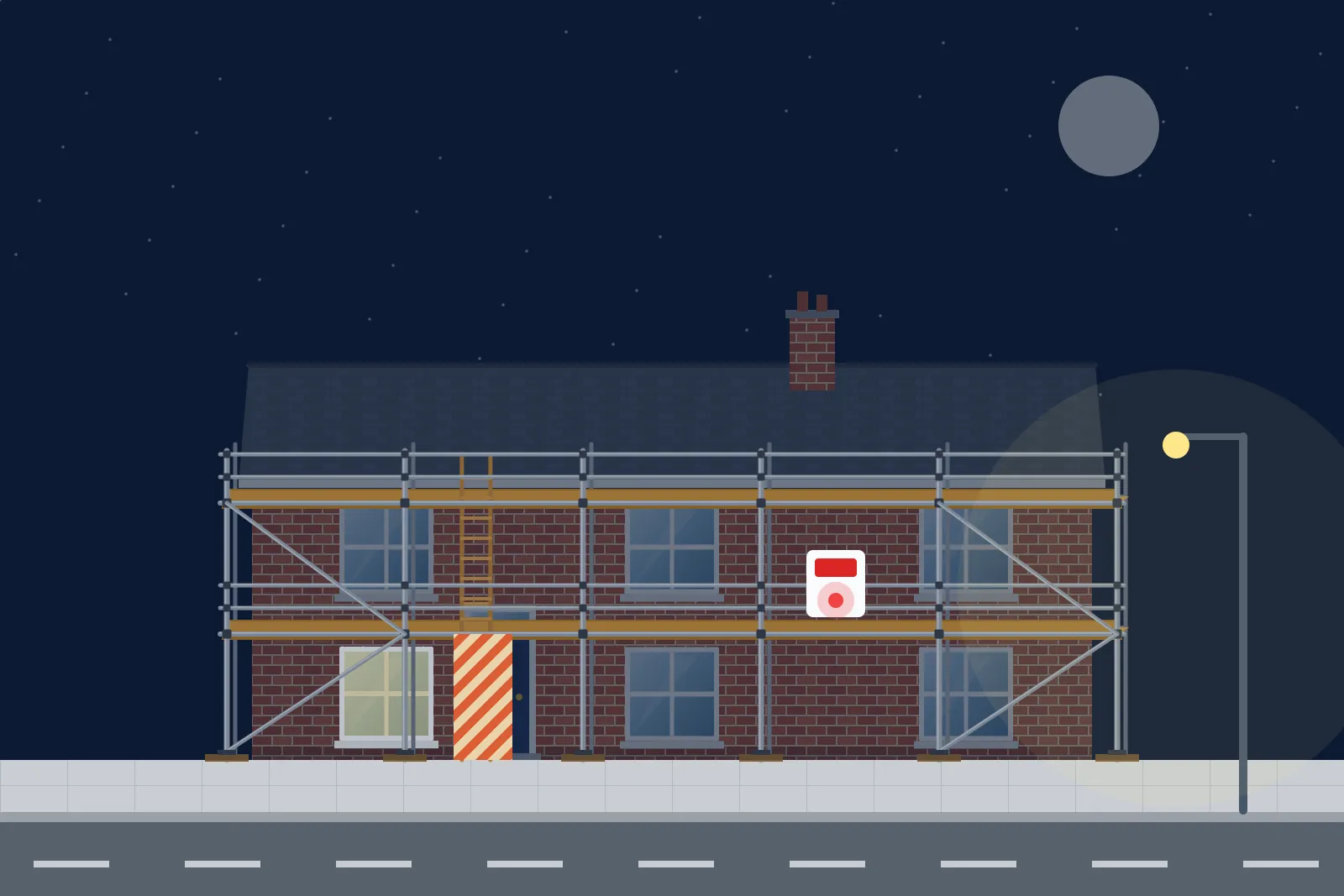
- Security measures to stop unauthorised access to flats
Communicating with residents
Scaffolding affects residents' daily lives – light, privacy, balconies and access. Advance notice, a named contact and regular updates make a big difference. Residents should also know not to use or alter the scaffold.