Why scaffolding affects security
With a scaffold up, upstairs windows, balconies and flat roofs are reachable from a boarded platform. That doesn't mean a break-in is likely, but it does mean a little extra care is sensible – particularly on longer jobs, when the house is empty or when the scaffold is in a quiet spot.
Scaffold alarms
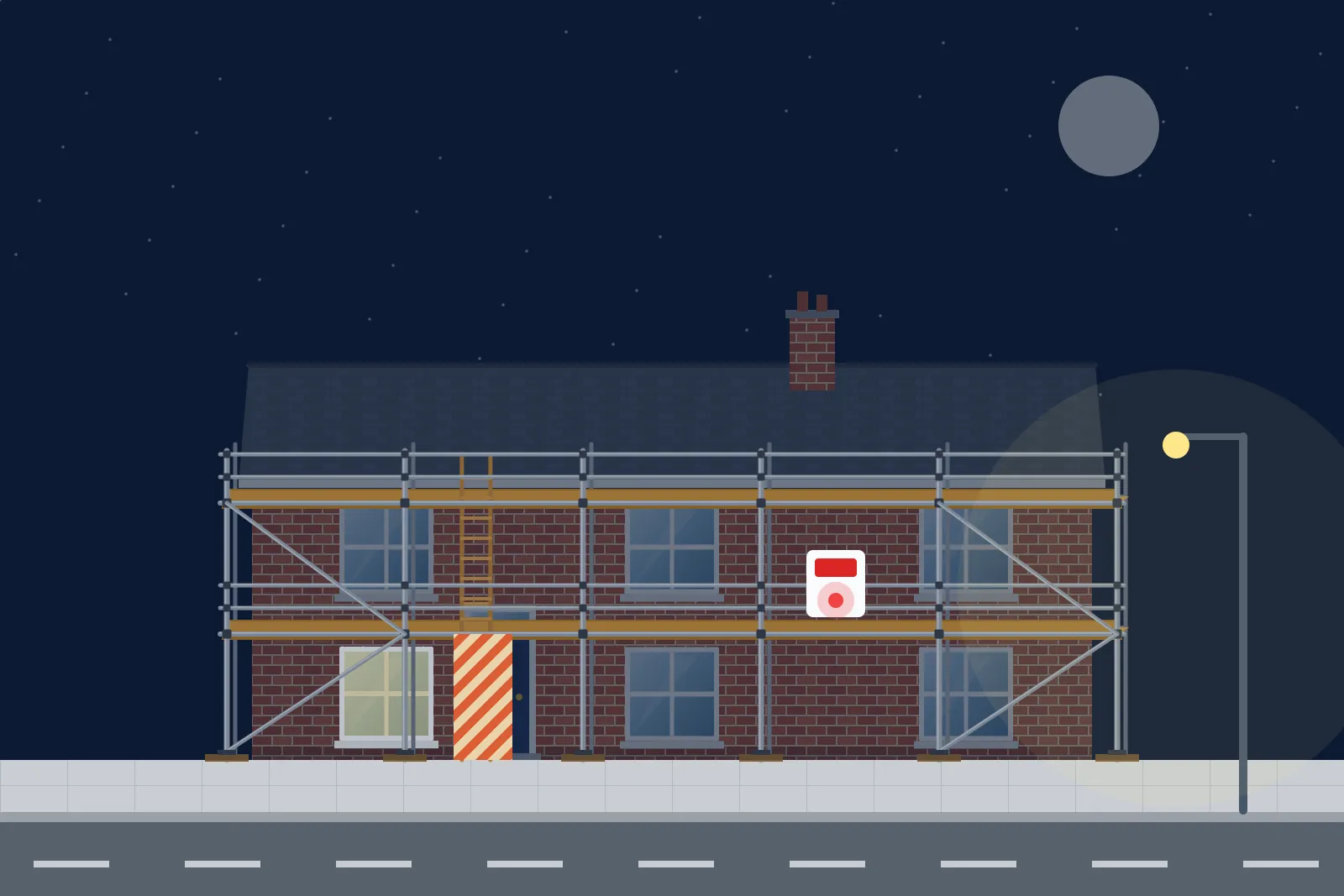
Many scaffolding companies can supply a scaffold alarm: battery-powered sensors fitted to the scaffold that sound an alarm, and sometimes send alerts, if someone climbs it out of hours. Ask whether alarms are available, how they're set and unset, and what they cost.
Make sure the tradespeople using the scaffold know how the alarm works, so it doesn't go off every morning.
Blocking access out of hours
The simplest measure is making the scaffold harder to climb when nobody is working.
- Removing or boarding off access ladders at the end of the working day
- Fitting a ladder guard – a board that covers the rungs – with a lock
- Keeping gates to side passages and rear gardens locked
- Not leaving tools or loose materials on the scaffold overnight
Ready to get prices?
Describe your project and compare free scaffolding quotes from local companies – there's no obligation.
- Free to use
- No obligation
- Local scaffolding companies
- Quick online form
You'll continue to our quotes partner, MyJobQuote, to describe your scaffolding job.
Around the house
- Keep upstairs windows and roof lights locked when no one is working
- Use timer lights or security lighting if the house will be empty
- Close curtains or blinds on rooms with valuables visible from the scaffold
- Let a trusted neighbour know how long the scaffold will be up
Insurance
Some home insurance policies have conditions or notification requirements when scaffolding is erected. Check your policy, or ask your insurer, before the scaffold goes up.
Confirm too that the scaffolding company has public liability insurance, and that any alarm or security measures you've agreed are written into the quote.