Scaffolding Services Explained
From a single chimney scaffold to a temporary roof over a whole house, scaffolding companies offer much more than tubes and boards. Here's what each service involves, and how to get quotes for the one you need.
- Roof scaffolding and edge protection
- Chimney scaffolds
- Temporary roofs
- Internal scaffolding
- Erection and dismantling
- Adaptations and inspections
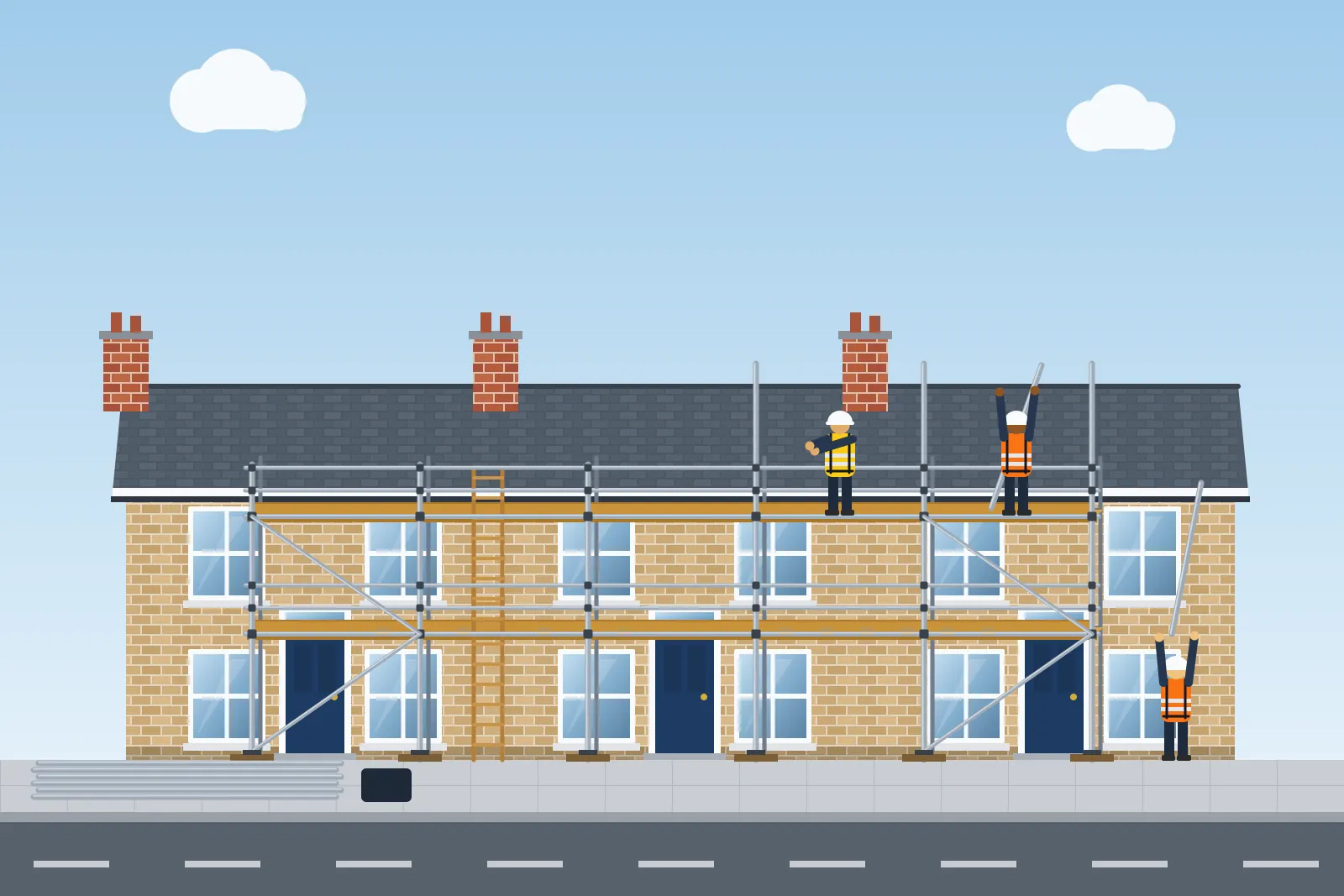
When people talk about hiring scaffolding, they usually mean a complete service rather than simply renting equipment. A scaffolding company surveys the job, works out what kind of scaffold is needed, delivers the materials, erects the structure, checks it before handing it over, adapts it if the work changes and finally takes it down and removes it.
Within that, there are specialist services aimed at particular jobs: roof scaffolds with edge protection, scaffolds built around chimney stacks, temporary roofs that keep the weather out during major works, and internal scaffolds for high ceilings and stairwells. Knowing what these are – and which one your project needs – makes it much easier to brief companies and compare their quotes.
This page gives a plain-English overview of each service. It is not a guide to building or altering scaffolding yourself: that should always be left to trained, competent scaffolders.
Scaffolding services local companies quote for
Independent scaffolding
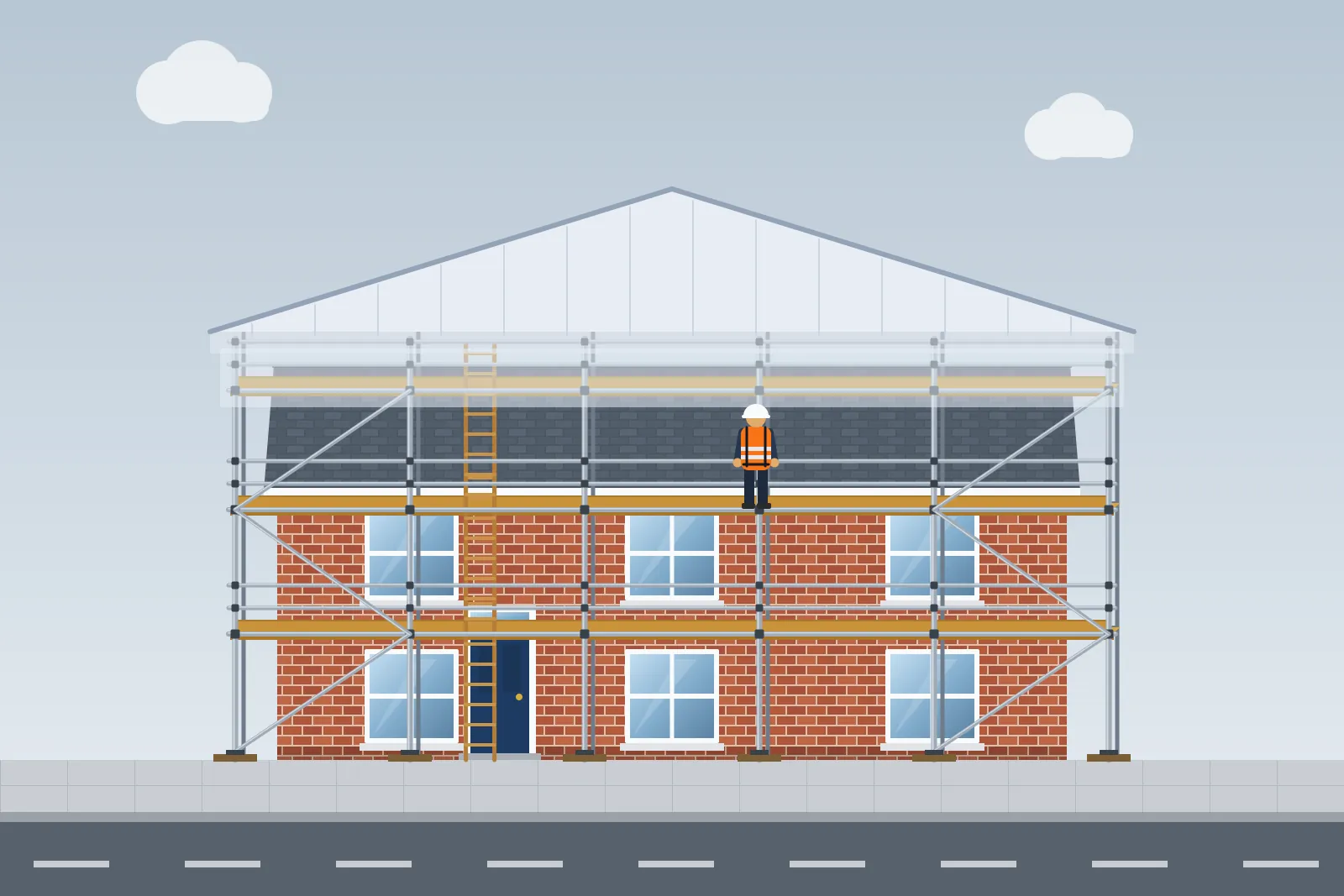
The familiar scaffold with two rows of standards, standing on its own and tied to the building for stability.
Roof scaffolding and edge protection
A working platform at eaves level with guardrails rising above the gutter line to protect people working on the roof.
Chimney scaffolding
A scaffold around a chimney stack so it can be repointed, repaired, rebuilt or taken down.
Temporary roofs
A sheeted roof structure on top of the scaffold that keeps rain off the building while the real roof is replaced.
Internal scaffolding
Scaffolds inside buildings for high ceilings, atriums, stairwells, churches and halls.
Loading bays and access
Reinforced bays for landing materials, plus stair towers and ladder access for larger jobs.
Scaffolding erection
Erecting a scaffold starts well before anything arrives on site. The company looks at the building, the ground, the access for the lorry and the work to be done, then decides on the type and layout of scaffold – and, for more complex structures, has it designed.
On the day, the scaffold is built up lift by lift on sole boards and base plates, with ties into the building and bracing for stability, and guardrails and toe boards on every working platform. Once it is complete, it is inspected before anyone else uses it, and the company confirms it is ready – often with a handover certificate. This is skilled, safety-critical work, and it should only ever be carried out by competent scaffolders.
Scaffolding dismantling and collection
At the end of the hire, the scaffold is taken down in a controlled sequence, broadly the reverse of how it went up, with materials lowered rather than dropped and loaded straight onto the lorry. Ties are removed as the scaffold comes down, and the holes left by them can be made good if that has been agreed.
Dismantling usually needs the same kind of planning as erection: parking for the lorry, a pavement licence if one is still needed, and clear agreement that every trade has finished. Once the scaffold is down, putting it back up for a forgotten job costs almost as much as the first time, so check the work carefully before you ask for it to be removed.
Roof scaffolding and edge protection
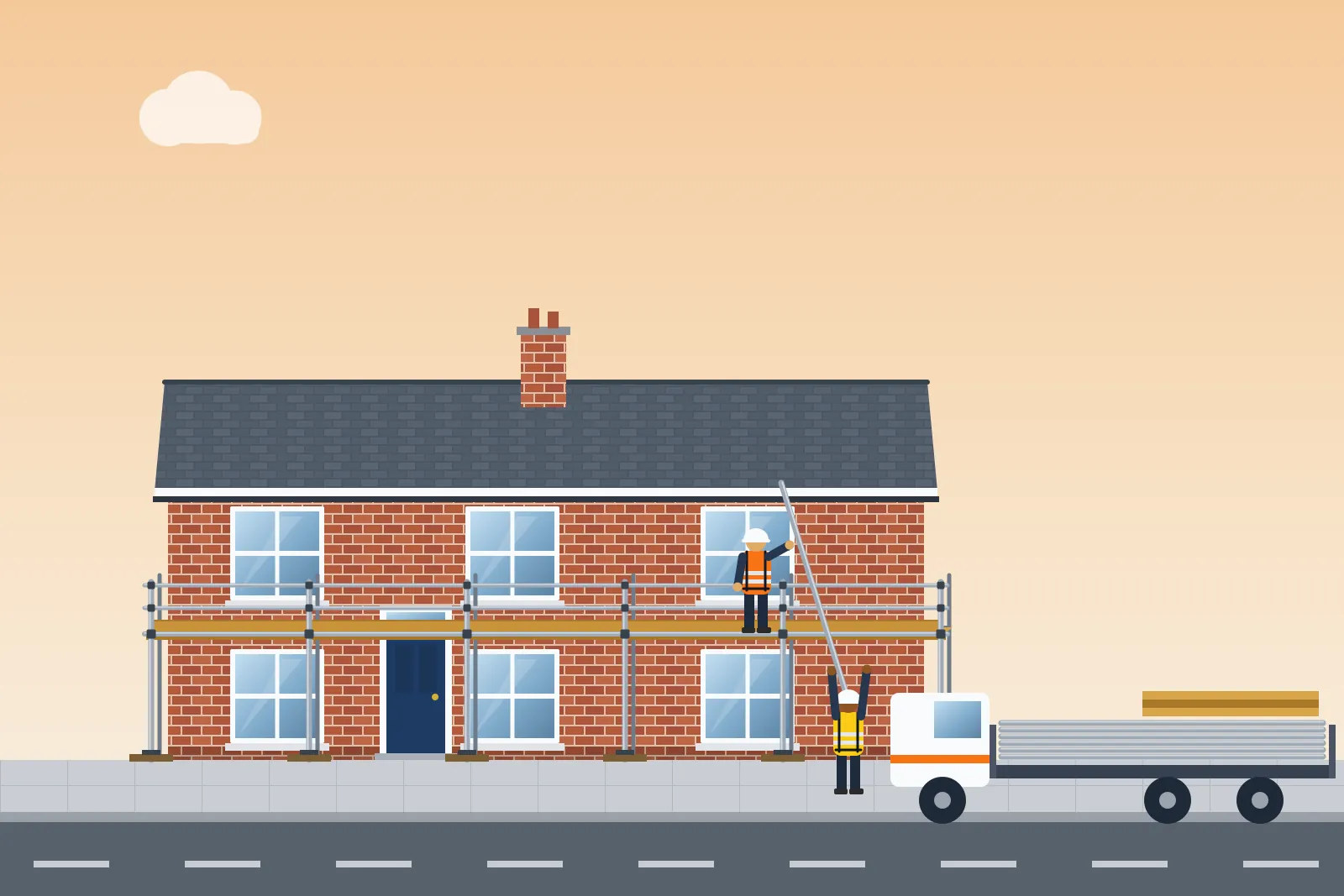
Roof scaffolding is designed around work on the roof itself. The top working lift sits close to gutter level, and guardrails and toe boards continue above the eaves to form edge protection – a barrier at the edge of the roof. On steeper or larger roofs, the scaffold may include a wider platform, extra rails or a loading bay for tiles and slates.
Edge protection is also used on flat roofs, for example during roof replacement or maintenance of plant. It can be scaffold-based or a free-standing system, depending on the building and the work. Describe the roof – pitched or flat, number of storeys, and the work planned – when you request quotes.
Chimney scaffolding
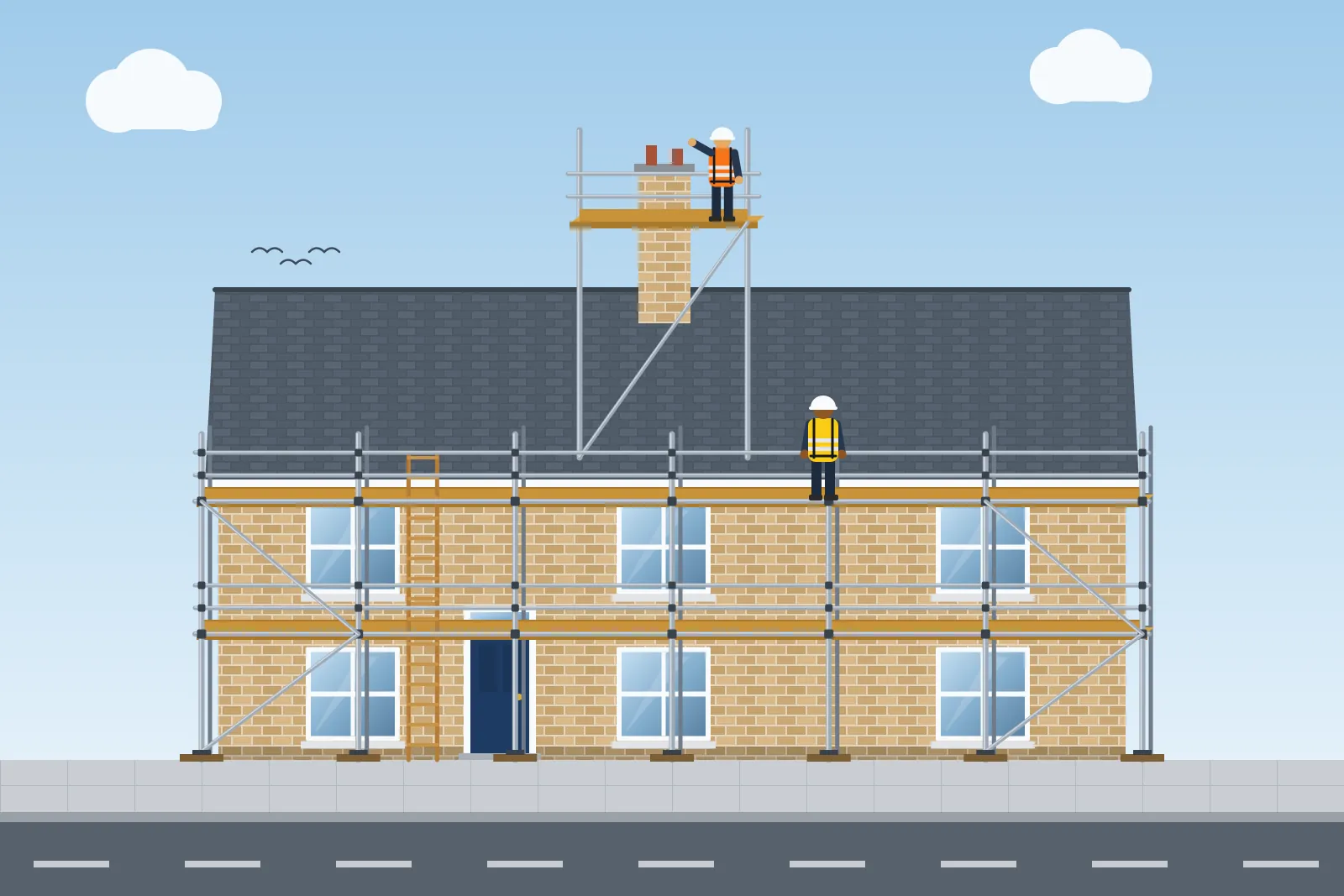
A chimney scaffold provides a working platform all round a stack, so a builder or roofer can repoint, replace pots, renew flashings or take the chimney down. Depending on the house and the position of the chimney, it may be supported from a scaffold below or built up on the roof with measures to spread the load and protect the roof covering.
Chimney scaffolds are one of the most common domestic scaffolding requests, and also one of the most varied in price, because access and the position of the stack make such a difference. Photos from the street and the garden help companies quote accurately.
Temporary roof systems
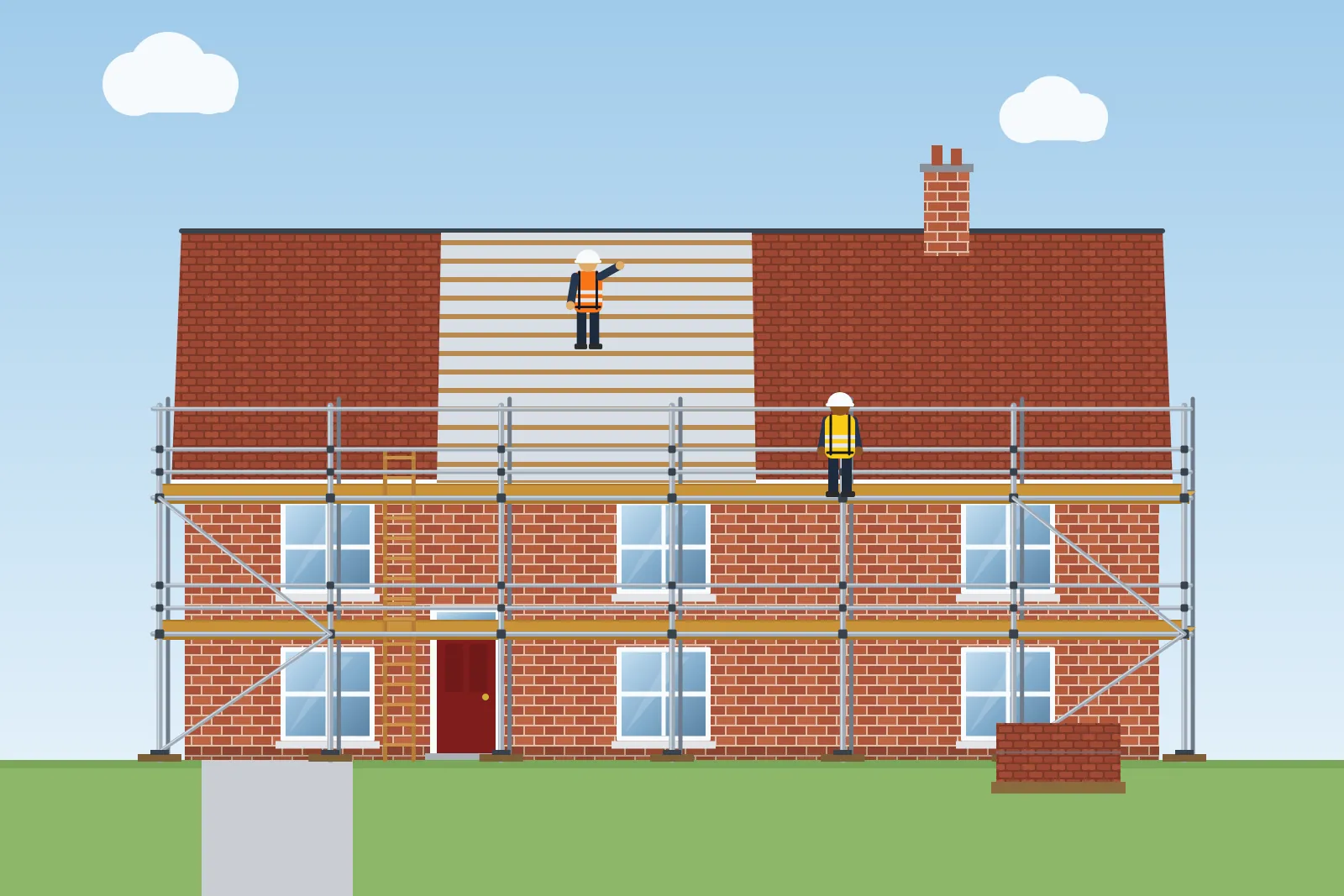
A temporary roof is a covered structure built over the top of the scaffold, sheeted to keep rain off the building while the permanent roof is stripped and replaced. It is used for re-roofing older properties, loft conversions, fire or storm damage repairs and work on historic buildings where the interior must be protected.
Temporary roofs need to be designed for wind and, in some locations, snow, and they place extra loads on the scaffold below. They add significantly to the cost and to the time needed to erect and dismantle, so they are usually only specified where the risk of water damage justifies them.
Internal scaffolding
Internal scaffolds give access to high ceilings, atriums, stairwells, churches and large halls for plastering, decorating, lighting and repairs. They may be a full birdcage scaffold covering a whole room, a scaffold around a stairwell, or a mobile tower for lighter work.
Inside a building, the main questions are how materials get in, whether the floor can take the load, how finishes will be protected and whether the space needs to stay in use. A survey visit is usually the best way to get an accurate quote.
Adaptations, inspections and extended hire
Projects change. Boards may need moving to a different height, a lift adding, or part of the scaffold removing early. These alterations should always be made by the scaffolding company rather than by other trades, and are usually charged as extras – so it is worth asking how they are priced.
Scaffolds also need inspecting while they are up, particularly after strong winds, and the company should tell you how this is handled. If the job overruns, the scaffold stays on hire and weekly charges usually apply, which is why a realistic programme matters when you first ask for quotes.
Choosing the right service
Start with the work, not the scaffold. Tell companies what is being done – re-roofing, a chimney repair, rendering, an extension – and they can recommend the type of scaffold, the height of the lifts and any extras such as edge protection, a loading bay or a temporary roof.
If you are not sure whether you need full scaffolding or a smaller solution such as a tower, describe the job and ask. A good company will explain the options and why one suits your project better than another.
Safety points that apply to every service
- Scaffolding should only be erected, altered and dismantled by competent scaffolders. Other trades and homeowners should never remove ties, boards or guardrails.
- Scaffolds should be inspected before first use, at regular intervals and after events such as high winds, with the results recorded.
- Ask whether operatives hold recognised scaffolding qualifications – in the UK, many scaffolders carry CISRS cards – and whether the scaffold will follow recognised design guidance or a bespoke design.
- If the scaffold stands on a pavement or road, the company should arrange any licence the highway authority requires.
This is general information, not professional advice. Requirements depend on the project, the building and where you are in the UK.
What affects the price of scaffolding services
Each service is priced on the job in front of the company. Broadly, these are the things that move the price:
- Type of scaffold
- A single-elevation scaffold is simpler than a chimney scaffold, a loading bay or a temporary roof.
- Height and size
- More lifts and longer runs mean more materials, ties and labour.
- Access and ground
- Restricted access, slopes, conservatories and soft ground take extra time and materials.
- Duration
- The initial hire period included in the price, and weekly charges after that.
- Design and engineering
- Bespoke designs for temporary roofs, sheeted or heavily loaded scaffolds.
- Adaptations
- Return visits to move boards, add lifts or alter the scaffold mid-project.
Scaffolding is priced job by job, so the only reliable figure is a written quote. Our scaffolding hire cost guide explains every factor in more detail.
What to ask when comparing scaffolding services
- Exactly which scaffold is included – elevations, height, number of lifts
- Edge protection, chimney scaffolds, loading bays or temporary roofs, if needed
- The hire period included and the weekly charge afterwards
- How adaptations and return visits are charged
- Inspection arrangements and confirmation the scaffold is ready to use
- Who handles licences, parking and neighbour access
- Insurance cover and how damage would be dealt with
- Expected dates for erection and dismantling
Request scaffolding quotes
Describe the job, add your postcode and compare quotes from local scaffolding companies. It's free, and you're under no obligation to go ahead.
Get free scaffolding quotes
Describe your project once and compare quotes from local scaffolding companies that cover your area.
- Free to use
- No obligation
- Local scaffolding companies
- Quick online form
You'll continue to our quotes partner, MyJobQuote, to describe your scaffolding job.
Scaffolding Services near you
You can request scaffolding quotes anywhere in the UK. Start with your nearest city:
Scaffolding hire in more towns and cities
Guides for scaffolding services
- Different types of scaffoldingIndependent, putlog, system, tower, chimney – scaffolding comes in several forms. Knowing the difference helps you understand what scaffolding companies are quoting for.
- Questions to ask a scaffolding companyA few well-chosen questions will tell you a lot about a scaffolding company – and make the quotes you receive far easier to compare.
- Scaffolding for chimney workChimney stacks sit at the most awkward part of a house to reach. A chimney scaffold gives a safe platform all round the stack so it can be repaired, rebuilt or removed.
- Scaffolding for listed buildingsHistoric buildings need maintaining like any other, but they deserve more care when the scaffold goes up. Here's what to consider if your home or building is listed or in a conservation area.
- Scaffolding over conservatories and extensionsA conservatory or single-storey extension often sits exactly where the scaffold needs to go. Here's how scaffolders work around them without putting weight on fragile roofs.
- Scaffolding inspections and handoverA scaffold isn't ready to use just because it's standing. It should be checked by a competent person, handed over properly and inspected while it's up. Here's what that looks like in practice.
Scaffolding Services: frequently asked questions
What services do scaffolding companies offer?
Most offer domestic and commercial scaffolding, including design advice, erection, inspection, adaptations and dismantling. Many also provide roof and chimney scaffolds, edge protection, temporary roofs, internal scaffolds, loading bays and scaffold towers.
What is edge protection?
Edge protection is a barrier – usually guardrails and toe boards – along an open edge such as the eaves of a roof, designed to help prevent people and materials falling. On roof work it is commonly provided by extending the scaffold above the gutter line.
When do you need a temporary roof?
Usually when a roof will be stripped or opened up for long enough that rain could damage the building – for example during full re-roofing of an older property, a loft conversion or repairs after fire or storm damage. A scaffolding company can advise whether it is justified for your project.
Can I adjust the scaffolding myself?
No. Only competent scaffolders should alter a scaffold. Moving boards, removing ties or taking off guardrails can make it unsafe. Ask the scaffolding company to make any changes – it is usually quicker than people expect.
What happens when the scaffolding comes down?
The company dismantles it in a controlled way, lowers the materials and loads them onto a lorry. Holes left by ties can be made good if agreed. Check that all the work is finished first, because putting a scaffold back up costs almost as much as the first time.
Do scaffolders need qualifications?
Scaffolding should be erected by competent people. In the UK, many scaffolders hold cards under the Construction Industry Scaffolders Record Scheme (CISRS), which show their training level. It is reasonable to ask a company about its team's training and experience.
Ready to get scaffolding quotes?
One short form, local scaffolding companies, no obligation.
Get Free Scaffolding Quotes