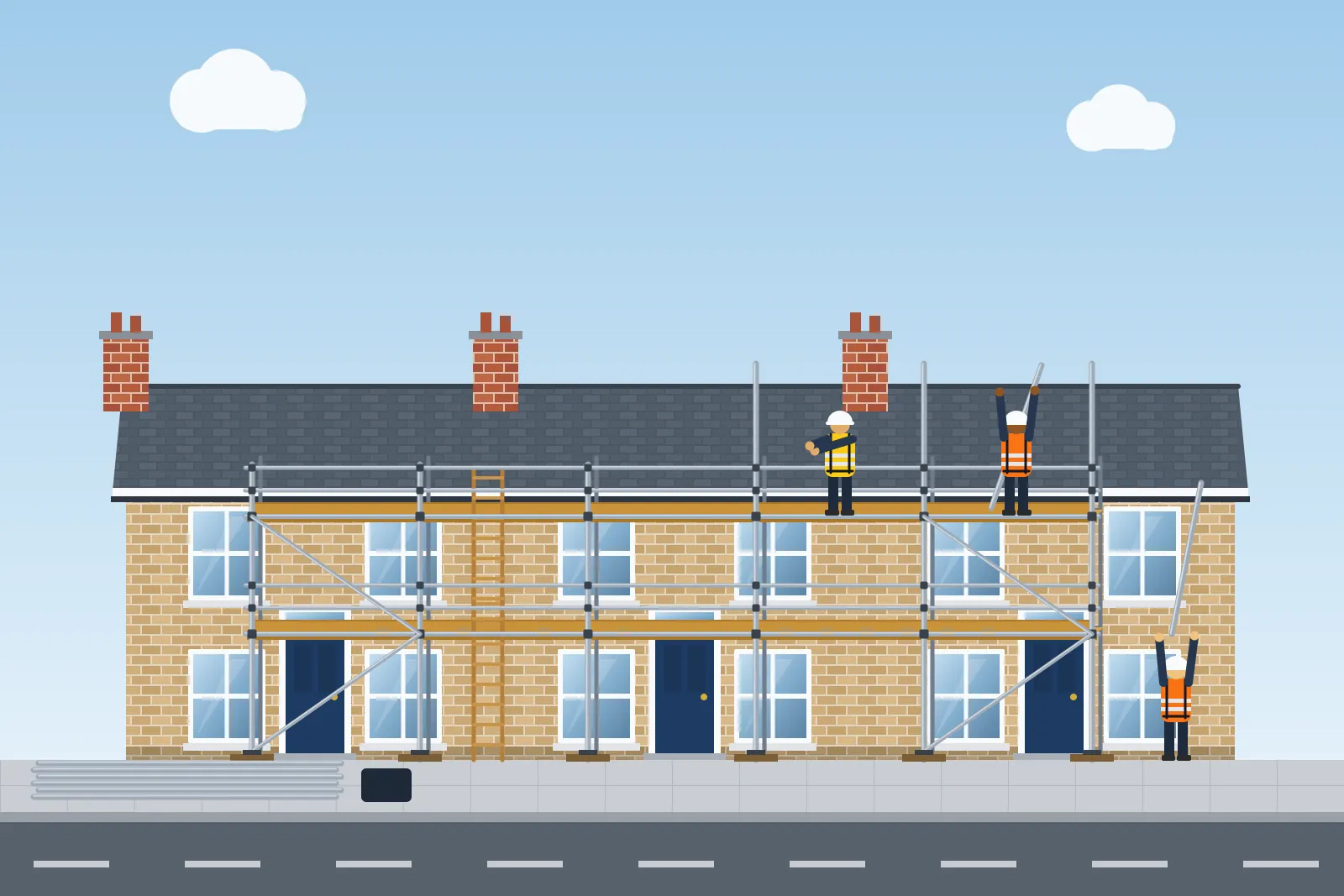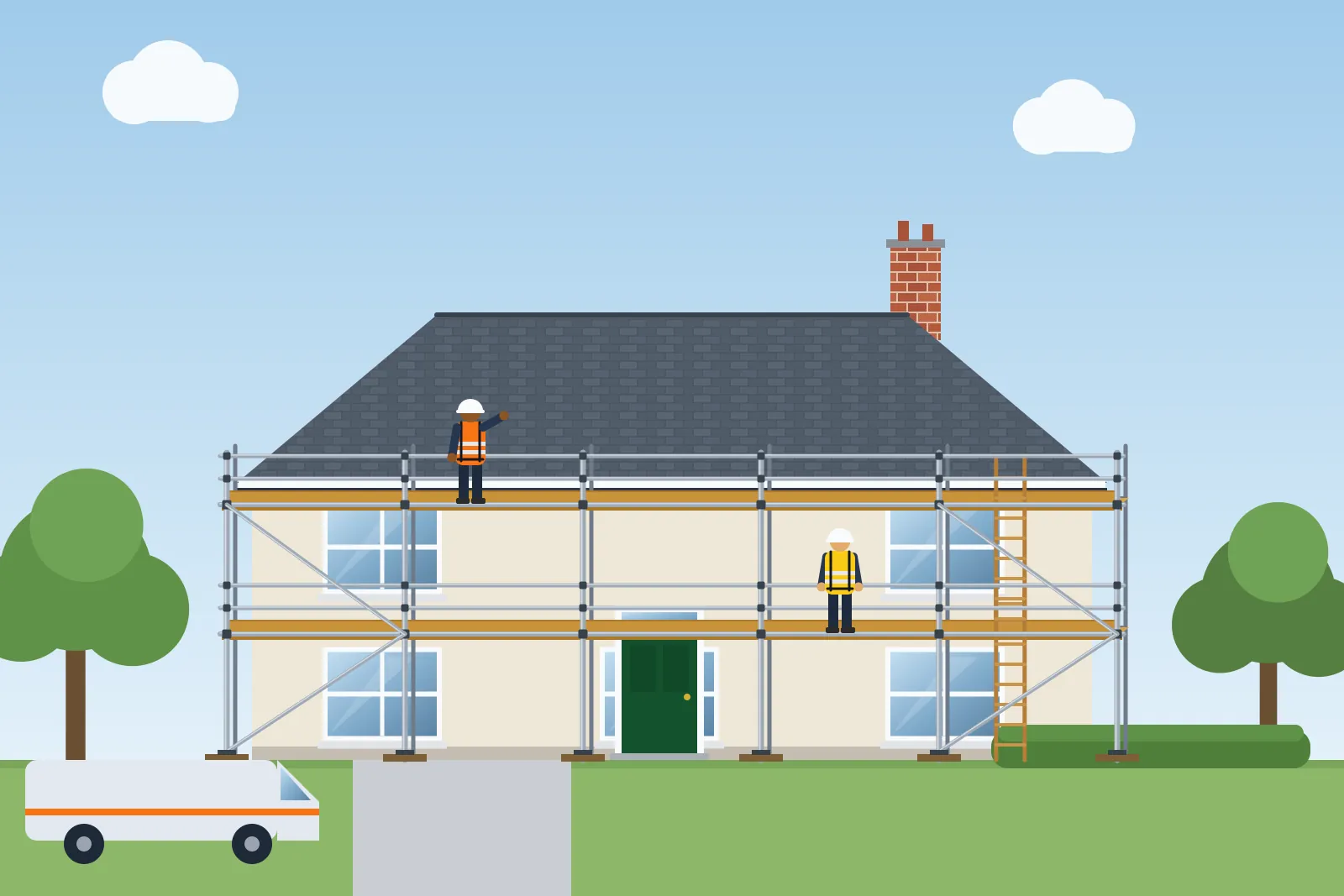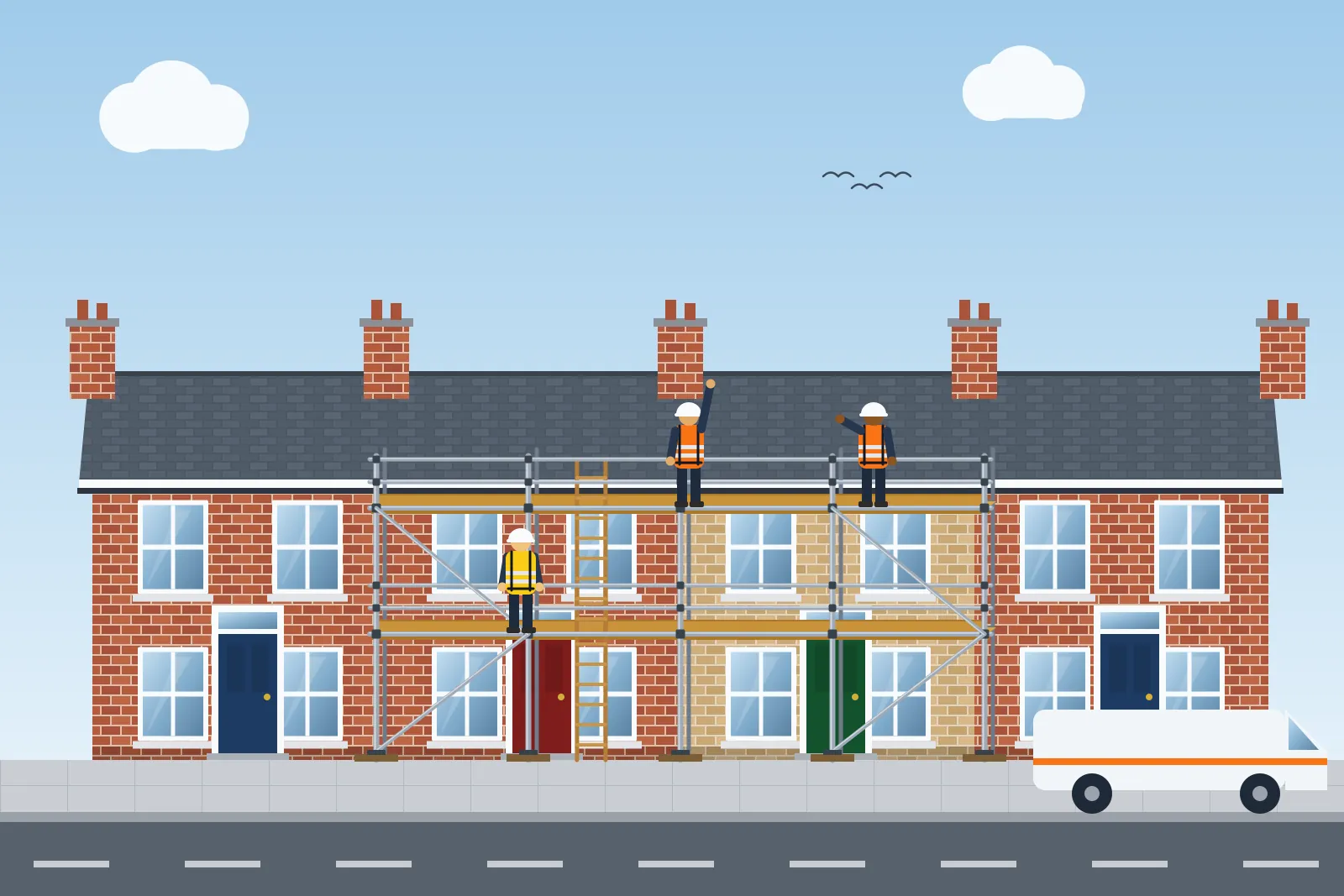
A week or two before
- Confirm the date and time with the scaffolding company and your tradespeople
- Tell your neighbours, and get agreement if the scaffold will stand on or overhang their property
- Check whether a pavement licence or parking suspension is needed and has been arranged
- Tell your home insurer if they require notice of scaffolding
- Ask about a scaffold alarm if security is a concern
Clearing the area
- Move cars off the drive and from in front of the house if possible
- Clear garden furniture, bins, pots and toys from where the scaffold will stand
- Cut back plants and shrubs close to the wall, or ask how they'll be protected
- Open gates and side passages, and make sure keys are available
- If materials must go through the house, clear a route and protect floors
On the day
Keep children and pets indoors or well away from the work area while the scaffold is being erected. Be available at the start to confirm the scaffold's position and answer questions. Keep windows near the scaffold closed while the scaffolders are working, unless ties are being fixed through them.
Ready to get prices?
Describe your project and compare free scaffolding quotes from local companies – there's no obligation.
- Free to use
- No obligation
- Local scaffolding companies
- Quick online form
You'll continue to our quotes partner, MyJobQuote, to describe your scaffolding job.
While the scaffold is up
- Keep upstairs windows locked when no one is working
- Don't climb the scaffold or let anyone else do so unless they're working from it
- Never move boards, ties or guardrails – call the scaffolding company instead
- Report anything that looks damaged or loose, especially after strong winds
- Keep the base of the scaffold clear
Before it comes down
Walk round with your tradespeople and check everything is finished – including areas behind the scaffold that are easy to miss. Agree who will make good the tie holes. Once you're happy, ask the scaffolding company to arrange dismantling.