An overview, not instructions
Erecting, altering and dismantling scaffolding is skilled, safety-critical work that should only be carried out by competent, trained scaffolders following the appropriate design and industry guidance. The description below is intended to help you understand what to expect – not to be used as instructions.
Before the scaffold goes up
The scaffolding company looks at the building, the ground and the work to be done, either from photos or on a site visit. It decides on the type and layout of scaffold, the number and height of lifts, and any extras such as edge protection, chimney scaffolds or loading bays. Larger or more complex scaffolds may need a specific design. If the scaffold will stand on the pavement, the company applies for a licence.
Delivery and erection
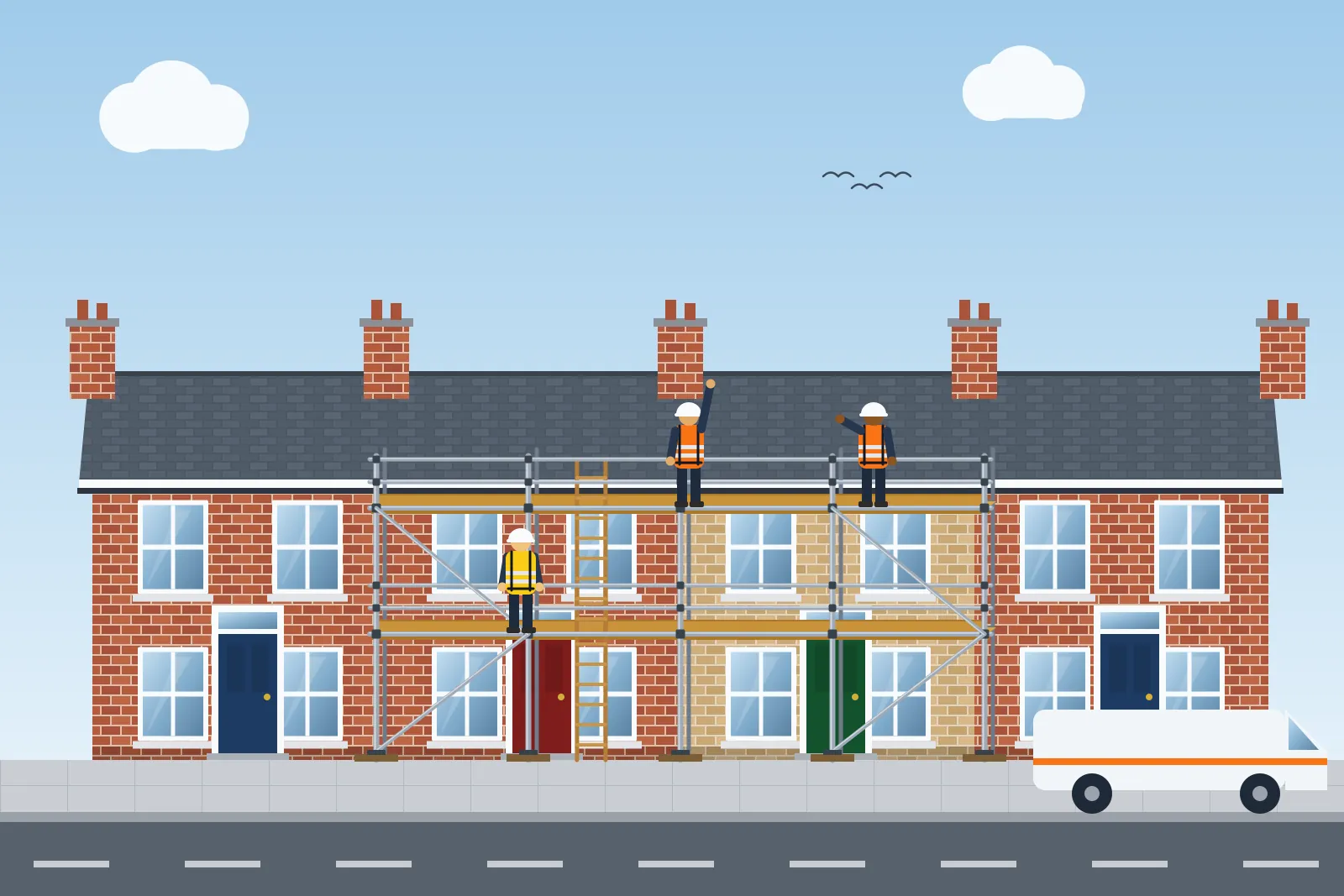
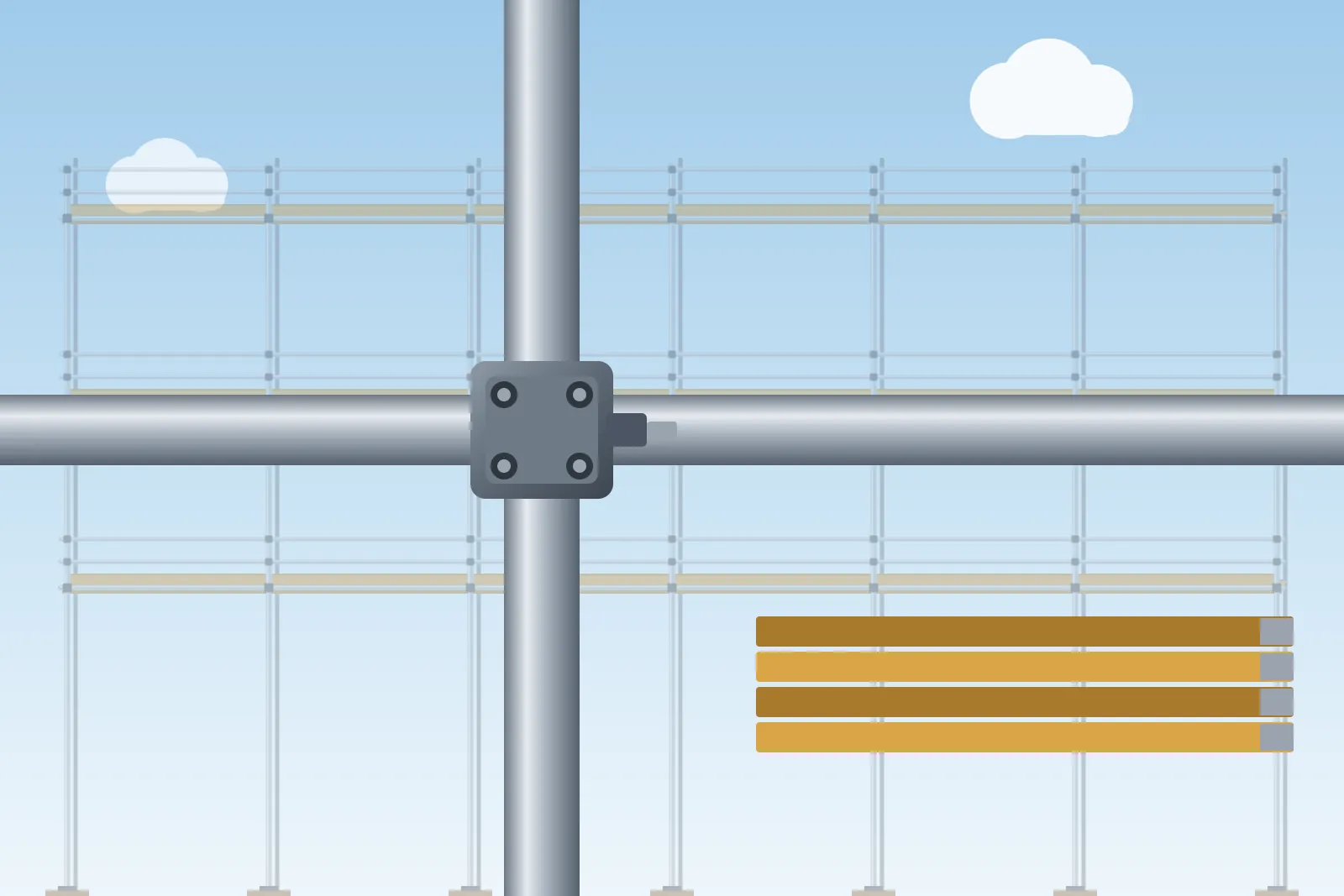
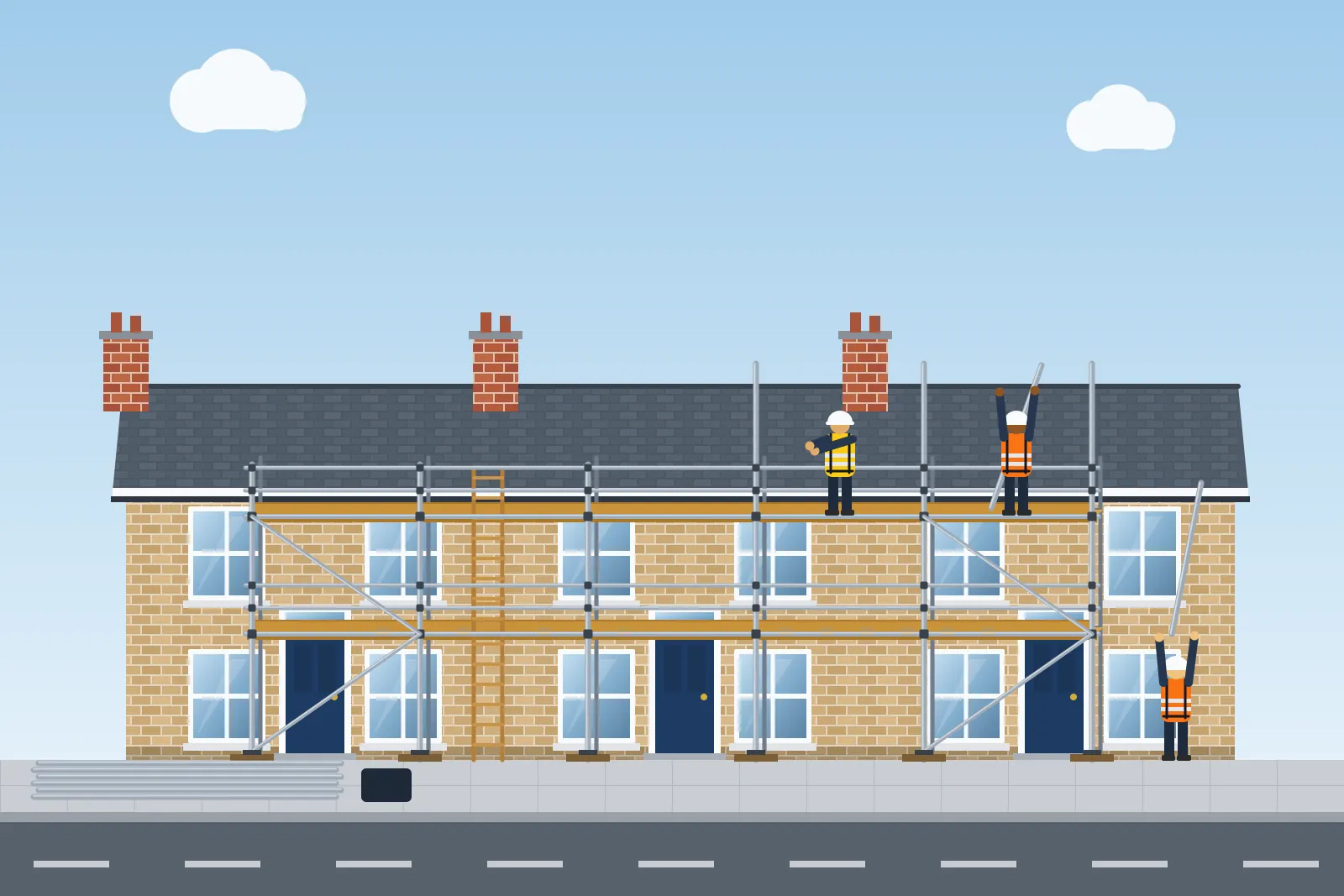
On the day, the lorry delivers tubes, fittings and boards, and the scaffolders build the scaffold up from the ground. The base is set out on sole boards and base plates, and the structure is built lift by lift, with ties into the building and bracing for stability, and guardrails and toe boards on the working platforms. A straightforward domestic scaffold is often erected within a day; larger or more complex scaffolds take longer.
Ready to get prices?
Describe your project and compare free scaffolding quotes from local companies – there's no obligation.
- Free to use
- No obligation
- Local scaffolding companies
- Quick online form
You'll continue to our quotes partner, MyJobQuote, to describe your scaffolding job.
Inspection and handover
Once complete, the scaffold is inspected by a competent person before anyone else uses it, and the company confirms it's ready – often with a handover certificate or a tag at the access point. During the hire, it should be inspected at regular intervals and after anything that could affect it, such as high winds.
Adaptations during the job
If boards need moving, a lift adding or part of the scaffold changing, the scaffolding company should do it. Other trades and homeowners should never remove ties, boards or guardrails, because that can make the scaffold unsafe.
Dismantling and collection
When the work is finished and checked, the scaffold is taken down in a controlled way, broadly in the reverse order to how it was built. Materials are lowered rather than dropped and loaded onto the lorry, ties are removed and holes are made good if agreed. Check the work carefully before you ask for the scaffold to be removed – putting it back up costs almost as much as the first time.