When a licence is usually needed
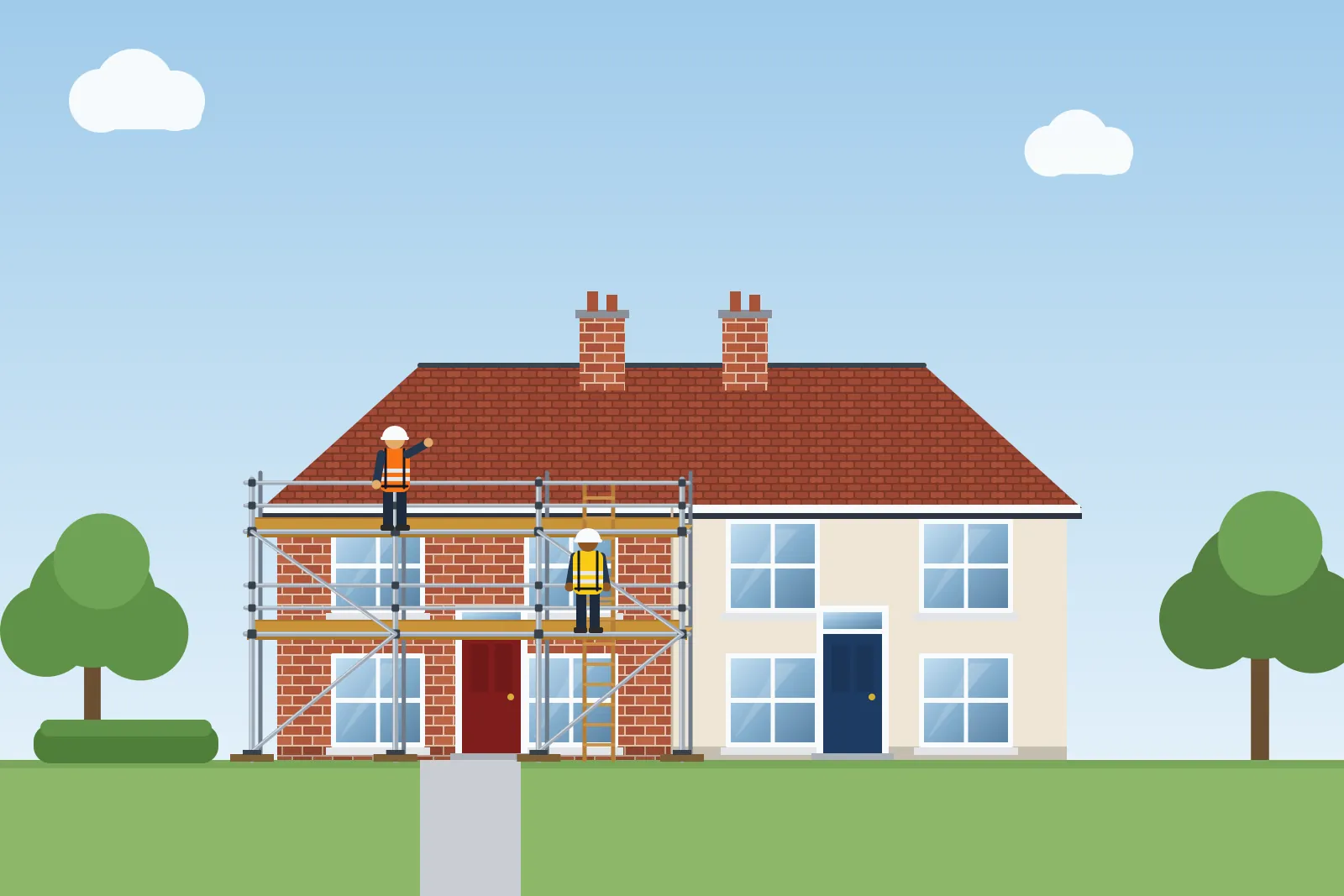
Scaffolding that stands entirely on your own land – a driveway, front garden or back garden – doesn't normally need a highway licence. The moment any part of it is on the public highway, which includes pavements and verges as well as roads, permission is usually required.
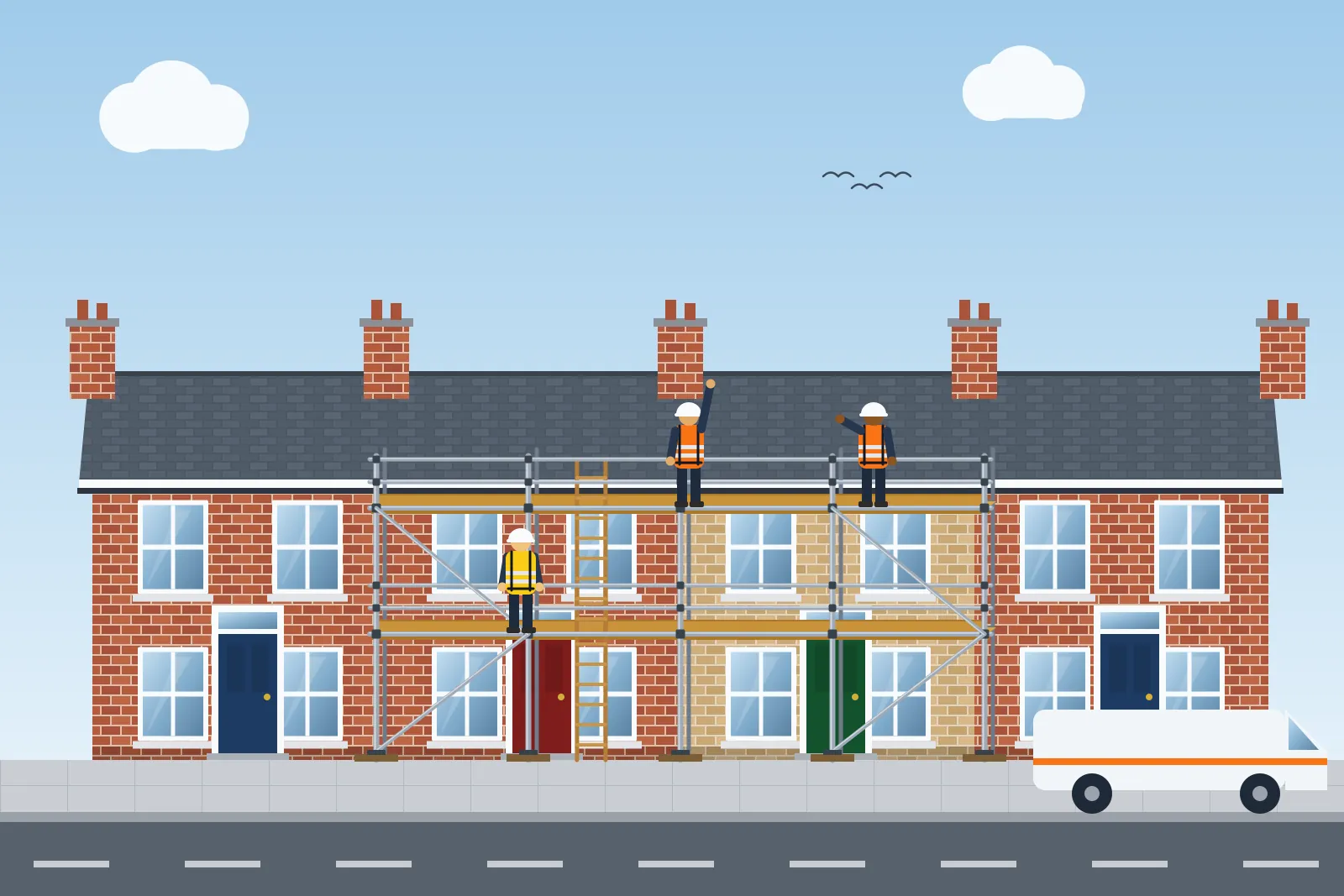
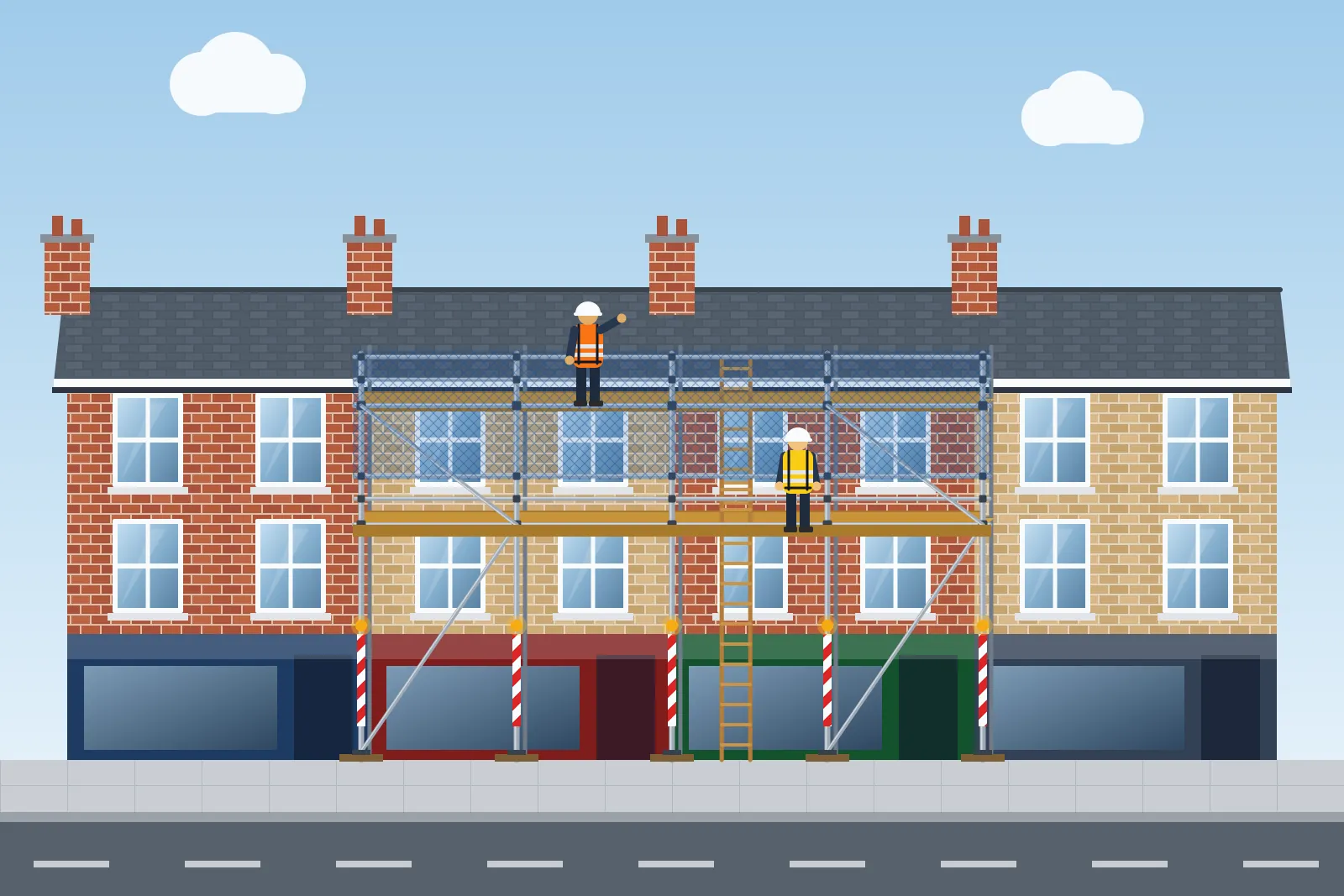
That's very common. Terraced houses in towns and cities often front straight onto the pavement, so even a simple scaffold for a chimney or a front roof slope will need a licence. Commercial buildings on high streets almost always do.
- Any scaffold standing on a public pavement or road
- Scaffolds that overhang the highway, such as fans or gantries above a pavement
- Hoardings around a site that take up part of the pavement
- Parking bays needed for the delivery lorry, which often need a separate suspension
Who issues the licence
In England and Wales, scaffolding on the highway is licensed by the highway authority – usually the county, unitary or London borough council – under section 169 of the Highways Act 1980. In London, roads that form part of Transport for London's red route network are licensed by TfL rather than the borough.
In Scotland, councils issue permits for scaffolding on roads and pavements in their role as roads authority. In Northern Ireland, permission for scaffolding on a public road or footway is generally handled by DfI Roads.
Each authority sets its own fees, notice periods and conditions, so the details vary from place to place.
Who applies – you or the scaffolding company?
In most cases the scaffolding company applies, because the licence relates to the structure they are putting up and authorities usually want to see the contractor's insurance and details. The fee may be included in the quote or listed separately.
Always ask. A quote that doesn't mention the licence when your scaffold will clearly be on the pavement should prompt a question about whether it has been allowed for.
Ready to get prices?
Describe your project and compare free scaffolding quotes from local companies – there's no obligation.
- Free to use
- No obligation
- Local scaffolding companies
- Quick online form
You'll continue to our quotes partner, MyJobQuote, to describe your scaffolding job.
Typical licence conditions
Conditions vary, but authorities commonly expect things such as:
- Lighting on the scaffold at night where it stands on the highway
- Hazard marking or banding on standards at ground level
- A clear pedestrian route, sometimes with a covered walkway
- Public liability insurance at a level set by the authority
- Removal by a set date, with extensions applied for if the job overruns
Allow time in your plans
Licences aren't instant. Authorities set their own notice periods, and busy areas may take longer. Parking suspensions for the lorry often need separate booking. Build this into your timetable, especially if your roofer, builder or renderer has a fixed start date.
If the job overruns, the licence may need extending too, so a realistic programme from the outset helps.
What about scaffold towers?
A mobile scaffold tower on the pavement is still an obstruction of the highway, and authorities generally expect permission for it too. Don't assume a tower avoids the need for a licence – ask the supplier.