When neighbours are affected
There's no general right to put scaffolding on someone else's property. If any part of the scaffold will stand in a neighbour's garden or drive, be tied to their wall, or overhang their land, you need their agreement first.
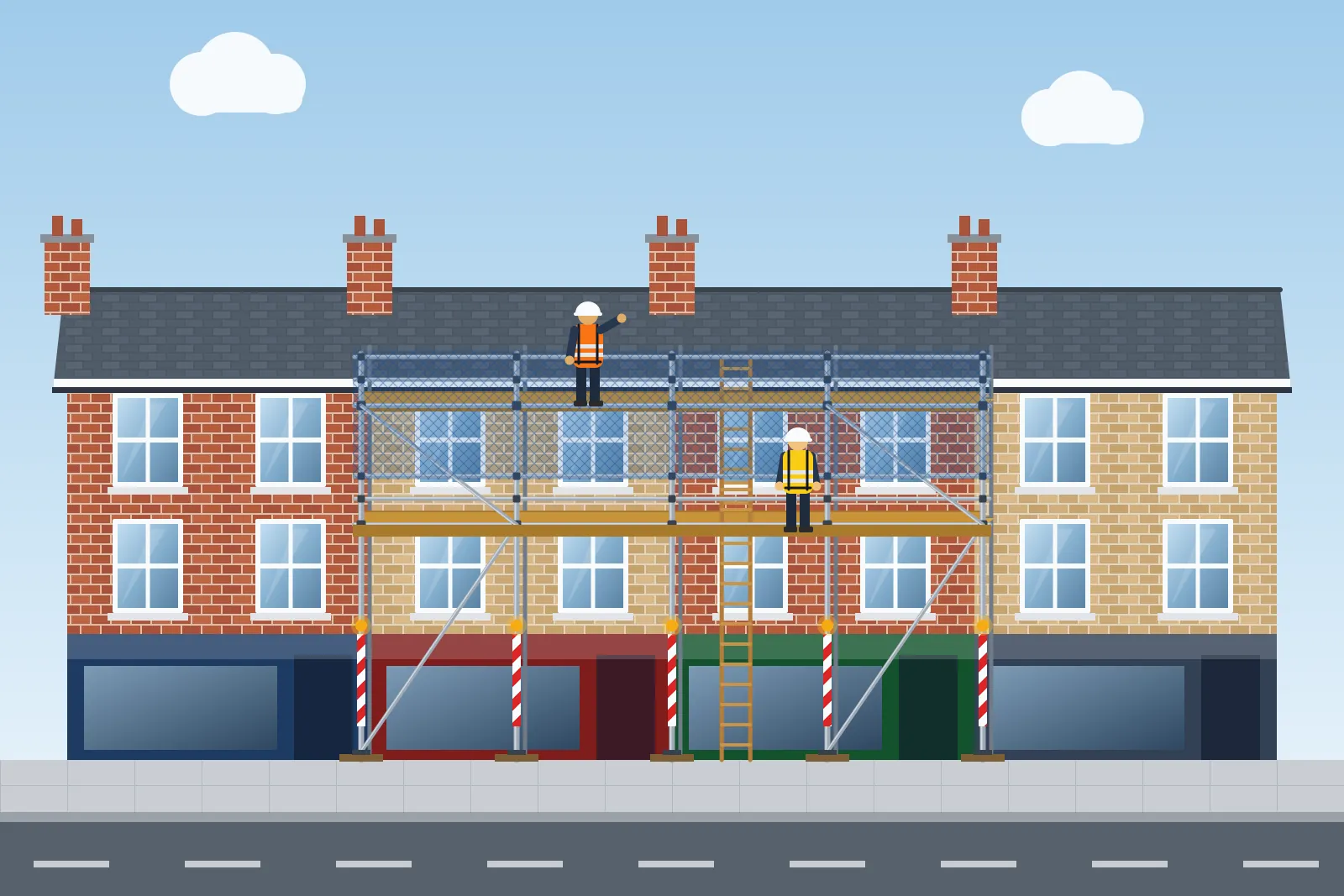
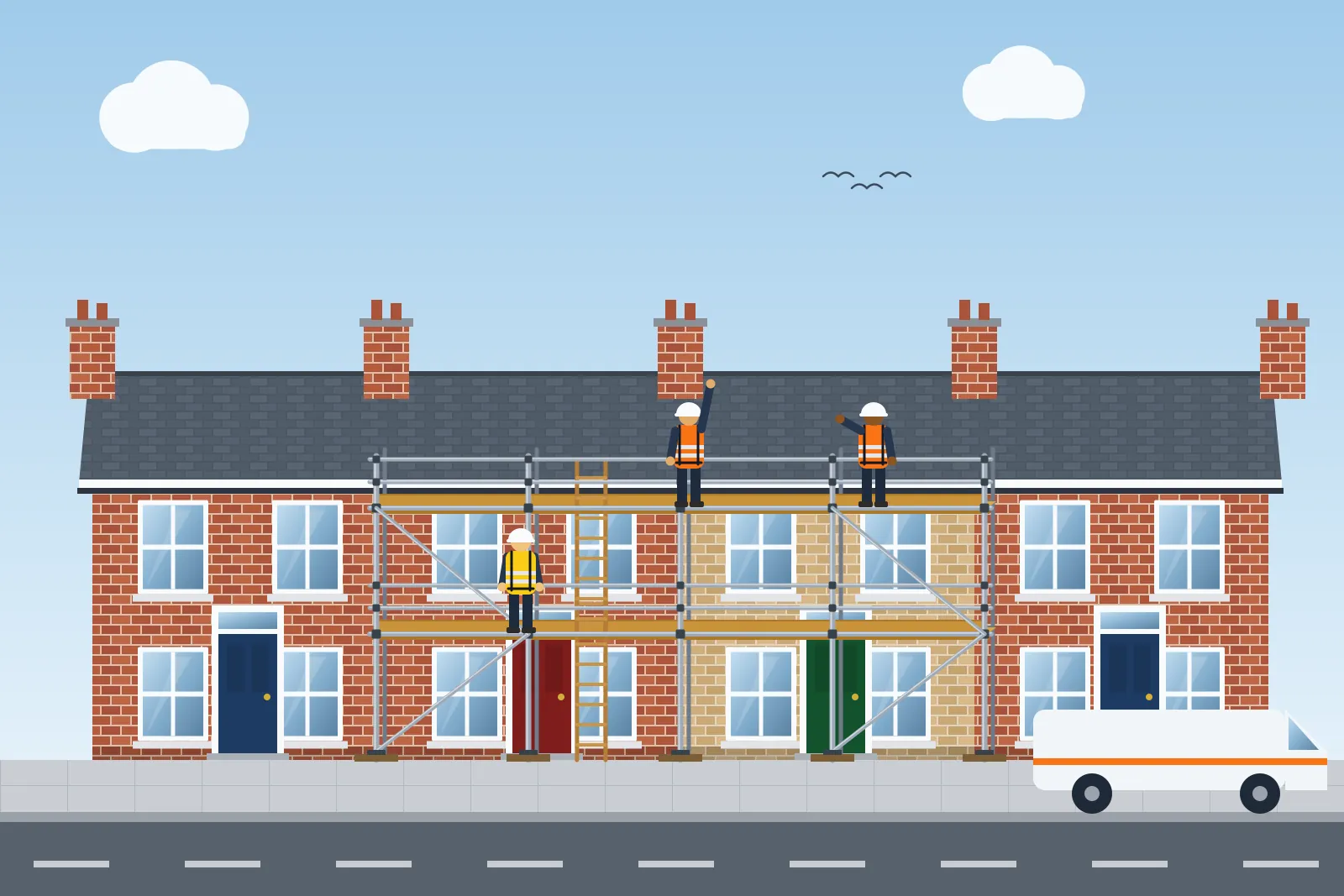
- Rear scaffolds on terraces, where gardens are narrow
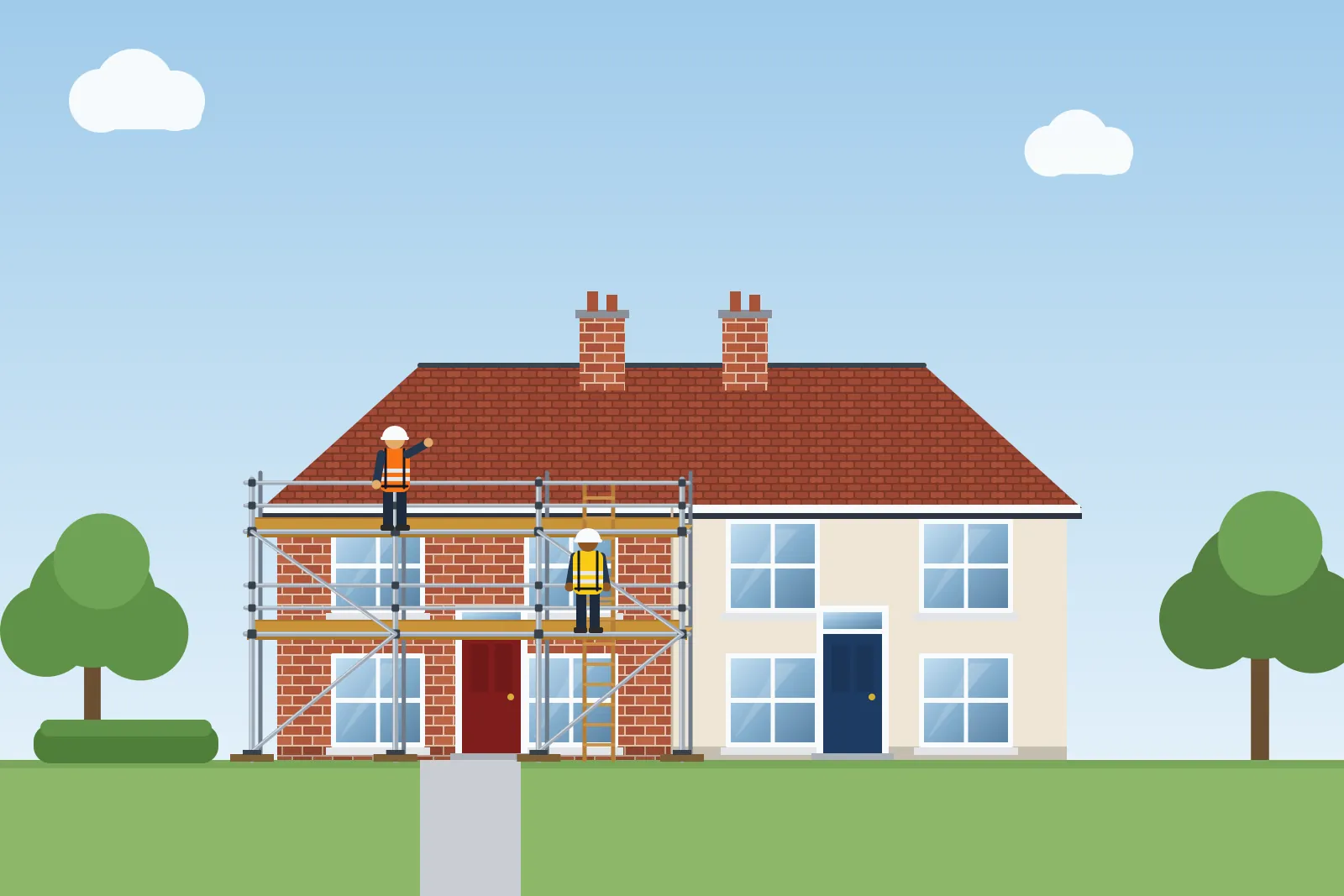
- Side scaffolds on semis built close to the boundary
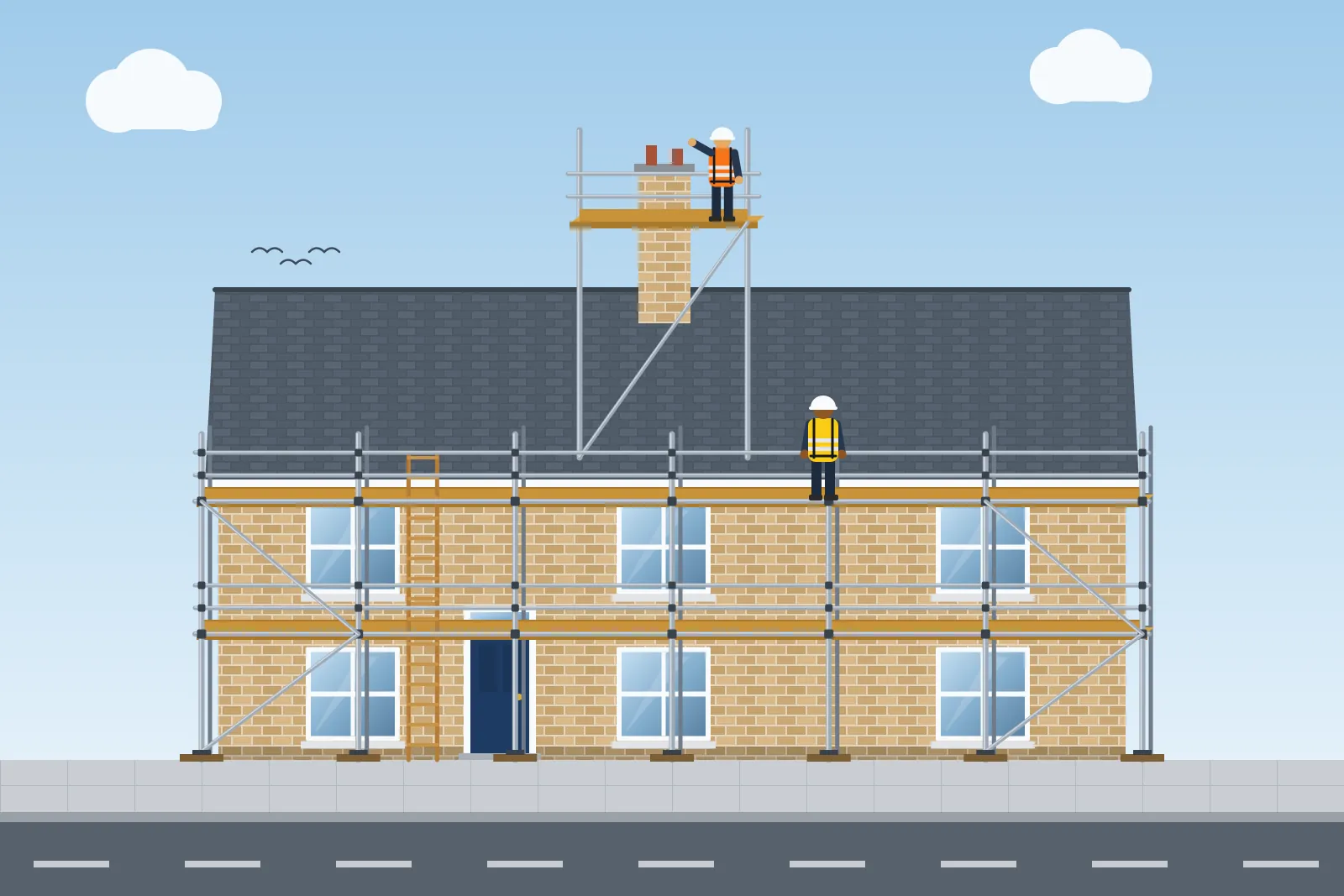
- Chimney repairs on stacks shared across the party wall
- Roof work where the scaffold extends past the party line
- Deliveries that need to pass through a shared drive or alley
Having the conversation
Talk to your neighbours before you book the scaffold, not the day before it arrives. Explain what work is being done, roughly how long the scaffold will be up, exactly where it will stand and how their property will be protected.
Many people find it helps to put the agreement in a short note or email – the dates, the area affected, how damage will be dealt with and who to contact. It avoids misunderstandings later.
Protecting their property
Scaffolders can lay boards over lawns, pad where tubes touch walls and keep paths clear. Agree how plants, fences, garden furniture and cars will be protected, and take photos of the neighbour's side before work starts so there's a record if anything is questioned.
Make sure the scaffolding company has public liability insurance and that the quote explains how damage would be handled.
Ready to get prices?
Describe your project and compare free scaffolding quotes from local companies – there's no obligation.
- Free to use
- No obligation
- Local scaffolding companies
- Quick online form
You'll continue to our quotes partner, MyJobQuote, to describe your scaffolding job.
If a neighbour says no
Sometimes agreement isn't possible. Options include redesigning the scaffold so it stays on your side – for example using a cantilevered design or working from your own roof – or changing the order or method of work. A good scaffolding company can suggest alternatives.
For certain essential repairs in England and Wales, the Access to Neighbouring Land Act 1992 allows a court to order access, but it is a legal route that takes time and cost. It's far better to reach agreement if at all possible, and to take legal advice before going down that road.