When painting needs scaffolding
Bungalows and ground-floor areas can often be painted from steps and ladders. For two- and three-storey houses, a scaffold or tower is often the safer and more practical choice, especially when walls need washing, scraping, filling and priming before painting. Painting a whole elevation in one consistent finish is much easier from a scaffold.
Scaffold or tower?
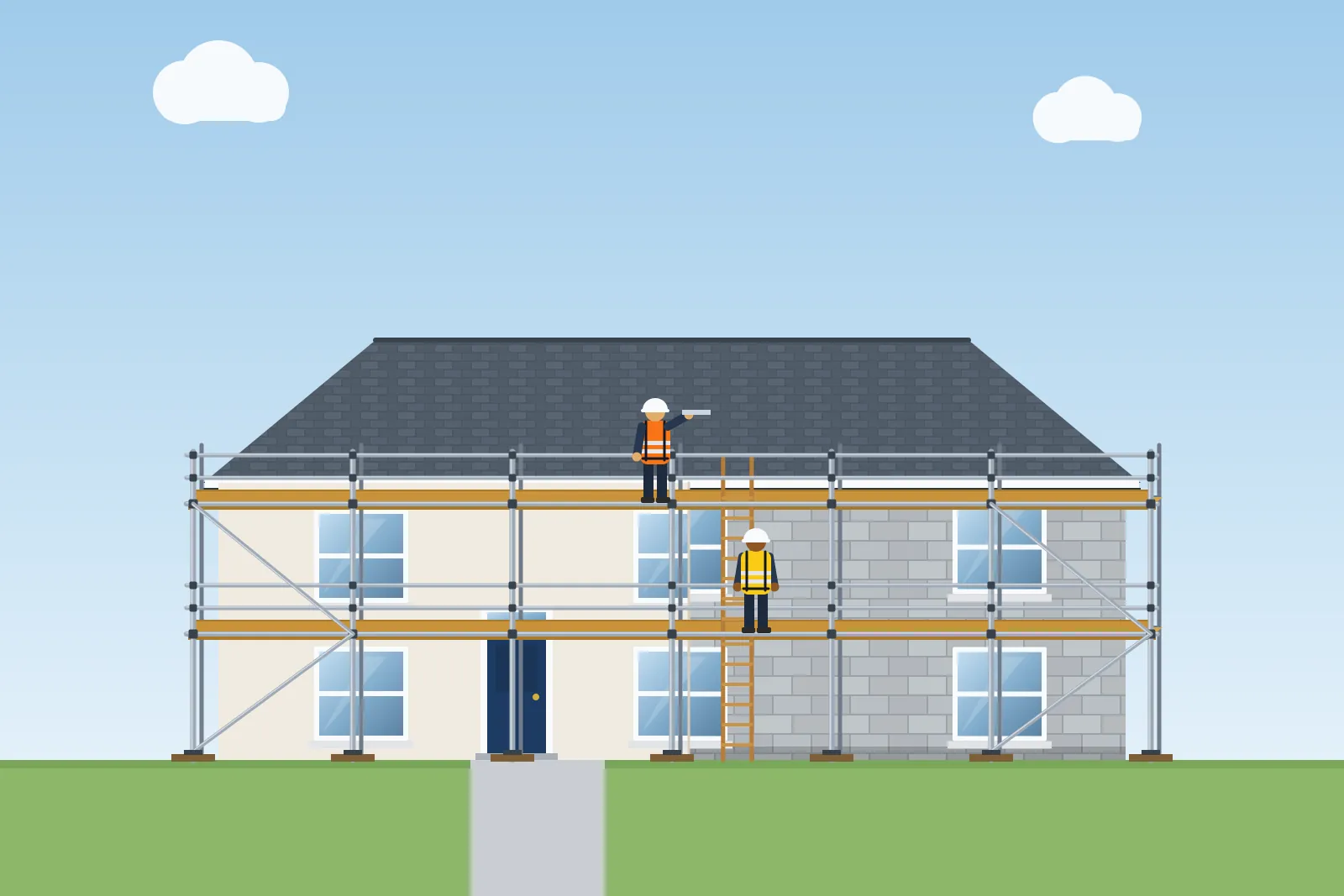
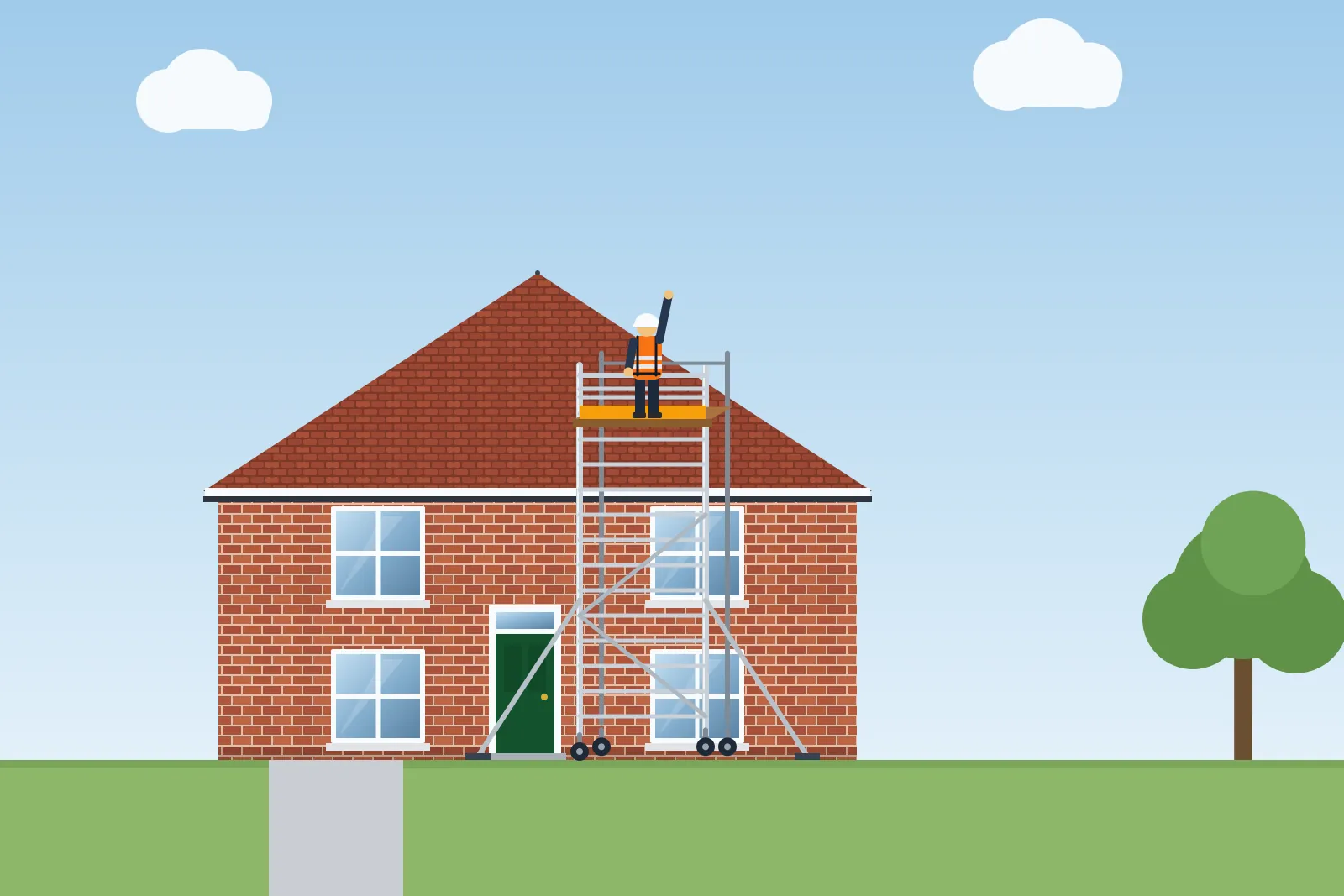
For a single wall or a few windows, a scaffold tower may be enough. For the whole front of a house – masonry, windows, fascias and gutters – full scaffolding usually makes more sense, because it gives access to everything at once and stays in place while coats dry.
Ready to get prices?
Describe your project and compare free scaffolding quotes from local companies – there's no obligation.
- Free to use
- No obligation
- Local scaffolding companies
- Quick online form
You'll continue to our quotes partner, MyJobQuote, to describe your scaffolding job.
Planning around the painter
- Agree which elevations and surfaces are being painted
- Ask your painter what lift heights suit them
- Check how the scaffold will be kept clear of wet paint and protected
- Allow for weather – exterior painting needs dry conditions
- Combine with other work, such as gutter or fascia replacement
Who arranges the scaffold
Many exterior painters arrange scaffolding through a firm they know and include it in their quote; others ask you to book it. If you book it, share the painter's requirements and timescale with scaffolding companies so the scaffold suits the job.