Why rendering needs full access
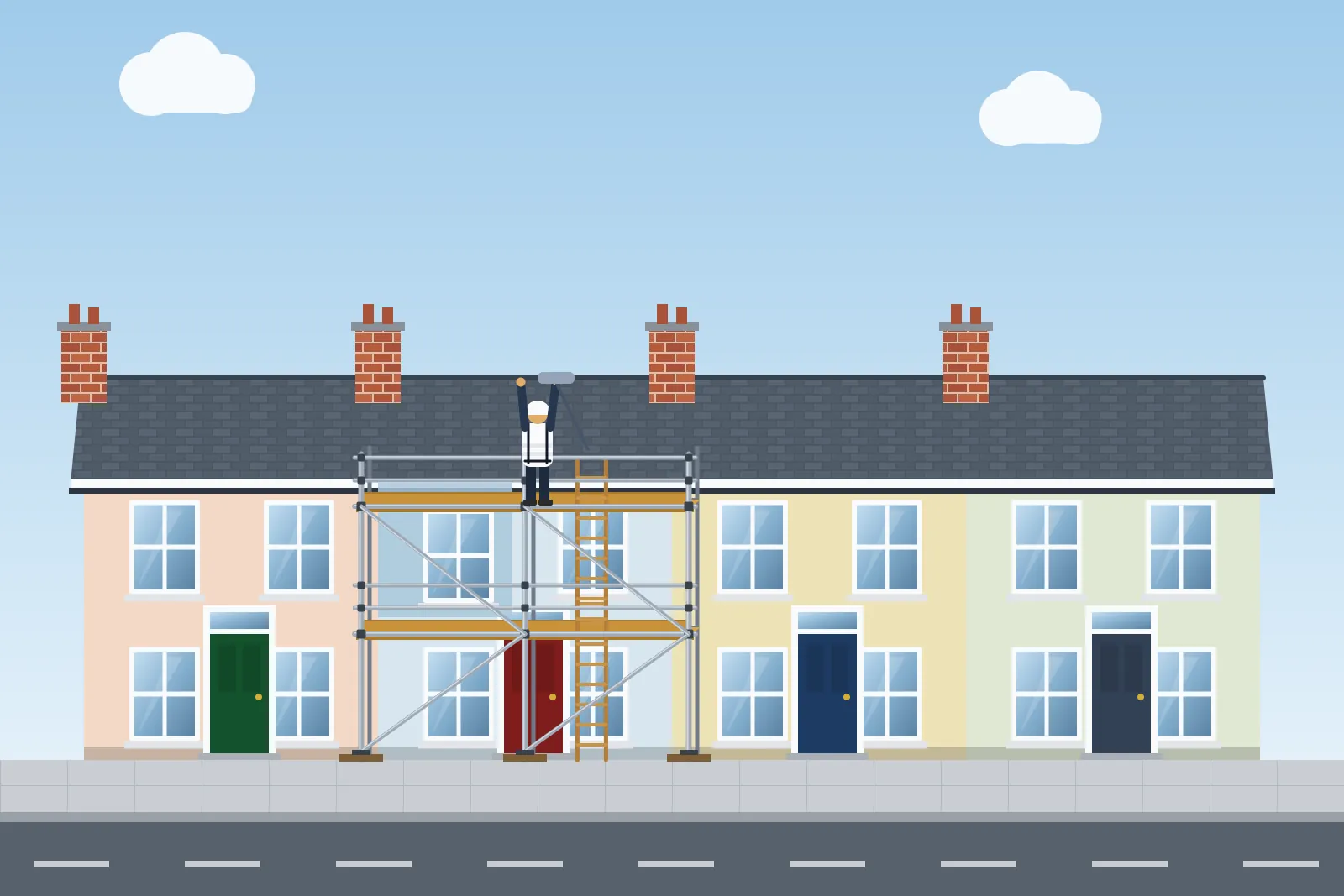
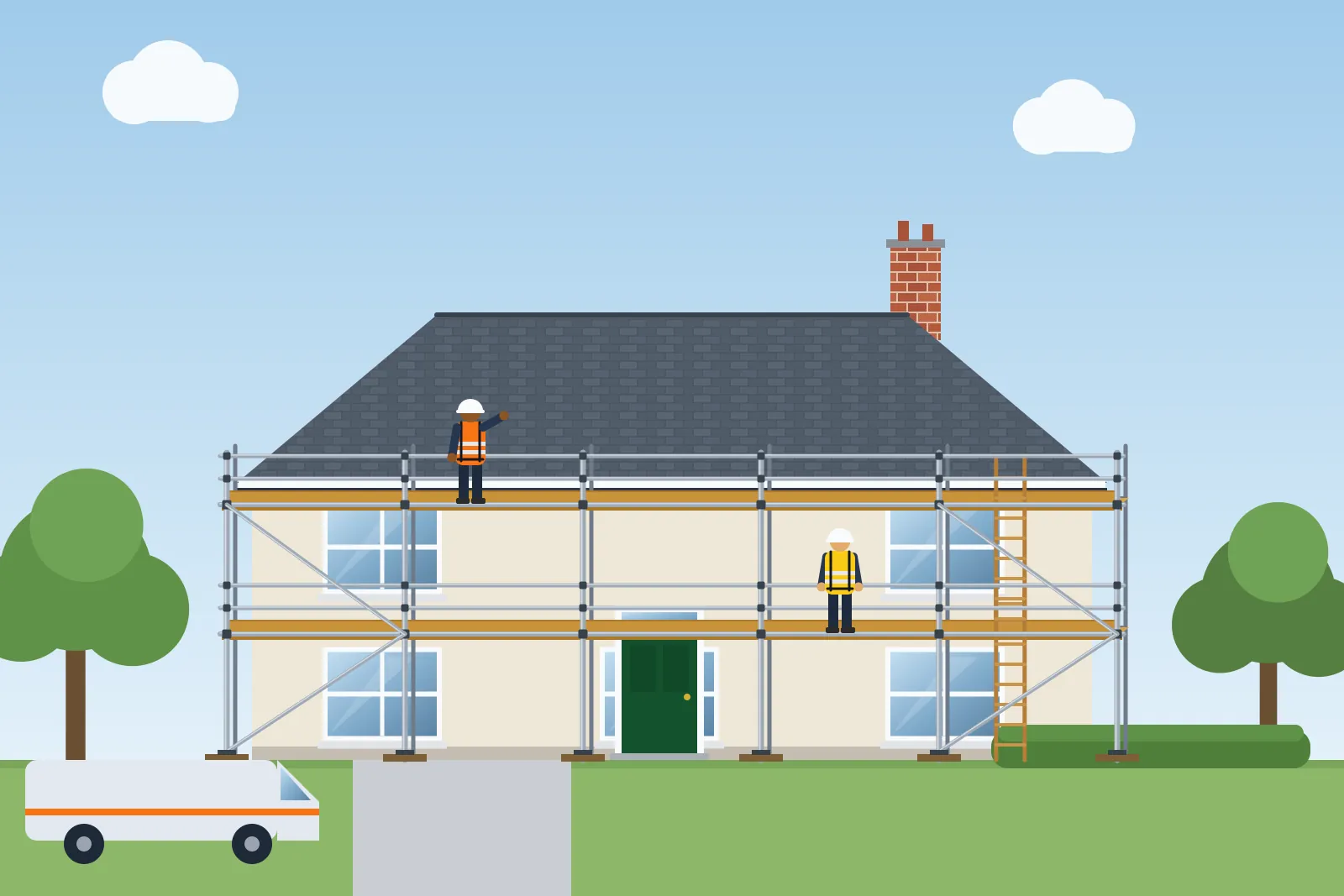
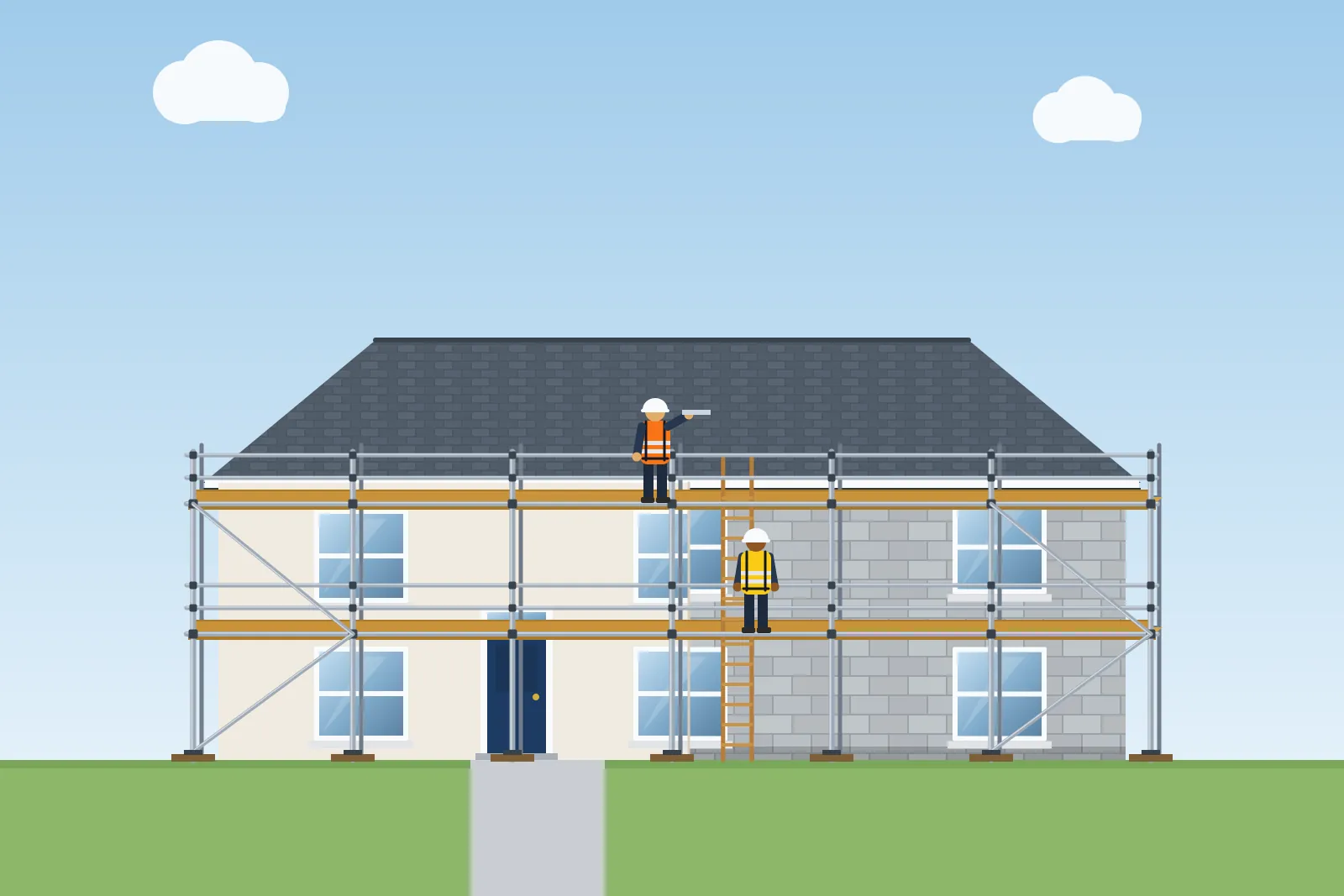
Rendering involves preparing the wall, applying base and finish coats, and finishing the surface evenly from top to bottom. Doing that from ladders makes an even finish very difficult. A scaffold gives renderers continuous access along the wall at every level, so they can work across the whole surface in a consistent way.
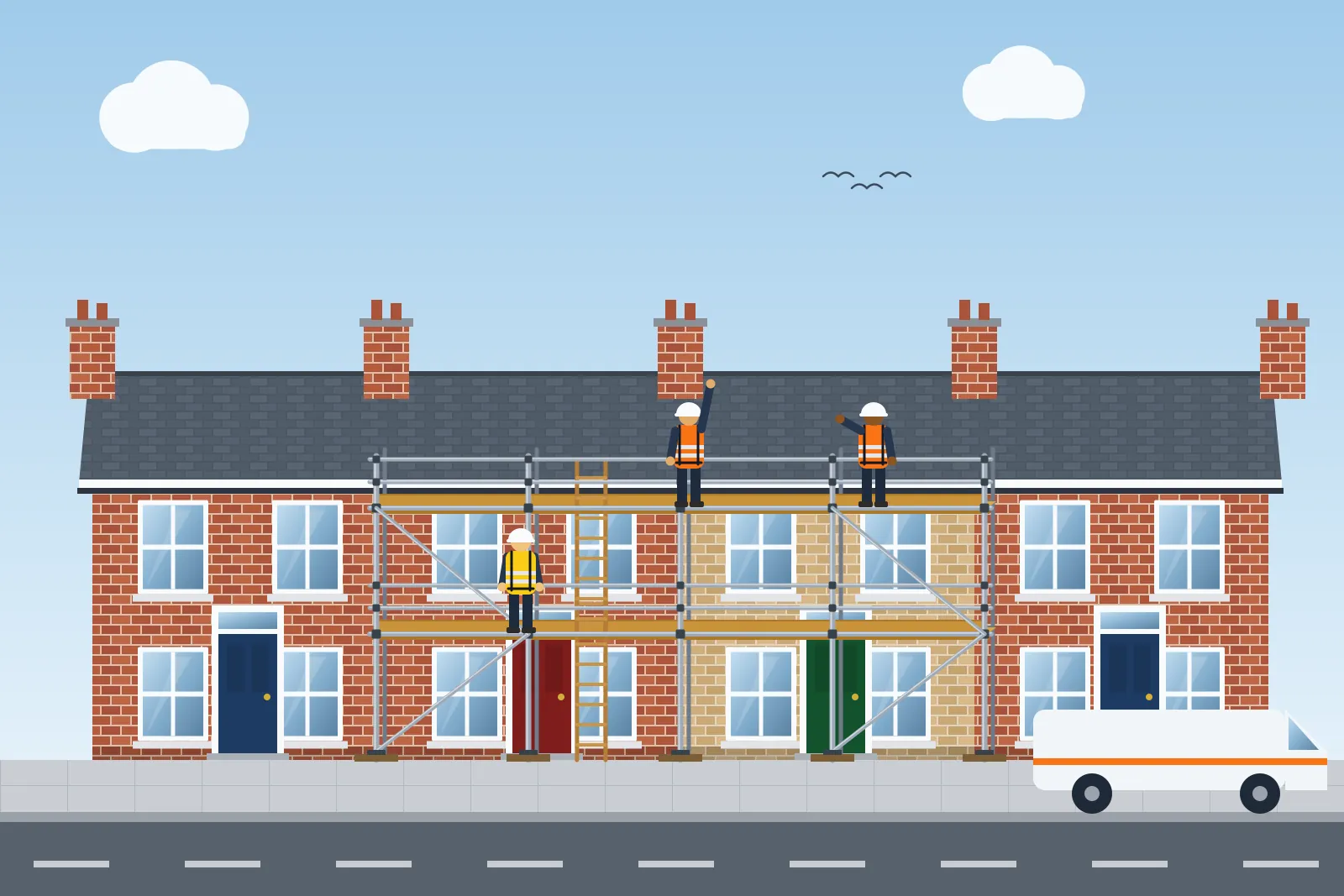
Repointing brick or stone walls is similar: it's slow, detailed work across the whole elevation, which is easiest from a steady platform.
How the scaffold is set up for render
Renderers may ask for lifts at particular heights and for the boards to sit at a certain distance from the wall, so they can work comfortably and finish behind the scaffold. Ties into the wall can get in the way of rendering, so scaffolders and renderers often agree where they'll go and how they'll be moved or made good as work progresses.
Ready to get prices?
Describe your project and compare free scaffolding quotes from local companies – there's no obligation.
- Free to use
- No obligation
- Local scaffolding companies
- Quick online form
You'll continue to our quotes partner, MyJobQuote, to describe your scaffolding job.
Sheeting and weather
Fresh render can be damaged by rain, frost, strong sun and wind, so renderers plan around the weather. Some ask for the scaffold to be sheeted to protect the work. Sheeting adds cost and increases the wind load on the scaffold, so it must be allowed for in the scaffold's design. Mention it when requesting quotes if your renderer needs it.
Combining jobs
While the scaffold is up, it's often worth replacing fascias, soffits and gutters, or repainting windows, so the whole elevation is finished at once. Tell scaffolding companies about all the work planned so the scaffold suits everyone.